Executive Overview: The New Battleground
In the rapidly shifting landscape of modern retail, a profound structural change is underway. The traditional customer journey—which once began with a brand’s homepage or a physical storefront—is being intercepted by a new layer of digital gatekeepers: AI-powered shopping assistants. As consumers increasingly rely on large language models and autonomous agents to curate their purchases, the classic definitions of brand loyalty are being tested.
For Sephora, the global beauty titan, this paradigm shift is not a threat to be feared but a challenge to be mastered. With its Beauty Insider program nearing its 20th anniversary, the company is proving that the key to survival in an automated world is not just data, but deep, human-centric personalization. By blending its massive reservoir of first-party data with an "agentic" strategy—meeting customers within the AI platforms they already use—Sephora is redefining what it means to remain relevant when the discovery process itself is being outsourced to algorithms.
Detailed Chronology: Two Decades of Beauty Intelligence
Since its inception, the Beauty Insider program has evolved from a simple points-based incentive system into one of the most sophisticated retail ecosystems in the world. With over 46 million members, the program provides the bedrock upon which Sephora builds its future-facing strategies.
The Foundation (2007–2015)
When the Beauty Insider program launched, its primary goal was customer retention. However, as the digital era matured, Sephora realized that loyalty was not merely about transactional frequency but about community. The program began to incorporate experiential rewards, allowing members to access exclusive events and early product launches, thereby cementing Sephora’s position as a destination for beauty discovery rather than just a warehouse for goods.
The Shift to Personalization (2016–2022)
As competition from direct-to-consumer (DTC) brands intensified, Sephora shifted its focus toward hyper-personalization. Recognizing that beauty is inherently individual—dependent on skin tone, hair texture, and personal preference—the brand began leveraging its first-party data to tailor the shopping experience. This era saw the introduction of more complex rewards, such as customizable birthday gifts and "Beauty Insider Challenges," which gamified the discovery process.
The Agentic Era (2023–Present)
We are currently witnessing the third major phase of this evolution. As AI assistants emerge as the primary point of contact for shoppers, Sephora is aggressively integrating its brand into external platforms. From native apps inside ChatGPT to partnerships with Google’s agentic checkout services, Sephora is effectively decoupling its value proposition from its own website, ensuring that its expertise is available wherever the customer happens to be.
Supporting Context & Metrics: The Data-Driven Advantage
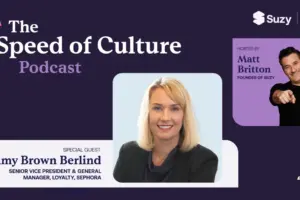
Emmy Brown Berlind, SVP and general manager of loyalty at Sephora, emphasizes that the brand’s success hinges on a symbiotic relationship between technology and the physical store. The metrics driving this strategy are compelling:
- Retention through Data: Over 90% of Sephora’s total revenue is generated by Beauty Insider members. This high degree of capture provides a feedback loop that allows the brand to refine its recommendations with surgical precision.
- The Power of Gamification: The "Beauty Insider Challenges" have proven to be a masterclass in consumer engagement. Since their launch in 2023, more than 30% of the client base has participated in these limited-time tasks. By prompting customers to explore categories they haven’t previously touched—such as a skincare loyalist trying a new hair product—Sephora is effectively expanding the "share of wallet" through discovery-oriented rewards.
- The Store as an Anchor: Despite the digital-first rhetoric, Sephora’s physical stores remain the company’s most effective conversion engines. The brand recognizes that online convenience cannot fully replicate the sensory experience of a physical beauty advisor. The store remains the laboratory where customers feel confident trying new products, often guided by human experts who possess a nuance that even the most advanced AI currently lacks.
Official Perspectives: Navigating the "Creepy" Threshold
A central theme in Sephora’s current strategy is the careful application of artificial intelligence. In a recent dialogue with Matt Britton, Emmy Brown Berlind addressed the delicate balance between helpfulness and intrusion.
Avoiding the "Creepy" Factor
For Sephora, the threshold of "creepiness" is defined by utility. "Apply AI where it creates practical value," Berlind notes. If the technology helps a customer identify the correct foundation shade or streamlines a complex skincare regimen, it is viewed as a tool of empowerment. However, if the data is used to manipulate or obscure the user’s agency, it risks eroding the brand’s hard-earned trust. Features like the "AI Beauty Chat" are kept strictly optional, ensuring the customer retains full control over their digital environment.
Operational Complexity vs. Client-Friendly Decisions
Berlind’s leadership philosophy centers on a single, recurring question: "Is this client-friendly?" While this often leads to significant operational hurdles—such as coordinating massive rewards programs across dozens of departments—the long-term benefits are undeniable. By prioritizing the client’s desire for choice (such as allowing users to choose between points or physical items for birthday rewards), Sephora creates a sense of recognition. The customer does not feel like a number; they feel like a participant in a curated experience.
Future Outlook: The Agentic Shopping Frontier
The retail industry is standing on the precipice of the "Agentic Era." As AI agents become more autonomous, they will not only recommend products but eventually negotiate prices, handle logistics, and manage returns on behalf of the consumer.
Protecting Relevance Over Destination
Sephora’s strategy for the next decade is clear: Protect relevance, not just traffic.
The company is no longer betting solely on its own website or app to win the battle for the consumer. Instead, it is positioning its inventory and expert advice to be accessible via any interface the user chooses. Whether it is a voice-activated assistant in a car or a generative AI search engine, Sephora aims to be the backend engine for beauty recommendations.
The Synthesis of Human and Machine
The future of beauty retail will be defined by the synthesis of three pillars:
- AI-Powered Discovery: Using data to predict needs before the customer realizes they have them.
- Physical Expertise: Maintaining the store as a hub for education, social connection, and high-touch service.
- Seamless Integration: Ensuring that the transaction is invisible, taking place within the ecosystem that the consumer trusts most.
As Emmy Brown Berlind notes, the challenges of the coming years will be significant. The transition from a destination-based brand to an integrated, agentic one requires a total overhaul of traditional marketing metrics. Yet, by anchoring its digital strategy in a deep, 20-year commitment to loyalty and human-centric service, Sephora is uniquely positioned to remain the gold standard of beauty. The "retail battleground" is indeed changing, but for those who prioritize the customer’s journey over the brand’s vanity, the future remains bright.