Executive Overview
As Marvel Studios approaches a monumental milestone in modern cinema, the architectural mastermind behind the Marvel Cinematic Universe (MCU), Kevin Feige, is looking backward to propel the franchise forward. Celebrating 25 years of interconnected comic book adaptations—a journey that effectively began with his work as an associate producer on 20th Century Fox’s original 2000 X-Men film—Feige is engineering the ultimate cinematic crossover.
The upcoming Avengers: Doomsday, slated to hit theaters on December 18, is poised to shatter boundaries by officially integrating the foundational generation of mutant characters into the core MCU canon. This includes iconic legacy castings such as James Marsden’s Cyclops, Rebecca Romijn’s Mystique, alongside legendary figures like Professor Charles Xavier and Erik Lehnsherr (Magneto).
What started as a pipe dream whispered by fans and actors alike over two decades ago has blossomed into an unprecedented studio strategy. Speaking recently with Empire, Feige reflected on the cultural significance of this union, citing old archival footage of Hugh Jackman championing the idea of an Avengers-X-Men crossover long before the corporate acquisition of 21st Century Fox made such a feat even remotely possible.
Yet, the creative fusion driving Avengers: Doomsday extends far beyond mere fan-service cameos. Recent disclosures reveal a surprisingly collaborative behind-the-scenes writing credit list, featuring modern MCU saviors like Ryan Reynolds and Hugh Jackman contributing alongside a staggering ten-person writing team. Furthermore, the film carries a profound emotional weight: it marks the final, poignant cinematic performance of the legendary Sir Patrick Stewart as Professor X, serving as a definitive swan song for an actor who defined a superhero generation. This report provides an in-depth analysis of the historical convergence, the creative mechanics, the official tributes, and the long-term industry ramifications of Avengers: Doomsday.
Detailed Chronology: From the Dawn of Mutants to the MCU Multiverse
To truly understand the seismic impact of Avengers: Doomsday, one must retrace the evolutionary timeline of the superhero film genre. When Bryan Singer’s X-Men premiered in the summer of 2000, the modern comic book blockbuster format was practically non-existent. Hollywood largely considered live-action superhero adaptations to be commercial risks, commercially radioactive following the collapse of the Batman franchise in the late 1990s.
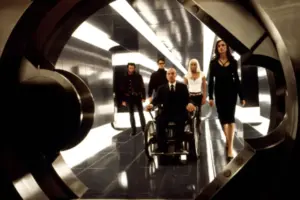
Kevin Feige, then a young producer navigating the industry, stood on the ground floor of that paradigm shift. The 2000 X-Men proved that audiences would accept grounded, emotionally resonant takes on spandex-clad characters. However, Hollywood at the time was heavily siloed. Marvel Entertainment licensed its intellectual properties out to various studios to stave off bankruptcy. Consequently, Sony Pictures controlled Spider-Man, 20th Century Fox controlled the X-Men and Fantastic Four, and Universal held certain distribution rights to the Hulk.
For the first decade of the 21st century, these cinematic universes operated in complete isolation. The birth of the MCU in 2008 with Jon Favreau’s Iron Man changed the rules entirely, establishing a shared continuity that eventually swallowed the box office whole. But as Disney’s historic acquisition of 21st Century Fox solidified in 2019, the intellectual property walls came crashing down.
The integration process was slow, methodical, and deliberately teased through multiverse narratives. Fans witnessed early glimpses of this convergence in Doctor Strange in the Multiverse of Madness (2022) and Deadpool & Wolverine (2024), which smashed box office records by gleefully bridging the Fox era with Disney’s MCU. Now, Avengers: Doomsday represents the apex of this 25-year evolution. By bringing back the original 2000s cast to stand shoulder-to-shoulder with Earth’s Mightiest Heroes, Marvel Studios is formally codifying two distinct eras of cinematic history into a singular, cohesive tapestry.
Supporting Context & Metrics: The Creative Engine Behind Doomsday
The mechanics of bringing Avengers: Doomsday to life are as fascinating behind the scenes as they are on the screen. Industry analysts and eagle-eyed fans pore over every production leak, and the recent discovery regarding the film’s writing credits has sent shockwaves through the fandom.
When the official screenwriting credits for Doomsday leaked online, observers were stunned to see a sprawling coalition of 10 writers credited with shaping the narrative. Among them were unexpected names: Ryan Reynolds and Hugh Jackman. While major motion pictures routinely employ multiple writers over years of development, the inclusion of Reynolds and Jackman points toward a uniquely collaborative environment.
Industry insiders suggest that these credits likely reflect the actors’ intimate understanding of their respective characters’ voices, arcs, and comedic or dramatic beats, particularly following their triumphant meta-textual victory lap in Deadpool & Wolverine. Rather than forcing legacy characters into rigid script templates written solely by traditional MCU architects, Marvel appears to have empowered the original icons to help shape their dialogue and integration into the broader multiverse storyline.
However, questions still linger regarding the scale of their physical presence. While Reynolds and Jackman’s writing credits are confirmed, the extent of their screen time in Doomsday remains a closely guarded secret. Are they serving as structural consultants for a wider mutant influx, or will they suit up for another universe-saving brawl? Given Marvel’s penchant for misdirection, audiences should expect surprises right up until the film’s December release.
The logistical challenge of balancing a cast that spans two decades of filmmaking cannot be overstated. Avengers: Doomsday must juggle established MCU mainstays with a wave of returning mutant legends, all while servicing a complex narrative involving multiverse incursions and, presumably, the catastrophic threat of Doctor Doom. It is a balancing act that requires surgical precision from the directing and writing teams, making the collaborative writing room a necessity rather than a luxury.
Official Statements and Tributes
Perhaps the most poignant narrative surrounding Avengers: Doomsday is the bittersweet finality associated with Sir Patrick Stewart’s return as Professor Charles Xavier. Stewart, whose portrayal of the telepathic mentor set the gold standard for cinematic comic book performances, has officially locked in his ninth and final appearance as the character.
In a heartfelt statement released by Marvel Studios, the company paid homage to Stewart’s quarter-century contribution to the genre:
"Stewart made his debut as Professor X in 2000s X-Men, where he embodied the composure, class, and wisdom of the beloved telepathic mutant and mentor of the X-Men. For more than 25 years, he brought a gravitas and profundity to the character… He returned to the role once more with 2026’s Avengers: Doomsday, his final on-screen appearance."
This sentiment was echoed by Kevin Feige during his comprehensive interview with Empire, where he reflected on the surreal nature of seeing historical ambitions manifest into reality:
"You see interviews of Hugh Jackman 15, 20 years ago saying, ‘People say it’s impossible, but maybe someday the X-Men and the Avengers can all get together.’ It just felt right. It just felt like the fun way to culminate a quarter-century of storytelling."
Feige’s comments underscore a deep sense of fan appreciation within the upper echelons of Marvel Studios. Far from viewing the legacy characters as mere marketing gimmicks, the creative team views their inclusion as a nostalgic, earned victory lap for a generation of moviegoers who grew up watching these foundational superhero films in theaters.
Future Outlook: The Dawn of a New Mutant Age
As Avengers: Doomsday prepares to storm theaters on December 18, its implications for the future of the Marvel Cinematic Universe are profound. For years, critics and fans have debated how Marvel would successfully introduce mutants—a cornerstone of Marvel Comics lore—into a continuity that had previously functioned entirely independently of them.
Rather than executing a clean-slate reboot with entirely unknown actors taking on roles immortalized by the likes of Hugh Jackman, Ian McKellen, and Patrick Stewart, Marvel Studios has opted for the ultimate multi-versal bridge. Avengers: Doomsday serves as the narrative crucible that melts down the old barriers between 20th Century Fox’s cinematic universe and the Walt Disney Company’s MCU.
Looking beyond Doomsday and its subsequent chapter, Avengers: Secret Wars, the cinematic landscape is primed for a comprehensive reset. By honoring the past—bringing back James Marsden, Rebecca Romijn, and celebrating the legacy of Sir Patrick Stewart—Marvel is establishing a deep emotional baseline. Fans are not just meeting new variants of classic characters; they are welcoming back old friends who laid the very bricks upon which the modern superhero empire was built.
When the house lights dim on December 18 and the logo for Avengers: Doomsday lights up the screen, audiences will witness more than just a blockbuster film. They will witness the convergence of 25 years of cinematic trial, error, triumph, and evolution—a testament to Kevin Feige’s enduring vision that what once seemed impossible is now, definitively, blockbuster reality.