Executive Overview
The digital commerce ecosystem is undergoing a profound structural shift. As artificial intelligence transitions from a novelty experimentation phase into the operational backbone of enterprise retail, platforms and service providers are racing to build secure, scalable infrastructure capable of supporting autonomous commerce.
This comprehensive industry analysis details the latest wave of product releases, logistical updates, and strategic platform integrations designed to help ecommerce merchants navigate an increasingly complex global marketplace.
Across the board, the overarching themes of the current landscape are clear:
- The rise of agentic commerce and AI-driven discovery engines
- The blurring lines between digital advertising and physical point-of-sale measurement
- The evolution of post-purchase monetization
- The democratization of advanced logistics for small- and mid-market merchants
Detailed Chronology of New Tools and Platform Updates
Logistics, Fulfillment, and Supply Chain Infrastructure
1. Maersk Expands Ecommerce Ecosystem Through ShippyPro Partnership
Global integrated logistics leader Maersk has announced a strategic partnership with ShippyPro, a premier global shipping management platform. By synthesizing ShippyPro’s advanced multi-carrier management capabilities with Maersk’s robust global logistics network, the collaboration aims to provide merchant customers with unprecedented flexibility. As brands scale operations across international borders, this integration empowers them to optimize carrier choices dynamically, reducing transit times and controlling operational expenditures.

2. Flowspace Launches $50,000 Fulfillment Freedom Fund
Fulfillment technology innovator Flowspace has introduced the Fulfillment Freedom Fund, a dedicated financial and technological support initiative. Offering up to $50,000 in volume-based transition support, the fund is specifically engineered to offset platform exit expenses and onboarding hurdles for brands seeking to modernize their supply chain infrastructure. Participating merchants gain access to a distributed warehousing network across the United States and Canada, orchestrated by intelligent AI software that automates inventory placement and order routing from a unified dashboard.
3. Basic 3PL Launches "GO" on Shopline
Nationwide logistics provider Basic 3PL has launched GO, a frictionless, self-service onboarding tool integrated natively into the Shopline omnichannel commerce platform. Through this integration, Shopline’s vast network of over 700,000 merchants gains instant access to a certified national fulfillment network. Following standard platform verification, users are automatically routed into Basic 3PL’s ecosystem—powered by the Soapbox order management system—ensuring optimal fulfillment speed and geographic proximity to end consumers.
AI Agents, Conversational Discovery, and Universal Checkout
4. Shoppable’s Universal Checkout Plugin Debuts in ChatGPT
Commerce infrastructure provider Shoppable has made its flagship Universal Checkout plugin available directly within the ChatGPT plugin directory. Built upon the universal checkout Model Context Protocol (MCP) server released earlier this year, this integration introduces multi-retailer product discovery and native cart-building capabilities to U.S. users. Brands are provided with a single connection point to a universal checkout backend, streamlining product discovery, cart consolidation, and transaction handling inside conversational AI environments.
5. Fastly Joins Experian Agent Trust Ecosystem for AI Commerce
Cloud computing and content delivery giant Fastly has partnered with credit data and technology leader Experian, joining its elite Agent Trust ecosystem. This collaboration establishes a security framework for enterprises to verify AI agents, authorize transactions, and protect sensitive data as autonomous, machine-driven commerce scales. Fastly’s programmable edge platform extends Experian’s framework, allowing organizations to evaluate AI agent identity, delegated authority, intent, and payment credentials before requests ever hit backend infrastructure.
6. ESW Launches Agentic Commerce with Microsoft Copilot
Global ecommerce engine ESW has officially launched Agentic Commerce, a cutting-edge tool designed to help brands optimize and integrate product catalogs directly onto AI platforms. Debuting with Microsoft Copilot as its inaugural integration, ESW’s solution bridges the gap between AI-driven product discovery and secure, in-chat checkout, significantly reducing friction in the consumer purchasing journey.
7. Novi Integrates with Syndigo to Accelerate Content Syndication
Novi—a specialized platform that optimizes brand product data so AI assistants like ChatGPT and Gemini can readily discover and recommend them—has announced a high-impact integration with Syndigo. This collaboration enables brands to seamlessly flow Novi-optimized product content directly across Syndigo’s extensive retail network, which includes e-commerce heavyweights such as Amazon, Walmart, and Target, drastically shortening the path from AI-driven recommendation to transactional execution.
Omnichannel Advertising, Analytics, and Merchant Control
8. Lightspeed Commerce Integrates with Meta Conversions API
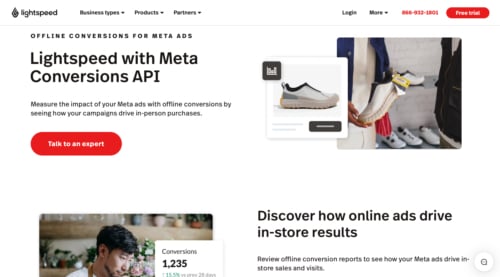
Omnichannel platform Lightspeed Commerce has rolled out a native integration with the Meta Conversions API. Designed to bridge the gap between digital ad spend and physical retail revenue, the tool allows retail merchants to connect their brick-and-mortar locations directly to Meta. By automatically syncing in-store product catalogs and securely transmitting point-of-sale transactions, merchants gain clear visibility into how Meta Ads influence in-store purchases, enabling more accurate campaign measurement and optimized ad targeting.
9. Shopify Expands Shop Campaigns to the U.K.
Shopify has officially expanded its performance marketing tool, Shop Campaigns, into the United Kingdom and several new international markets. Previously limited to the U.S. and Canada, the platform allows merchants to promote products across the Shop app and third-party ecosystems (including Meta, Google, X, Snap, and Pinterest) via unified campaigns. Operating on a performance-based model, businesses only pay when a completed sale occurs, driving risk-free customer acquisition.
10. Meta Releases "Seller" App for Facebook Marketplace
In a move to empower independent e-commerce participants and re-commerce professionals, Meta has launched Seller, a dedicated mobile application built specifically for Facebook Marketplace vendors. The app provides streamlined access to AI-powered listing creation tools, a unified messaging inbox, robust inventory management, and deep performance metrics (such as views, clicks, and conversion threads) that sync instantly with the main Marketplace platform.
11. Miva Announces Release of 26R2 Update
Enterprise and mid-market ecommerce platform Miva has announced the immediate availability of its 26R2 software update. The release heavily expands Miva’s Vexture merchandising suite, granting merchants advanced flexibility to curate product displays via AI prompts, dynamic collections, and refined search queries. Additionally, the 26R2 update features a revamped page caching architecture and expanded access to category facets to elevate storefront performance.
Payments, Post-Purchase Innovation, and Customer Retention
12. Amazon Business Adds Affirm as First Buy-Now, Pay-Later Option
Amazon Business has selected Affirm as its inaugural pay-over-time checkout solution. Eligible business customers can now split the cost of commercial purchases without incurring late or hidden fees. Amazon Business confirms that this payment option will roll out to all qualified sole-proprietor accounts ahead of the peak holiday shopping season.
13. Neon Secures $13 Million Series A to Expand In-Game Commerce
Gaming commerce infrastructure startup Neon has raised $13 million in a Series A funding round co-led by Andreessen Horowitz and Renegade Partners, with strategic participation from major game developer Krafton. Neon specializes in helping game publishers operate direct-to-consumer digital storefronts. The capital injection will fund workforce expansion, loyalty system development, and global market penetration, bringing Neon’s total capital raised to $27 million.
14. Cleo Updates Chargeback Prevention Solution for Retail Suppliers
Supply chain orchestration platform Cleo has upgraded its Chargeback Prevention suite. Leveraging AI-powered detection agents, the system automatically analyzes complex data patterns to predict supply chain risks and flag financial discrepancies. Furthermore, its Dynamic Insights feature utilizes conversational intelligence to deliver personalized, real-time analytics to retail suppliers navigating outsourced logistics.
15. Whop Launches Command-Line Interface (CLI) for Businesses and AI Agents
Digital product marketplace and API ecosystem Whop has launched Whop CLI (Command-Line Interface). This tool provides business owners—and their deployed AI agent workforces—with direct, language-based access to Whop’s full-stack API architecture, allowing for automated administrative tasks, rapid application deployment, and advanced business management.
16. Algolia Launches Dynamic Facets for Intelligent Product Discovery
AI-powered site-search leader Algolia has rolled out Dynamic Facets. This intelligent feature automatically prioritizes and surfaces the most contextually relevant product filters (such as size, color, brand, or technical specifications) in real time based on active shopper intent and behavioral patterns, streamlining the digital path-to-purchase.
17. Swap Launches "Checkout+" for Post-Purchase Revenue Generation
Ecommerce storefront and returns specialist Swap has introduced Checkout+, a premium modular add-on that bundles return shipping protection and fee-free returns into a single opt-in customer experience. Brands share in the newly generated opt-in revenue while offloading return logistics to Swap’s carrier network. The system automates claims processing, providing shoppers with instant prepaid labels and frictionless return handling.
Supporting Context & Industry Metrics
The convergence of AI agent infrastructure and traditional enterprise resource planning (ERP) systems marks a fundamental transformation in retail technology. Industry data indicates that global investments in agentic commerce—systems where autonomous software agents discover, negotiate, and execute transactions on behalf of consumers—have accelerated by over 140% year-over-year.
Simultaneously, the demand for unified online-to-offline (O2O) attribution tools, such as the Lightspeed-Meta integration, highlights a critical merchant priority: closing the data loop between digital advertising spend and physical foot traffic. With privacy regulations tightening globally, platforms capable of securing first-party data transactions while maintaining low-latency API performance are securing significant market share.
In the logistics sector, the introduction of funds like Flowspace’s $50,000 initiative reflects competitive pressures among 3PL providers. As brands grapple with rising warehousing overhead and consumer expectations for expedited delivery, automated self-service onboarding (such as Basic 3PL’s integration with Shopline) is rapidly becoming the gold standard for operational agility.
Official Statements and Industry Insights
Industry leaders emphasize that these technological expansions are not merely incremental upgrades, but foundational steps toward the future of automated commerce:
- On AI Agent Security: Commenting on the integration within the Experian Agent Trust ecosystem, technical architects at Fastly noted: "As autonomous digital entities begin executing financial transactions on behalf of consumers, verifying agent identity and delegated authority at the edge is no longer optional—it is the bedrock upon which trusted AI commerce must be built."
- On Omnichannel Measurement: Representatives from Lightspeed Commerce emphasized the strategic value of the Meta Conversions API: "Retailers have long struggled to prove the tangible in-store value of digital ad campaigns. By seamlessly syncing point-of-sale data with social platforms, we are giving merchants the definitive clarity they need to optimize their capital allocation."
- On Fulfillment Modernization: Discussing the launch of the basic GO integration, Basic 3PL executives highlighted user accessibility: "Merchants should not have to jump through administrative hoops to build a resilient supply chain. Native, automated onboarding bridges the gap between storefront software and physical logistics."
Future Outlook: What Merchants Must Watch
As the digital commerce landscape heads toward the close of the decade, merchants must prepare for an operational environment governed by three primary pillars:
- The Optimization of AI Discovery: Traditional Search Engine Optimization (SEO) is actively being supplemented by Generative Engine Optimization (GEO). Tools like Novi, Syndigo, and Shoppable prove that if a brand’s catalog is not structurally optimized for AI ingestion and universal checkout APIs, it risks invisibility in conversational shopping interfaces.
- Frictionless Post-Purchase Monetization: Returns and fulfillment are evolving from cost centers into active revenue and retention channels. Programs like Swap’s Checkout+ and Flowspace’s automated routing demonstrate that consumers demand absolute transparency and ease of return, rewarding brands that eliminate post-purchase friction.
- Decentralized Payment Flexibilities: The integration of B2B Buy-Now-Pay-Later (BNPL) services like Affirm on Amazon Business signals that flexible financial structuring is no longer exclusive to B2C retail. Enterprise and wholesale buyers increasingly expect consumer-grade financing flexibility at checkout.
Merchants who successfully integrate these modular, AI-ready, and logistics-optimized solutions will be best positioned to capture market share in an increasingly autonomous and competitive global economy.