A pervasive myth continues to stall mid-career professionals, consultants, and enterprise brands from entering video marketing: the belief that YouTube belongs exclusively to youthful, highly charismatic influencers delivering entertainment-first content. Recent strategic shifts across the digital video landscape reveal a starkly different reality. As digital search behaviors evolve, YouTube has solidified its position as the world’s second-largest search engine and a primary engine for high-ticket client acquisition, brand authority building, and domain monetization.
According to video growth strategist Ty Myers, operating in conjunction with digital marketing authority Michael Stelzner, success on YouTube for business leaders relies not on performative personality, but on strategic problem-solving. Mid-life professionals possess deep domain expertise, nuanced industry knowledge, and refined communication skills honed across sales, consulting, and instruction. When mapped onto a structured YouTube framework, these transferable assets frequently out-perform hyper-charismatic content that lacks actionable substance.
+-----------------------------------------------------------------------+
|                 YOUTUBE PRE-PRODUCTION TIME BREAKDOWN                 |
|                                                                       |
|   [ Research & Validation ]  [ Title & Thumbnail Design ] [ Outline ] |
|   =================================================================   |
|                      60% PRE-PRODUCTION (6 Hours)                     |
|                                                                       |
|   [ Scripting / Recording ]  [ Video Editing ]                        |
|   =========================================                           |
|           40% PRODUCTION & POST (4 Hours)                             |
+-----------------------------------------------------------------------+
This deep dive outlines the operational blueprint used by creators to launch, scale, and monetize YouTube channels regardless of market entry timing. Key findings demonstrate that up to 80% of a video’s performance is determined during pre-production—specifically through the interplay of topic selection, title framing, and thumbnail design—rather than expensive production equipment. By pairing artificial intelligence workflows with explicit retention mechanics, legacy knowledge-holders are converting organic views into high-value revenue streams.
Detailed Chronology: The Four-Phase Strategic Launch Architecture
To transition a channel from zero subscribers to a sustainable, lead-generating media asset, Myers establishes a phased implementation framework. This methodology moves systematically from foundational positioning to data-driven optimization.
       +-------------------------------------------------------+
       | PHASE 1: Define Goals & Mission                       |
       | Clarify monetizable business outcomes & positioning   |
       +---------------------------+---------------------------+
                                   |
                                   v
       +-------------------------------------------------------+
       | PHASE 2: Define Target Avatar                         |
       | Map specific audience pain points & transcript signals |
       +---------------------------+---------------------------+
                                   |
                                   v
       +-------------------------------------------------------+
       | PHASE 3: The 15-Video Rep Baseline                    |
       | Publish rapid iterations to build camera comfort      |
       +---------------------------+---------------------------+
                                   |
                                   v
       +-------------------------------------------------------+
       | PHASE 4: Pivot to High-Leverage Analytics             |
       | Study outlier data, distribution, & systemic quality  |
       +-------------------------------------------------------+
Before recording a single frame, a channel must establish an unshakeable operating thesis. Ambiguity stands as the single primary point of failure for institutional and professional creators. Broad targeting—attempting to serve all demographics simultaneously—dilutes brand authority and confuses distribution systems.
Creators must explicitly define the primary monetizable outcome:
Direct B2B lead generation
High-ticket advisory and consulting client acquisition
Digital or physical product sales
Enterprise authority building and industry legacy
Phase 2: Audience Persona (Avatar) Mapping & Transcript Optimization
Once the channel mission is locked, strategic focus pivots to identifying the precise target demographic (the "Avatar"). This process requires mapping the explicit fears, operational friction points, and desired outcomes of the target viewer.
This avatar definition directly governs video metadata and content scripting. YouTube’s automated indexing systems process every word spoken in a video’s audio track, converting speech to text to interpret semantic meaning. The platform’s machine learning models synthesize this transcript data alongside viewer engagement patterns to serve videos to users displaying matching intent signals. Highly specific language choices serve as signaling flares for the distribution algorithm.
Phase 3: The Frictionless Repetition Baseline
A common obstacle facing high-achieving corporate veterans is operational perfectionism. Spending months polishing a debut video delays critical real-world market feedback.
Myers advocates executing a rapid baseline of approximately 15 videos. This initial volume phase serves two functional purposes:
Desensitization and Comfort: It eliminates camera anxiety and refines visual delivery.
Workflow Standardization: It establishes sustainable, repeatable production rhythms.
Perfection is intentionally deprioritized during this phase; getting reps in takes precedence over absolute production polish.
Phase 4: Operational Pivot from Quantity to Quality
Upon completing the initial 15-video baseline, content creators must shift focus from production volume to deep analytical evaluation. At this juncture, creators analyze YouTube as a dynamic content distribution network rather than a static repository. Creators evaluate market outliers, study high-performing video formats within their sector, and optimize content structure around viewer retention data.
Supporting Context & Metrics: Pre-Production, AI Stack, and Case Studies
The 80/20 Distribution Rule and Time Allocation
Data shows that visual assets and narrative framing govern organic reach. The combination of Topic, Title, and Thumbnail accounts for roughly 80% of a video’s success on YouTube. A technically average video built around an exceptional topic with a compelling title and thumbnail will consistently outperform a high-budget video featuring poor market positioning.
                  TYPICAL FAILURE MODE vs. OPTIMIZED WORKFLOW

FAILED WORKFLOW:
  [ Script & Record ] ----> [ Edit Video ] ----> [ Slap on Title/Thumbnail ]
  *Result: High effort, low click-through rate, minimal distribution.*

OPTIMIZED WORKFLOW:
  [ Topic Research ]  ----> [ Title & Thumbnail ] ----> [ Script & Record ]
  *Result: Validated demand, optimized CTR, maximum algorithmic reach.*
To optimize resource deployment, Myers advises allocating 6 out of every 10 weekly production hours strictly to pre-production. This involves topic validation, title variance testing, thumbnail conceptualization, and analytical modeling before writing scripts or turning on cameras.
+---------------------------------------------------------------------------+
|                          PRE-PRODUCTION TOOLKIT                           |
+-------------------+-------------------------------------------------------+
| TOOL              | STRATEGIC FUNCTION                                    |
+-------------------+-------------------------------------------------------+
| vidIQ             | Keyword search volume, view velocity trajectory,      |
|                   | market outlier identification.                        |
+-------------------+-------------------------------------------------------+
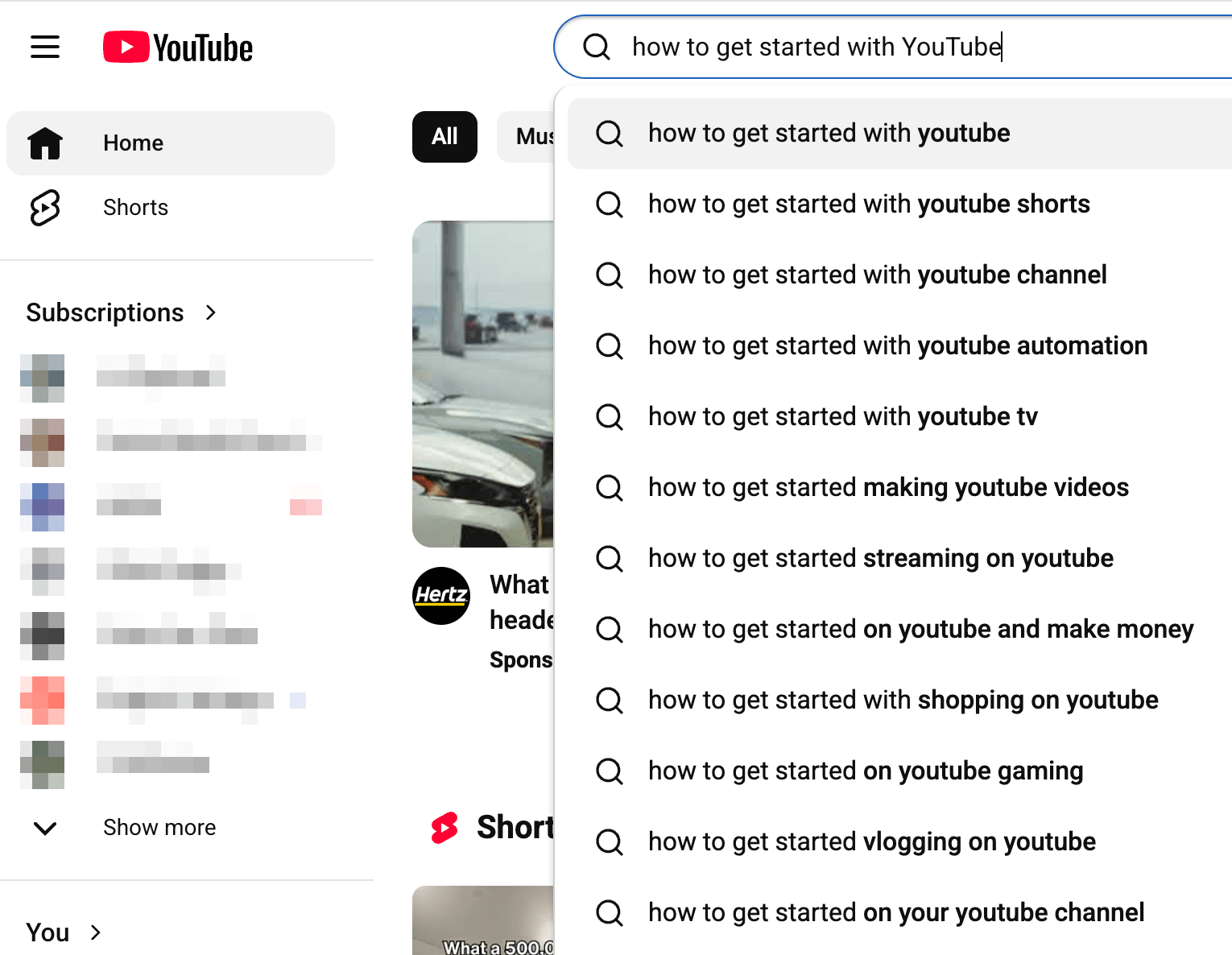
| YouTube Search    | Intent parsing, direct search phrasing mapping,       |
| Autocomplete      | long-tail audience queries.                           |
+-------------------+-------------------------------------------------------+
| Google NotebookLM | Whitepaper, document, and data set research synthesis |
|                   | into structured content foundations.                   |
+-------------------+-------------------------------------------------------+
| Claude AI         | Conversational interview scripting, context extraction|
|                   | without generic templating.                           |
+---------------------------------------------------------------------------+
Strategic Topic Validation Framework
To pressure-test video concepts before production, growth teams utilize a three-stage validation pipeline:
Quantitative Volume Analysis via vidIQ: Proposed topics are evaluated using specialized research tools to confirm monthly search volume and audience demand.
Trajectory and Velocity Evaluation: By running target keywords through specialized browser extensions, creators evaluate competitor video metrics. Key signals include:
Recency: If top-performing videos are several years old, audience interest may be waning.
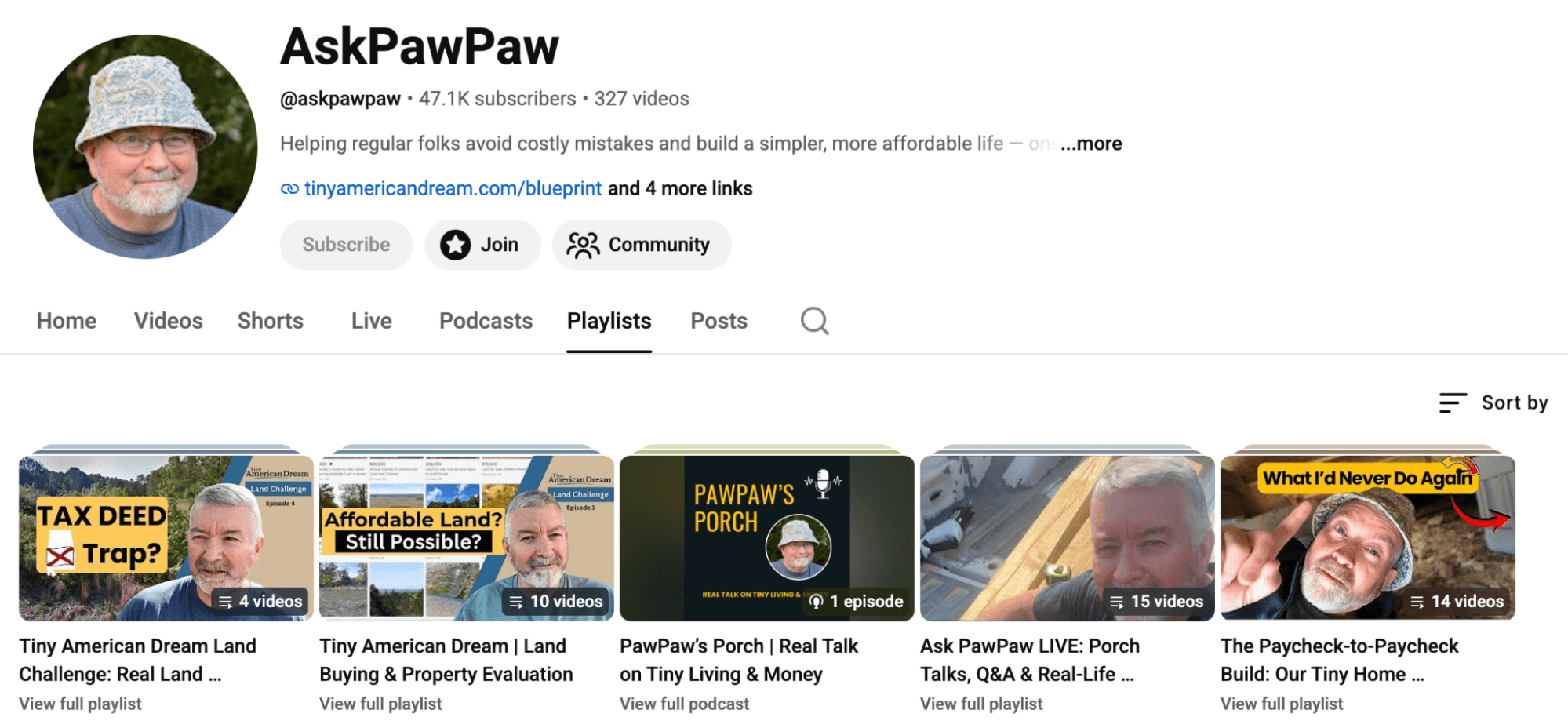
The real-world impact of data-backed emulation is illustrated by the YouTube channel Ask PawPaw, hosted by a creator named Kevin.
Initial Channel Positioning: Focused on conventional personal finance topics aimed at retirees—including budgeting, Health Savings Accounts (HSAs), and broad investment vehicles.
The Analytical Insight: The channel experienced minimal initial traction. Through comparative outlier research using vidIQ, Myers identified an adjacent trend: simple, raw videos focused on shed-to-tiny-home conversions and alternative low-cost housing were generating hundreds of thousands of views.
Strategic Execution: Kevin pivoted production to showcase real-world walk-throughs of pre-built sheds at local retail lots, evaluating square footage, pricing, and practical viability for retirees looking to downsize.
Measurable Outcome: The format resonated immediately. Kevin successfully repositioned his channel around tiny home conversions and land-sourcing advisory, building a loyal audience with direct business monetization pathways.
Google NotebookLM for Deep Synthesis: For research-heavy topics, creators upload dense academic whitepapers, regulatory updates, and market reports into Google NotebookLM. The tool synthesizes complex documents into structured summaries, accelerating accurate scripting.
Claude AI via Interactive Inquiry: Rather than prompting AI to generate a script directly—which frequently produces generic content—Myers uses a conversational extraction technique. The creator instructs Claude to act as a seasoned journalist, asking the creator pointed, sequential questions about the topic. The creator’s authentic spoken answers supply the personal anecdotes, strategic insights, and nuanced perspectives needed for a compelling script framework.
Production Mechanics, Hook Architecture, and Monetization Tactics
+---------------------------------------------------------------------------+
|                     30-SECOND HOOK ARCHITECTURE                           |
+---------------------------------------------------------------------------+
| 00:00 - 00:05 | 1. Avatar Callout      | Name target demographic explicitly |
| 00:05 - 00:15 | 2. Curiosity Gap       | Present counterintuitive premise  |
| 00:15 - 00:22 | 3. Instant Credibility | State proof/results before advice |
| 00:22 - 00:30 | 4. Objective Blueprint | Map precise outcome of the video   |
+---------------------------------------------------------------------------+
Hook Architecture (The First 30 Seconds)
Viewer retention curves drop sharply within the initial 30 seconds if content fails to instantly validate the user’s decision to click. An effective hook incorporates four distinct structural components:
Explicit Demographic Callout: Address the specific audience persona within the opening sentence to immediately confirm target relevance.
The Curiosity Gap / Counterintuitive Premise: Present an unexpected insight or challenge a common industry assumption to create productive intellectual tension.
Proof and Authority Validation: Lead with concrete track records or quantifiable metrics before delivering educational content.
The Objective Map: Outline the specific solution the video delivers, establishing clear expectations for the viewer.
Dual-Layer Monetization: Converting Attention to High-Ticket Revenue
Channels operating as B2B funnel drivers prioritize business monetization over AdSense payouts. Turning viewers into paying clients relies on a complementary dual-layer strategy:
Explicit Mid-Roll Call-to-Action (CTA): Placed strategically mid-way through the video, this direct mention connects the video topic to the creator’s broader paid services (such as advisory programs, coaching, or enterprise software), directing interested viewers to descriptions links.
Subtle Contextual Proof Insertion: Creators naturally weave real-world client experiences, ongoing advisory projects, and operational success stories into the core instruction. Repeated exposure to these subtle proof points establishes deep expertise and confirms active commercial involvement without sounding overly sales-focused.
YouTube’s recommendation engine prioritizes overall session duration—the total time a viewer stays on the platform after watching a video. Extending total viewing time leads to increased content distribution.
To maximize session duration, creators eliminate traditional video exit cues:
TRADITIONAL OUTRO (High Churn)
Instruction -> "Thanks for watching!" -> Outro Music -> Summary -> Viewer Leaves
*Result: Signals the video is ending, leading to immediate viewer drop-off.*

RETENTION-OPTIMIZED OUTRO (High Session Duration)
Instruction -> Seamless Transition Question -> End-Card Overlay Click
*Result: Propels the viewer directly into the next video without interruption.*
Eliminate Wrap-Up Signals: Outro music, formal summaries, and conversational sign-offs ("In conclusion…", "Thanks for watching…") serve as prompts for the viewer to navigate away.
Seamless Bridge Transitions: Creators transition directly from the final educational point into an unresolved question that can only be answered by watching a specific follow-up video.
End-Card Integration: Placing a targeted video link on the screen right as the seamless transition occurs guides the viewer straight into the next video, driving continuous watch time and reinforcing organic algorithmic reach.
Equipment Standards and Hardware Efficiency
A common misconception among emerging creators is that entering YouTube requires high-end cinema cameras, complex lighting rigs, and dedicated studio spaces. In practice, modern hardware offers a accessible entry point with minimal technical friction.
Audio Quality as a Top Priority: While viewers will tolerate mid-tier visual fidelity, low-quality, echoing, or distorted audio leads to immediate viewer exit. Securing a reliable broadcast mic plugged directly into the capture device eliminates a major point of friction.
Hardware Minimalization: Myers documented filming over 100 long-form channel videos using solely an iPhone 15 paired with a USB-C Shure MV7+ microphone. This lean approach keeps set-up time low, allowing creators to focus their energy on research, scripting, and retention design.
Official Statements & Expert Insights
Evaluating YouTube through a operational lens redefines how mid-career professionals approach platform growth.
On overcoming late-entry reluctance and leveraging existing professional skills, Ty Myers noted:
"The most persistent misconception holding midlife professionals back from YouTube is the belief that the platform belongs to a certain type of person: someone bubbly, charismatic, naturally funny on camera. What actually matters is understanding a specific viewer’s problem and communicating a solution clearly enough that the viewer feels heard. Those skills transfer directly from careers in sales, consulting, teaching, or any field where someone has spent years figuring out what an audience needs."
Addressing operational friction and the pitfalls of perfectionism during early channel development, Myers added:
"Perfectionism leads to months spent at the starting line rather than on the platform… Topic, title, and thumbnail together account for 80% of a video’s success. Filming a mediocre video with a well-researched topic, a sharp title, and a strong thumbnail will outperform a polished video nobody clicks on."
Detailing the mechanics of content distribution and session optimization, Michael Stelzner and Myers emphasized the shift away from vanity metrics toward intentional session design:
"YouTube prioritizes session duration… If your content helps someone stay on the platform longer, it rewards it with more distribution. You go directly from the last piece of instructional content into a question that can only be answered by watching the next video."
Future Outlook & Industry Implications
The trends reshaping YouTube point to a future defined by algorithmic specificity, AI-driven content assembly, and specialized industry expertise. As broad entertainment formats face increasing competition and content saturation, search and recommendation algorithms are becoming more sophisticated at matching niche viewer queries with hyper-relevant professional guidance.
+---------------------------------------------------------------------------+
|                   EMERGING YOUTUBE CONTENT TRENDS                         |
+---------------------------------------------------------------------------+
| ERA OF BROAD ENTERTAINMENT            ERA OF SPECIALIZED KNOWLEDGE        |
| - High saturation                     - Algorithmic hyper-targeting       |
| - Broad appeal topics                 - Industry-specific depth           |
| - AdSense monetization reliance       - Direct enterprise lead funnels    |
| - High production overhead            - Lean, friction-free workflows     |
+---------------------------------------------------------------------------+
Rise of the Micro-Authority: High-ticket consulting, enterprise SaaS, and specialized B2B services are replacing traditional AdSense revenue models. Channels with modest subscriber bases (5,000 to 20,000 subscribers) will continue to generate multi-six-figure revenue streams by serving highly focused B2B audiences.
AI-Augmented Content Workflows: The integration of AI research tools like Google NotebookLM and conversational scripting assistants like Claude will lower pre-production barriers. Industry professionals will be able to turn complex internal data, corporate research, and years of experience into structured video assets in hours rather than weeks.
Algorithmic Reliance on Transcript Dynamics: As natural language processing and semantic video parsing advance, YouTube’s distribution engine will rely less on superficial tags and more on spoken context. Spoken accuracy, demographic alignment, and structural retention logic will become the main drivers of organic discoverability.
For mid-career professionals and established businesses, YouTube represents far more than an entertainment platform—it is a powerful tool for scaling trust and expertise. By prioritizing structured pre-production, focusing on high-demand topics, and optimizing for viewer retention, late-stage market entrants can bypass trial-and-error to build high-converting, sustainable video ecosystems.