Executive Overview
The modern consumer smart home security landscape has reached an interesting inflection point, defined by a constant tug-of-war between convenience, installation friction, and recurring long-term costs. For years, upgrading home exterior security meant navigating a complex web of electrical wiring, hiring professional contractors, or dealing with the persistent anxiety of proprietary power cables that restricted placement options. Today, however, wireless smart home technology has matured to the point where high-definition monitoring and heavy-duty outdoor lighting can be deployed in minutes, entirely independent of hardwired electrical infrastructure.
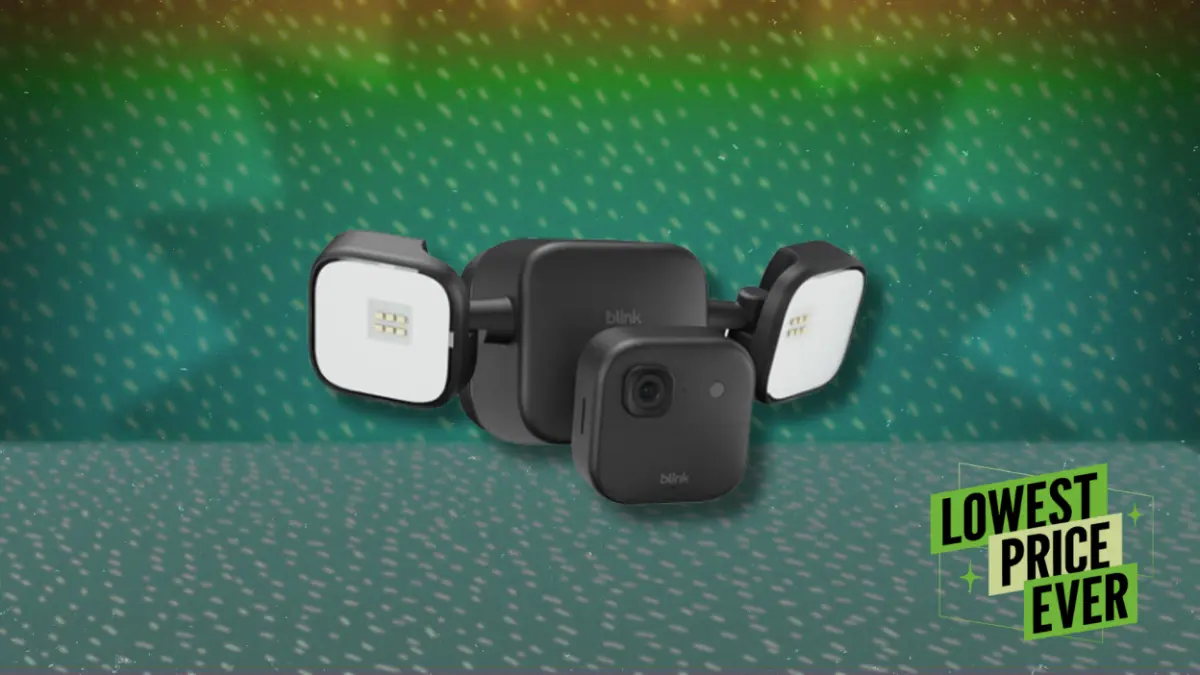
A prime manifestation of this market shift is the Blink Outdoor 2K+ Wireless Floodlight Camera, a device that has recently captured industry headlines by plunging to an all-time low price of $77.99 (down from its standard retail price of $129.99) on Amazon. This steep price drop, verified by independent price-tracking metrics, presents a compelling proposition for homeowners looking to secure driveways, backyards, and side entrances without breaking the bank.
However, looking past the initial discount reveals a more nuanced narrative. While the hardware package offers impressive specifications—including wire-free installation, sharp 2K video resolution, a 135-degree field of view, and a motion-activated 700-lumen floodlight—prospective buyers must carefully weigh hidden expenses. Chief among these are the ecosystem limitations (primarily tethered to Amazon Alexa rather than Apple HomeKit or Google Assistant) and the financial mechanics of Blink’s cloud subscription model versus local storage requirements.
This comprehensive report examines the technical capabilities, market positioning, financial implications, and broader industry trajectory of the Blink Outdoor 2K+ Wireless Floodlight Camera. By breaking down its features, analyzing its ecosystem constraints, and exploring the true cost of ownership, this article aims to provide a definitive guide for consumers navigating the crowded smart home security market.
Detailed Chronology: The Evolution of Wire-Free Security and the August 2026 Price Drop
To fully understand the significance of the current discount on the Blink Outdoor 2K+ Wireless Floodlight Camera, it is vital to trace how the device entered the market and how competitive pressures have shaped its pricing trajectory.
The Shift Toward Wire-Free Convergence
Historically, outdoor security cameras and floodlights existed as entirely separate entities. Homeowners typically relied on traditional, dumb halogen or LED floodlights controlled by wall switches or simple passive infrared (PIR) motion sensors, supplementing them with standalone security cameras that required separate power sources. The convergence of these two technologies into unified wireless units represented a major milestone in home automation.
Blink, a company acquired by Amazon in 2017, built its brand identity around affordable, long-lasting battery-powered security cameras. The introduction of the Outdoor 2K+ line marked a significant step up from the company’s legacy 1080p offerings, bringing sharper sensor resolutions and enhanced AI-driven motion detection to a wider demographic.
The August 2026 Price Correction
Throughout the first half of 2026, the Blink Outdoor 2K+ Wireless Floodlight Camera maintained its baseline manufacturer’s suggested retail price (MSRP) of $129.99. While occasional minor promotional discounts shaved $10 to $15 off the price tag during minor retail holidays, the device largely resisted deep discounting due to steady consumer demand for wire-free floodlight integrations.
That landscape shifted dramatically in August 2026. Independent price-tracking tools and market watchdogs recorded an aggressive price slash, driving the hardware cost down to $77.99. This reduction represents a nearly 40% savings off the MSRP, undercutting several competing mid-tier outdoor cameras on the market.
Industry analysts point to intense competition in the smart home sector—driven by aggressive pricing from rival brands like Wyze, Eufy, and Ring—as the primary catalyst for this price correction. As consumers become increasingly sensitive to inflation and subscription fatigue, hardware manufacturers are increasingly forced to lower upfront entry barriers to secure long-term ecosystem lock-in.
Supporting Context & Metrics: Technical Specifications and Cost of Ownership
When evaluating a piece of smart home security hardware, headline-grabbing discounts can easily overshadow the practical realities of daily use and long-term maintenance. A granular examination of the Blink Outdoor 2K+ reveals a mix of strong technical specifications and notable operational caveats.
Hardware and Performance Metrics
- Video Resolution: Up to 2K resolution, a notable upgrade from standard 1080p sensors. This higher pixel density vastly improves the likelihood of successfully capturing identifiable facial features, vehicle license plates, or package details.
- Field of View: 135-degree wide-angle lens, providing broad coverage suitable for suburban driveways and backyards.
- Illumination: Motion-activated LED floodlight delivering 700 lumens of brightness. While not blindingly bright compared to commercial-grade industrial floodlights, 700 lumens is more than sufficient to illuminate dark entryways and act as a psychological deterrent for intruders.
- Power and Battery Life: Completely wire-free operation. The package includes two AA lithium batteries to power the camera unit and four D-cell batteries dedicated to the floodlight module. Blink advertises a maximum battery lifespan of up to two years, though real-world longevity fluctuates wildly based on activity frequency, floodlight activation duration, and local weather extremes.
- Connectivity and Smart Home Integration: Operates on local Wi-Fi and connects through the included Sync Module Core. Native support is robust for Amazon Alexa and IFTTT workflows. However, the system notably lacks native compatibility with Apple HomeKit or Google Assistant ecosystems, limiting its appeal for households deeply embedded in non-Alexa smart home architectures.
The Subscription and Local Storage Dilemma
Perhaps the most critical factor in determining the true value of the Blink Outdoor 2K+ is its data storage ecosystem.
Out of the box, the camera offers basic motion alerts, live view capabilities, night vision, and two-way audio. However, advanced functionalities—such as person and vehicle detection, cloud storage, and AI-generated motion summaries—require a paid subscription. Blink’s Basic plan is priced at $3.99 per month or $39.99 per year for a single device, following a 30-day free trial included with the purchase.
For privacy-conscious consumers who prefer to avoid recurring monthly fees, local storage is technically an option, but it comes with a frustrating catch. The Sync Module Core included in the standard box does not support local video storage out of the box. To bypass cloud subscriptions and store footage locally, users must invest in additional hardware:

- Sync Module XR: Retailing at approximately $73.53.
- Compatible microSD card: Retailing at approximately $29.99.
When factoring in these additional hardware requirements, a consumer hoping to run the system entirely subscription-free will face an upfront investment that quickly erases the savings of the initial $77.99 sale price. Prospective buyers must therefore calculate whether they prefer the convenience of the cloud subscription model or the upfront capital expenditure required for localized, offline archiving.
Official Statements and Industry Perspective
While consumer electronics manufacturers rarely issue formal press releases for standard promotional price adjustments, product positioning statements from Amazon and Blink provide clear insight into their design philosophy.
Democratizing Home Security
In previous product announcements, Blink representatives have consistently emphasized the democratization of home safety. The core design philosophy behind the Blink brand has always centered on removing the technical barriers that traditionally prevented average homeowners from installing security infrastructure.
By eliminating the need for professional electricians, complex low-voltage wiring, or specialized mounting brackets, the company aims to position its hardware as a DIY appliance rather than an integrated smart home installation. The incorporation of a high-lumens floodlight into a battery-operated housing addresses a specific market demand: consumers who want the safety and visibility of floodlighting in remote corners of their property (such as detached garages or garden sheds) where running electrical conduit is structurally impossible or prohibitively expensive.
Industry Analyst Commentary
Smart home industry analysts have offered a measured response to the Blink Outdoor 2K+ price drop. On one hand, tech reviewers and consumer advocates praise the hardware for its sharp 2K visual fidelity and ease of deployment, noting that at $77.99, it represents exceptional hardware value.
On the other hand, industry watchdogs frequently caution consumers about the "razor-and-blade" business model prevalent in the security camera industry. By discounting hardware to aggressively low margins, manufacturers rely heavily on recurring subscription services to achieve long-term profitability. Analysts advise buyers to look past the initial sticker price and carefully evaluate whether the ecosystem restrictions (such as the lack of Google Assistant or Apple HomeKit support) and subscription fees align with their long-term digital infrastructure.
Future Outlook: Where Wire-Free Security is Heading
The aggressive discounting of devices like the Blink Outdoor 2K+ Wireless Floodlight Camera provides a clear window into the future of consumer surveillance technology over the next several years. Several key trends are poised to shape the market:
1. The Proliferation of Local AI Processing
As silicon technology advances and edge-computing chips become cheaper and more power-efficient, the heavy reliance on cloud-based AI processing is slowly shifting. Consumers are increasingly demanding on-device person, vehicle, and pet detection that does not require an ongoing monthly subscription fee. Future iterations of wire-free cameras will likely integrate local neural processing units (NPUs) to handle intelligent alerts natively, reducing cloud bandwidth costs for manufacturers and subscription fatigue for users.
2. Battery Technology and Energy Harvesting
While battery life of up to two years is impressive, battery degradation in extreme weather environments remains a persistent challenge for wireless outdoor hardware. The industry is rapidly moving toward more robust, integrated energy-harvesting solutions. Small-form-factor solar panels, optimized low-light photovoltaic cells, and advanced power-management protocols will soon transform "wire-free" cameras from battery-reliant devices into truly autonomous, self-sustaining security nodes.
3. Ecosystem Interoperability and Matter Protocol
One of the most persistent complaints regarding budget-friendly security ecosystems is fragmentation—specifically, the walled-garden approach that restricts cross-platform functionality (such as Blink’s exclusion of Apple HomeKit and Google Assistant). As the smart home industry increasingly embraces the universal Matter standard and foundational interoperability frameworks, consumer expectations will shift. Future security buyers will increasingly reject hardware that locks them into a single voice assistant or ecosystem, forcing manufacturers to open their APIs and support cross-platform streaming protocols.
Conclusion
The drop of the Blink Outdoor 2K+ Wireless Floodlight Camera to $77.99 is an undeniably attractive proposition for anyone looking to bolster their exterior home security without tackling complicated wiring projects. With sharp 2K video resolution, a reliable 700-lumen floodlight, and straightforward installation out of the box, it delivers solid utility for driveways, yards, and dark entryways.
However, smart home consumers must approach this deal with a clear-eyed understanding of the total cost of ownership. Beyond the initial promotional price tag, buyers must navigate ecosystem limitations—such as a lack of native Apple HomeKit or Google Assistant support—and carefully consider whether they prefer paying a recurring monthly cloud subscription or investing extra capital into local storage hardware.
Ultimately, for households already anchored in the Amazon Alexa ecosystem that do not mind minor recurring fees or supplemental hardware investments, this August 2026 discount represents an opportune moment to upgrade perimeter security. For everyone else, weighing the long-term operational costs against alternative hardware ecosystems remains an essential step before clicking "buy."