Executive Overview
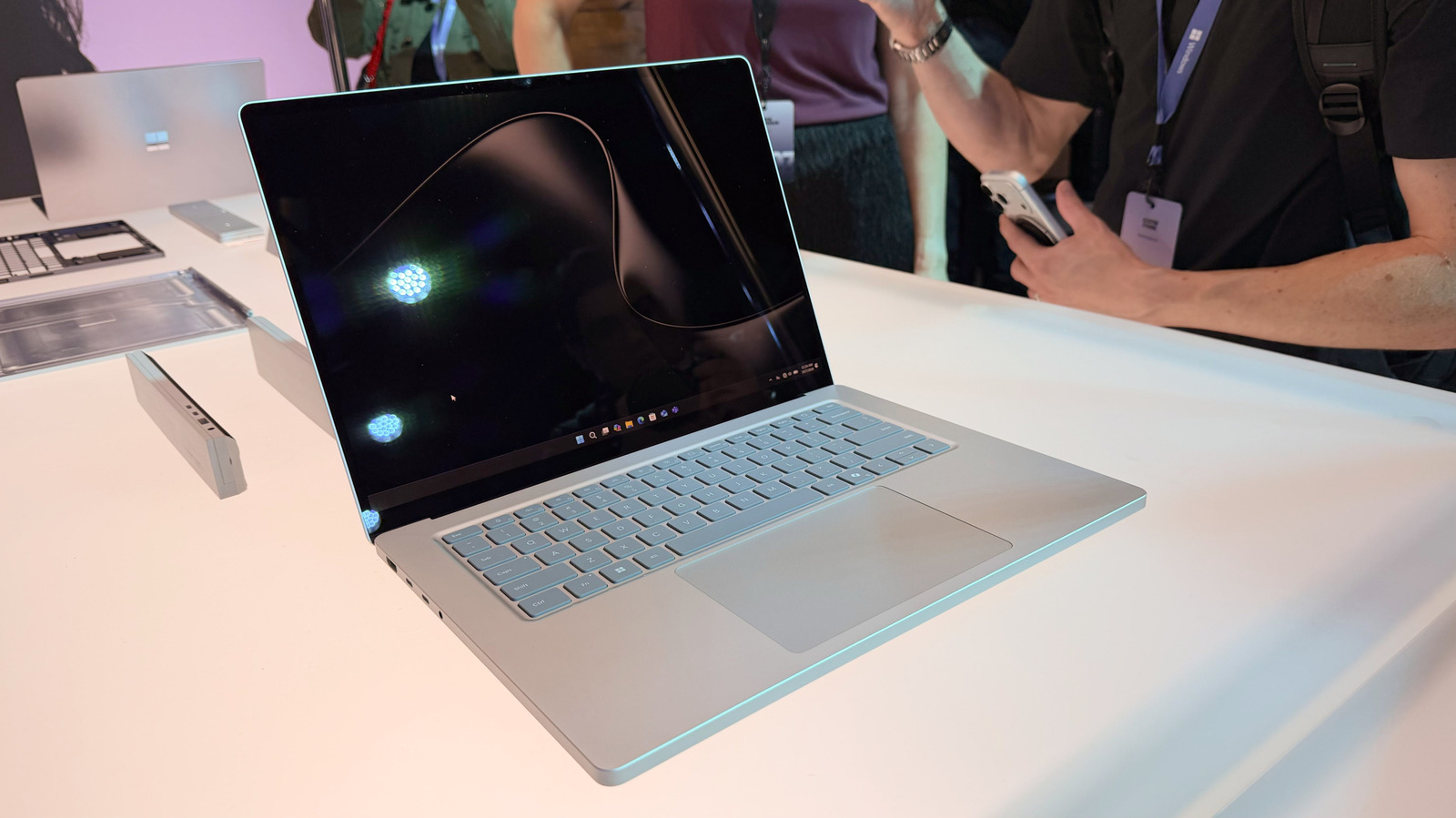
The landscape of high-end personal computing is undergoing a structural paradigm shift, driven largely by the relentless evolution of artificial intelligence workloads and the architectural wake-up call delivered years ago by Apple Silicon. Into this competitive crucible steps the Surface Laptop Ultra, a formidable machine that made its initial debut in June before taking center stage at a recent San Francisco showcase.
Priced at a formidable starting point of $2,599, the Surface Laptop Ultra is unashamedly aimed at power users, creative professionals, and, above all, AI developers who require uncompromising workstation performance in a portable chassis.
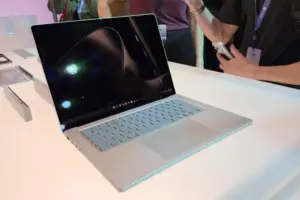
Powering this machine is NVIDIA’s groundbreaking RTX Spark platform, fusing a custom-built Arm-based CPU architecture with powerful integrated neural processing units (NPUs) and graphical processing power capable of supporting up to a staggering 128GB of unified RAM. While its exterior aesthetic channels the minimalist, straightforward elegance of a MacBook Pro clone—forsaking gimmicky hinges or eccentric form factors for a clean aluminum shell—its inner hardware represents a monumental leap forward for Windows notebooks.
This hands-on analysis explores the design philosophy, target demographic, performance metrics, and industry implications of Microsoft and NVIDIA’s latest joint venture.
Detailed Chronology
The Genesis and Evolution of the High-End Surface
- June: Microsoft first quietly teases the Surface Laptop Ultra, positioning it as the most powerful Surface laptop ever manufactured. At the time, industry analysts note its striking visual resemblance to Apple’s MacBook Pro lineup, lacking the signature quirks of past Surface devices like the Laptop Studio.
- The Launch Event (San Francisco): Microsoft and NVIDIA executives take the stage to formally unveil the machine and the underlying RTX Spark ecosystem. The event highlights concepts of "hybrid intelligence"—seamlessly blending local and cloud-based AI processing—and showcases the machine’s capability to run massive local language and machine learning models.
- Hands-On Evaluation: Industry reviewers get their first prolonged, physical look at the hardware, testing its keyboard ergonomics, haptic trackpad responsiveness, magnetic charging solutions, and baseline gaming and AI workloads.
Supporting Context & Metrics: Architecture and Hardware Design
Form Meets Function: Build Quality and Ergonomics
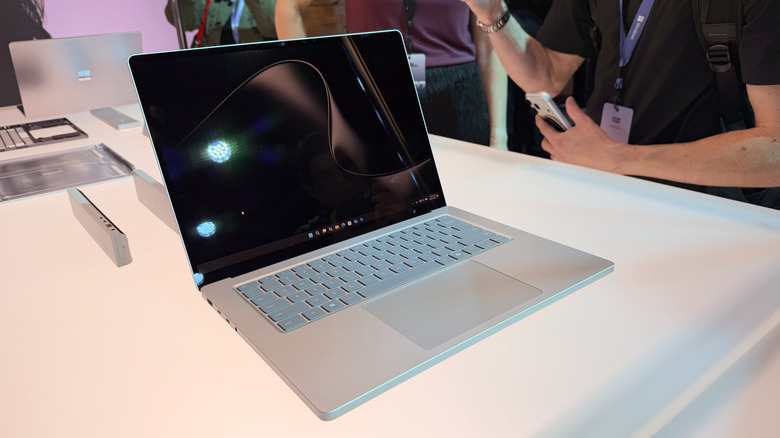
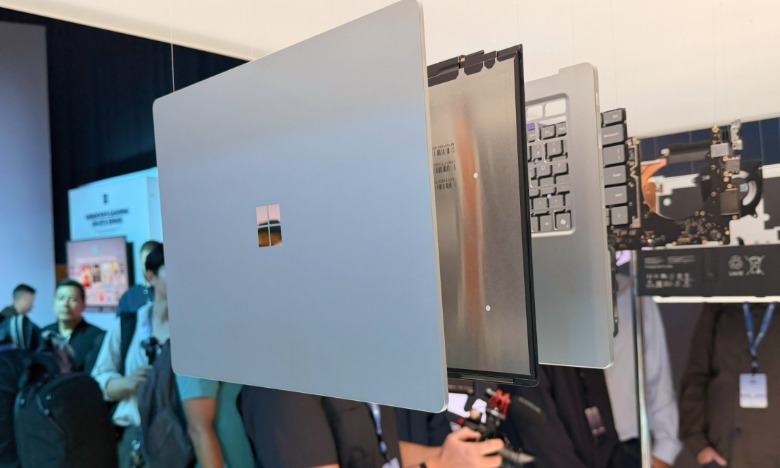
At first glance, the Surface Laptop Ultra avoids ostentation. There are no flashing RGB lights, folding screens, or precarious mechanical hinges. Instead, Microsoft opted for a clean, anodized aluminum chassis that exudes understated luxury.
- Weight and Dimensions: Weighing in just under 4.5 pounds, the 16-inch workhorse is noticeably lighter than Apple’s competing 16-inch MacBook Pro, while maintaining an identical structural rigidity.
- Keyboard and Trackpad: Microsoft continues its tradition of stellar keyboard design, offering keys with deep, satisfying tactile feedback. Accompanying the keyboard is a massive, highly responsive haptic touchpad that tracks gestures smoothly without dead zones.
- Thermal Management: Given the intensive nature of local AI model training and sustained gaming workloads, the thermal architecture is built to handle high TDPs quietly and efficiently, minimizing thermal throttling whether plugged into a wall outlet or running purely on battery power.
+-------------------------------------------------------------------------+
|                  SURFACE LAPTOP ULTRA: QUICK METRICS                    |
+--------------------------+----------------------------------------------+
| Starting Price           | $2,599                                       |
| Form Factor              | 16-inch Premium Laptop                       |
| Weight                   | Under 4.5 lbs                                |
| Maximum RAM Capacity     | Up to 128GB Unified Memory                   |
| Core Architecture        | Arm-based CPU + NVIDIA RTX Spark Platform    |
| Target Audience          | AI Developers, Power Users, Researchers      |
+--------------------------+----------------------------------------------+
The NVIDIA RTX Spark Platform and Arm Integration
The real story of the Surface Laptop Ultra lies beneath the hood. Built around NVIDIA’s RTX Spark platform, the laptop leverages an Arm-based CPU architecture paired with robust unified memory bandwidth.
Historically, Windows laptops running on battery power experienced significant performance degradation compared to when they were tethered to an AC adapter. However, the combination of Arm’s power efficiency and NVIDIA’s deep architectural integration allows the Surface Laptop Ultra to maintain peak performance thresholds regardless of power sources.
During testing, the machine ran demanding applications—such as Gears of War: E-Day at resolutions slightly exceeding 1080p—with flawless frame rates both on battery and wall power. More importantly, this processing headroom unlocks unprecedented capabilities for data scientists and software engineers who previously looked to macOS ecosystems out of sheer necessity.
Innovative Connectivity: The Magnetic USB-C Cable
Ports on high-end laptops have long been a battleground of compromises, but the Surface Laptop Ultra gets nearly everything right. It includes a robust selection of standard inputs:
- Multiple USB-C ports
- A full-sized HDMI output
- A dedicated, full-sized SD card slot
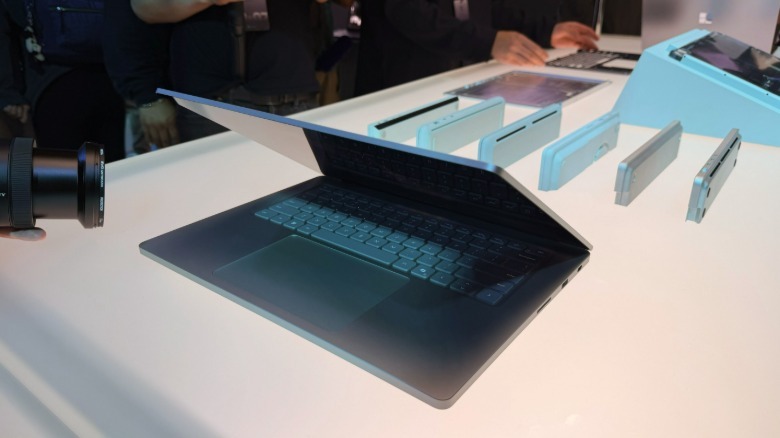
However, the standout hardware innovation is its offset USB-C port designed specifically for Microsoft’s custom magnetic USB-C charging cable. Replacing the proprietary Surface Connectors of generations past, this cable automatically snaps into place when brought near the port, preventing accidental desk-dives if someone trips over the cord.
Crucially, because the underlying interface is standard USB-C, users can charge the laptop with any standard USB-C power brick on that same port. Conversely, the magnetic cable itself can be reversed on the power adapter to act as a standard USB-C cable for other peripherals, showcasing a rare example of proprietary convenience meeting open-standard utility.
Official Statements and Industry Reactions
The reception of the Surface Laptop Ultra highlights a major philosophical shift within the Windows ecosystem. For years, Windows developers working with heavy local machine learning models felt constrained by hardware limitations or forced to migrate to Apple Silicon hardware boasting 128GB of unified memory.
Aidan Pinero, an AI researcher and Master’s student at UCSC Silicon Valley, captured the sentiment of many technical professionals at the launch event:
"I’ve been jealous of my friends running MacBook Pros with 128GB of RAM. Finally having a Windows system that can run large AI models with this level of flexibility thanks to NVIDIA’s RTX Spark platform changes the game for our workflow."
Microsoft and NVIDIA leadership heavily emphasized the concept of hybrid intelligence—the strategic distribution of computational tasks between local device hardware and cloud-based infrastructure. By bringing enterprise-grade local processing power directly into a 16-inch portable form factor, the companies aim to capture a market of software engineers who demand low-latency AI inference directly on their local machines.
Future Outlook: The Shadow of Apple Silicon and the Road Ahead
To understand the long-term trajectory of the Surface Laptop Ultra and the broader RTX Spark ecosystem, one must examine the competitive pressure exerted by Apple.
Six years ago, Apple’s introduction of Apple Silicon transformed the personal computer market. By unifying CPU, GPU, and NPU architectures onto a single package with high-bandwidth unified memory, Apple delivered immediate, tangible benefits to every consumer buying a Mac—from casual web browsers to enterprise software engineers.
The Surface Laptop Ultra, by contrast, is an elite niche product. At a starting price of $2,599, it is explicitly not built for average computer users. It is a specialized tool for a specialized class of workers: AI developers, machine learning researchers, and extreme power users.
What Lies Ahead?
- Trickle-Down Technology: Just as high-end graphics and processing capabilities eventually migrate down to consumer-grade hardware, the innovations pioneered by RTX Spark and Arm-based Surface laptops will likely find their way into more affordable mid-range laptops over the next several product cycles.
- Software Optimization: As more developers adopt RTX Spark-enabled machines, the software ecosystem for Windows on Arm will mature exponentially, reducing reliance on emulation layers and unlocking native performance across a wider array of enterprise applications.
- The Battle for AI Dominance: With Microsoft, NVIDIA, and Apple all vying to dictate how local and cloud AI interact on personal hardware, the Surface Laptop Ultra serves as Microsoft’s opening salvo in the next decade of personal computing dominance.
While the Surface Laptop Ultra remains a luxury purchase for the vast majority of consumers, its gorgeous design, uncompromising build quality, and sheer computational muscle prove that Microsoft is no longer content playing catch-up—it is ready to lead the charge into the AI-native hardware era.