
Executive Overview: The Invisible Tug-of-War
A simple search for a "cordless drill" on Walmart’s website reveals a modern digital marketplace paradox. At the top of the results page sits a prominent brand module dedicated to Greenworks, followed immediately by four sponsored product listings. In fact, a shopper must scroll past six paid advertisements before encountering a single organic search result.
While this may seem like a standard feature of modern e-commerce, it underscores a profound, quiet struggle playing out across the enterprise retail landscape. As retailers scramble to capitalize on the lucrative "retail media" gold rush—where brands pay to secure prime digital real estate—they are increasingly forced to reconcile two competing philosophies: the merchant’s desire to curate the most relevant, high-converting products, and the media team’s mandate to drive short-term advertising revenue.
This article explores the growing tension between merchandising and retail media, the governance challenges that arise when these two departments collide, and the critical role of "relevance" in maintaining a sustainable digital storefront.
Detailed Chronology: From Organic Search to Auction-Based Real Estate
Historically, e-commerce search results were governed by a singular, straightforward logic: relevance. Algorithms were designed to match a user’s intent with the highest-rated, best-selling, and most pertinent products in the catalog. The goal was simple—maximize the conversion rate by putting the "right" product in front of the shopper as quickly as possible.
However, the rise of retail media networks (RMNs) has fundamentally altered this ecosystem. Over the past five years, the retail industry has realized that the digital traffic flowing through their sites is an asset as valuable as their physical inventory. By introducing programmatic advertising auctions into search results and category pages, retailers have unlocked a massive, high-margin revenue stream.
The current state of affairs, as seen in the Walmart "cordless drill" example, represents a shift from pure algorithmic curation to a hybrid model. In this model, the page layout is no longer solely determined by a product’s organic performance metrics (such as sales velocity or review sentiment). Instead, a portion of the page is now reserved for "paid prominence."
This transition has occurred in three distinct phases:
- The Experimental Phase: Retailers began by placing banner ads on the periphery of the site to avoid interfering with the core shopping experience.
- The Integration Phase: Ads were moved directly into the search results and category grids, appearing as "sponsored" products that blended in with organic listings.
- The Optimization Phase (Current): Retailers are now using sophisticated bidding algorithms to determine exactly how many sponsored slots the site can sustain before shoppers begin to bounce or report a decline in search quality.
Supporting Context: The Governance Dilemma
The primary challenge for large-scale retailers is not technical, but structural. In most enterprise organizations, the merchandising team and the retail media team operate as siloed entities with distinct, and often conflicting, Key Performance Indicators (KPIs).
The Merchandising Mandate
The merchandising team is typically measured by metrics that reflect the health of the core retail business: conversion rates, sell-through velocity, and gross margin. Their objective is to highlight products that satisfy customer needs and drive long-term loyalty. When a merchandiser sees a sponsored product occupying a prime "above-the-fold" position, their instinct is often to view it as an obstruction—a paid placement that may be less relevant to the customer than an organic best-seller.
The Media Mandate
Conversely, the retail media team is measured by ad revenue, share of voice, and advertiser retention. Their success is predicated on ensuring that paying brands receive maximum visibility. They are under pressure to prove the ROI of their platform to vendors, which leads to a structural bias toward maximizing the number of sponsored slots on any given page.
The Asymmetry of Measurement
This organizational divide creates a dangerous imbalance. Ad revenue is immediate, highly attributable, and easily presented on quarterly earnings reports. If a retail media team can generate millions in incremental revenue, it is viewed as a resounding success.
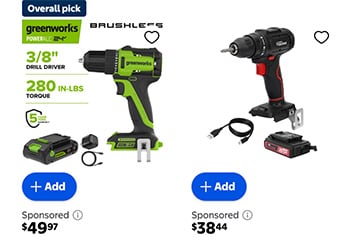
The "cost" of this success—such as a slightly lower conversion rate or a long-term decline in site satisfaction—is often diffuse, delayed, and difficult to isolate. If a shopper decides not to buy a drill because the top six results were paid ads, that "lost sale" is buried in thousands of data points. Consequently, the media team often holds a structural advantage, as their wins are loud and clear, while their potential negative impacts are quiet and hard to quantify.
Official Statements and Industry Insights
The industry is beginning to recognize that more inventory does not necessarily equate to more value. Sherry Smith, President of Retail Media at Criteo, emphasizes that retailers must tread carefully when balancing these competing interests.
"Retailers need to be thoughtful about where and how they introduce advertising," Smith noted in response to inquiries regarding the future of the space. "More inventory doesn’t necessarily mean more value. The focus should be on placements that perform for advertisers, remain useful to shoppers, and create incremental value for the retailer once the costs of running the program are taken into account."
Smith’s perspective highlights the "Golden Rule" of modern retail media: Relevance is the natural boundary. When an ad is relevant, it acts as a service to the customer. When it is irrelevant, it acts as a barrier. If the sponsored drill is exactly what the customer was looking for, the retailer wins, the brand wins, and the shopper wins. The tension only becomes toxic when the advertising auction elevates a mediocre product over a superior one, purely because of a higher bid.
Future Outlook: Establishing Rules for Sharing
As the retail media landscape matures, companies that successfully navigate the "merchandising vs. media" conflict will likely establish strict governance rules to prevent the erosion of the shopping experience. These rules will likely coalesce around three core pillars:
1. The "Relevance-First" Algorithm
Retailers are moving toward hybrid ranking algorithms that weigh "relevance score" alongside "bid amount." Even if a brand is willing to pay a premium, if the product’s relevance score to the user’s search query falls below a certain threshold, the system may suppress the ad. This prevents the "clutter" that frustrates users.
2. The "Performance" Ceiling
Retailers must establish a maximum percentage of page space that can be dedicated to sponsored content. By setting a hard cap—for instance, ensuring that at least 50% of the first "fold" of search results remains organic—retailers can protect the integrity of their search results while still maintaining a lucrative advertising program.
3. Integrated P&L Accountability
To resolve the organizational silo, forward-thinking retailers are beginning to adjust how they measure success. Rather than measuring the media team solely on ad revenue, they are beginning to factor in the "incremental impact" on the total site conversion rate. If ad placements lead to a decline in overall site conversion, the media team’s performance metrics should reflect that, encouraging them to prioritize quality and relevance over sheer volume.
Conclusion: The Path Toward Sustainable Growth
Retail media offers a massive opportunity for retailers to monetize their digital traffic, shopper data, and intent-rich search moments. However, this opportunity is only sustainable if the advertising adds to the commerce business rather than cannibalizing it.
The most successful retailers of the future will be those who view their search results pages not as mere billboards for sale, but as curated experiences. By establishing a culture where merchandising and media operate in concert—rather than in competition—retailers can turn their websites into destinations that are as profitable for the retailer as they are useful for the customer. The goal is not just to sell more ads; it is to sell the right products to the right people, with advertising serving as the bridge, not the barrier.