Executive Overview
In the rapidly expanding ecosystem of generative artificial intelligence, standing out requires more than just raw computational muscle—it demands a strategic balance of accessibility, advanced capability, and cost. As xAI’s Grok navigates the hyper-competitive landscape of over 3,500 frontier AI models in 2026, the question on many users’ minds is straightforward: What can you actually do with Grok for free, and where do the paywalls begin?
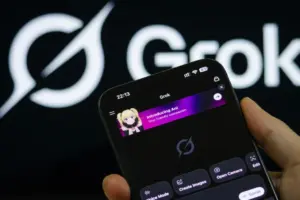
Like most major consumer-facing AI systems today, Grok employs a freemium model. The free tier acts primarily as an introductory portal, granting users casual access to the chatbot via web and mobile interfaces for basic inquiries, fundamental voice interactions, and limited web and X (formerly Twitter) searches. However, this no-cost tier is heavily constrained by strict usage caps, reduced model availability, and a complete absence of heavy-duty generative media tools.
For power users, researchers, coders, and content creators, xAI provides tiered subscription models—most notably SuperGrok and SuperGrok Heavy—alongside specialized business packages. These paid iterations unlock advanced reasoning engines, higher rate limits, priority access during peak hours, and sophisticated media generation tools. Yet, as the AI industry matures in 2026, users are increasingly evaluating whether the price of admission is justified by performance, keeping a wary eye on persistent challenges like hallucinations and prompt misinterpretation.
This comprehensive report explores the exact boundaries of Grok’s free and paid tiers, analyzes what upgrades buy consumers, and provides a strategic roadmap for evaluating whether a subscription is worth your hard-earned money.
Detailed Chronology: The Evolution of Grok’s Access Tiers
To understand how Grok’s pricing and feature distribution arrived at its current 2026 structure, it is essential to trace the strategic milestones of xAI’s consumer rollout.
Phase 1: The Exclusive X Integration (Late 2023 – Early 2024)
When xAI first introduced Grok to the public, availability was severely restricted. Initially positioned as a direct perk for top-tier subscribers of the X platform, Grok was locked behind the paywall of X Premium+ subscriptions. The goal was twofold: drive adoption and monetization of the social media platform while leveraging real-time data feeds to train and ground the model. During this period, there was virtually no free tier to speak of; casual users could only experience Grok through shared screenshots and media clips posted across the platform.
Phase 2: Democratization and the Introduction of Standalone Access (2024 – 2025)
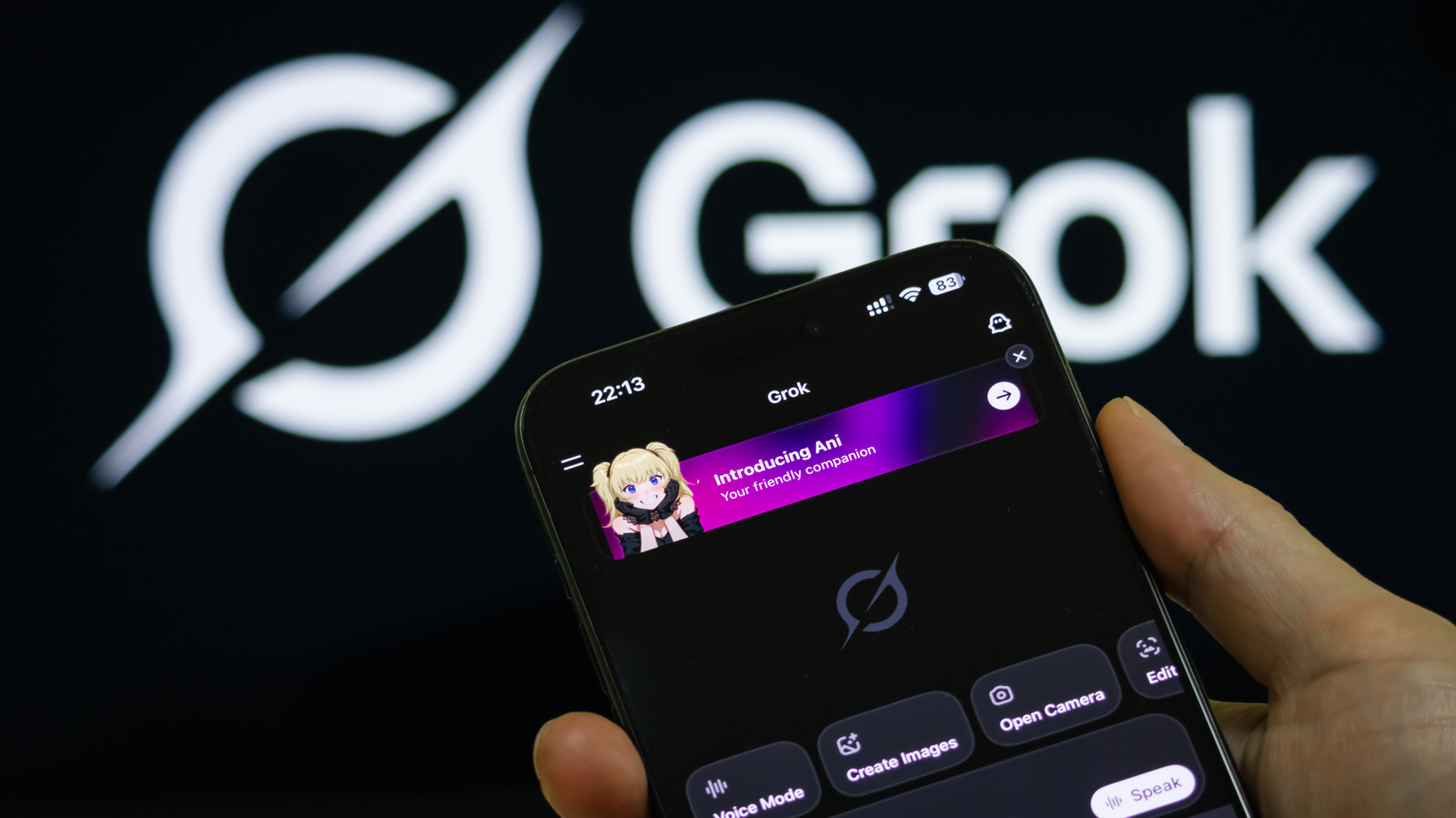
As the generative AI market matured and competitors like OpenAI, Google, and Anthropic aggressively pushed free-to-use tiers to capture market share, xAI realized it needed to lower the barrier to entry. The company began rolling out standalone web and mobile applications for Grok, accompanied by a limited free tier. This allowed everyday users to test the chatbot’s conversational quirks, real-time X search integration, and signature rebellious personality without committing to an X subscription. However, rate limits on this free tier remained notoriously tight, serving primarily as a teaser for what the underlying architecture could achieve.
Phase 3: The Multi-Tiered Enterprise and Consumer Ecosystem (2026)
By 2026, Grok has evolved from a single experimental chatbot into a sprawling family of frontier models tailored to specific workloads. Recognizing that casual texters, hardcore coders, and corporate entities have vastly different needs, xAI structured its offerings into distinct brackets:
- The Free Tier: Tuned for light, sporadic use and basic browsing.
- SuperGrok: The flagship consumer upgrade for heavy users, deep researchers, and creative professionals.
- SuperGrok Heavy: A high-end tier designed for power users with extreme workloads and a need for maximum resource allocation.
- Business & Enterprise Plans: Centralized management frameworks tailored for organizational deployment and API integration.
This evolutionary trajectory reflects a broader industry truth: maintaining massive frontier models is financially unsustainable on pure advertising or goodwill alone, necessitating clear, tiered monetization strategies.
Supporting Context & Metrics: Free vs. Paid Feature Breakdown
Navigating what is free and what is locked behind xAI’s paywalls requires looking closely at the architectural and functional divisions between tiers. The following breakdown highlights the operational differences across Grok’s service levels in 2026.
| Feature / Capability | Free Tier | SuperGrok Tier | SuperGrok Heavy / Enterprise |
|---|---|---|---|
| Primary Use Case | Casual queries, testing, occasional web lookups | Extended research, coding, day-to-day productivity | Extreme workloads, large-scale deployment, API access |
| Usage Limits (Rate Caps) | Extremely strict; resets slowly | Significantly elevated; designed for continuous workflow | Maximum available throughput |
| Model Intelligence | Base models with standard reasoning capabilities | Advanced reasoning models with extended context windows | Most resource-intensive, cutting-edge frontier models |
| Generative Media (Image/Video) | Strictly limited / Restricted to promotional demos | Full access to high-quality image and video creation tools | Priority generation with advanced parameter controls |
| Real-Time X & Web Search | Included with strict frequency caps | Seamless, high-speed integration with priority indexing | Deep enterprise-grade search and analytics integration |
| Priority Access (Peak Hours) | Subject to throttling and wait times during heavy traffic | Guaranteed priority queue positioning | Dedicated infrastructure allocation |
The Reality of Free-Tier Limitations
For users relying exclusively on the free version of Grok, the most immediate bottleneck is the rate limit. While xAI dynamically adjusts these caps based on global infrastructure load and active user demand, free users can expect to hit a hard wall after a handful of intensive prompts—particularly those involving multi-step reasoning or long-form text analysis.
Furthermore, xAI has strategically reserved its most resource-intensive features—such as high-fidelity image and video generation tools—for paying customers. While occasional promotional windows or minor media-generation knick-knacks may appear on the free tier, anyone looking to reliably produce visual assets must look toward SuperGrok.
Official Statements and Industry Philosophy
xAI’s overarching philosophy regarding Grok has always centered on transparency, speed, and real-time access to information, contrasted with the heavily sanitized outputs of competing models. Company leadership and product documentation emphasize that paid tiers are not merely about unlocking arbitrary software locks, but about funding the immense computational overhead required to run state-of-the-art neural networks.
In official product descriptions on the xAI pricing portal, SuperGrok is marketed explicitly as the "full power" version of the assistant. The messaging underscores that higher subscription tiers are engineered to remove friction—offering longer conversation memory, access to deeply analytical reasoning models, and the computational headroom needed to process complex programmatic tasks.
Industry analysts note that xAI’s pricing strategy mirrors the broader maturation of the generative AI market in 2026. Companies are moving away from loss-leader models that subsidize free users indefinitely, choosing instead to clearly segment their audiences:
- Casual consumers get a functional, lightweight chatbot to handle quick everyday tasks.
- Professional power users subsidize the ecosystem through monthly subscriptions in exchange for productivity gains.
- Enterprises provide the steady, recurring revenue streams necessary to fund next-generation AI research and cluster expansion.
Future Outlook: Where Grok and Consumer AI Are Heading
As we look beyond 2026, the battleground for consumer AI is shifting away from simple conversational fluency toward autonomous execution, multimodal depth, and deep integration into daily digital workflows.
1. The Erosion of Static Tiers
The rigid line between "free" and "paid" is expected to blur. Future iterations of Grok—and competing services—will likely transition toward consumption-based token models or context-aware dynamic pricing, where users pay precisely for the computational complexity of the specific tasks they execute.
2. The Persistence of the Hallucination Challenge
No matter how much a user pays for SuperGrok or SuperGrok Heavy, capital investment does not buy infallibility. AI models in 2026 remain inherently susceptible to hallucinations, misread prompts, and factual drift—particularly when synthesizing breaking news or rapidly shifting trends on social media platforms like X. As xAI continues to refine Grok’s real-time search capabilities, the burden will remain on the end-user to practice rigorous fact-checking.
3. Strategic Advice for Users
When evaluating whether Grok deserves a permanent spot in your digital toolkit, the best approach is pragmatic:
- Start on the Free Tier: Test the waters. Evaluate Grok’s unique interface, voice interactions, and search capabilities without spending a dime.
- Assess Your Bottlenecks: If you find yourself constantly hitting rate limits, struggling with complex coding logic, or requiring advanced image and video generation, the upgrade path becomes clear.
- Cross-Reference Your Sources: Treat Grok as a powerful collaborative assistant and research accelerator rather than an infallible oracle. Always verify critical information against primary sources, regardless of your subscription tier.
Ultimately, Grok’s tiered ecosystem in 2026 offers a flexible entry point for casual enthusiasts while reserving its raw computational horsepower for those who need professional-grade AI capabilities at their fingertips.