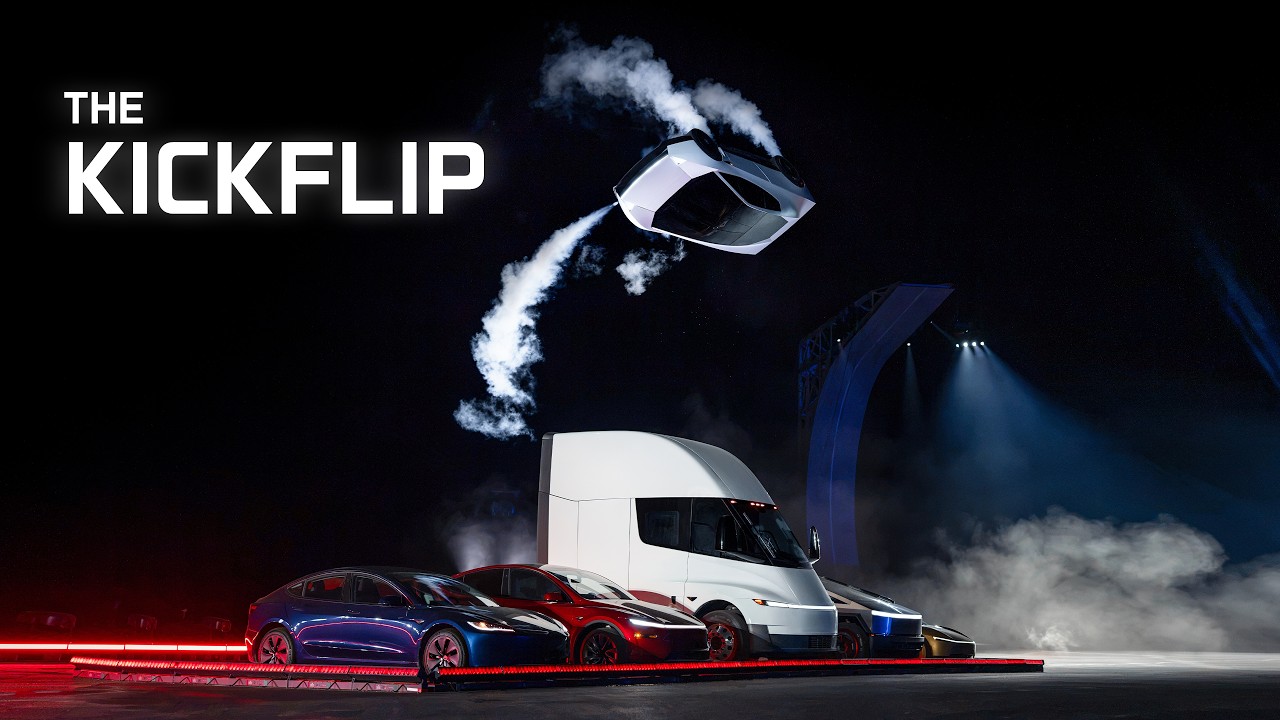
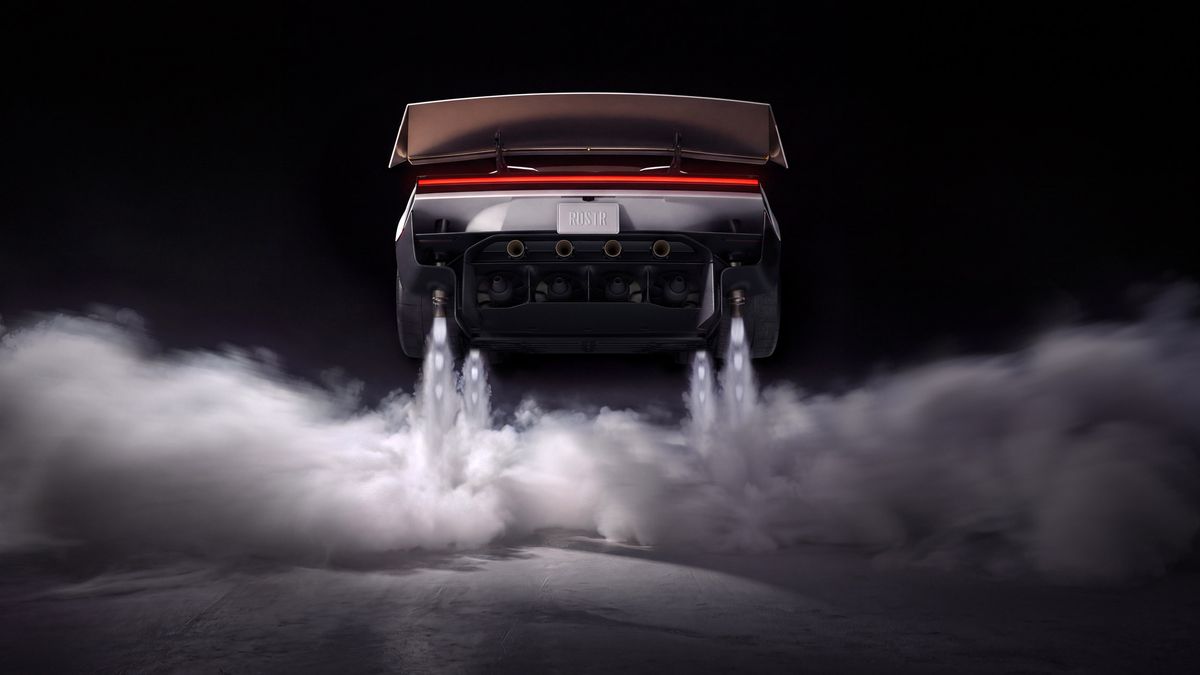
The long-dormant dream of personal aerial mobility took a theatrical, if eccentric, leap forward when Tesla showcased its concept model for the long-promised rocket-boosted Roadster. Livestreamed from SpaceX’s Texas testing facility, the automotive world watched as a driverless concept vehicle executed a pre-programmed sequence: rocketing up a steel ramp, performing a dramatic kickflip off a half-pipe, and gliding gracefully back to terra firma. Chief Executive Elon Musk took to the stage to declare, “Flying cars are real”—a statement that immediately ignited fierce debate across the global automotive, aerospace, and design sectors.
First promised nearly a decade ago in 2018, the next-generation Tesla Roadster has become a symbol of both the company’s boundary-pushing engineering ambitions and its notorious timeline slippages. Originally slated for customer deliveries by 2020, the vehicle’s release window has now been pushed back to 2028. Beneath the stagecraft and David Copperfield-esque illusions, however, lies a deeper industrial narrative. Tesla is no longer operating in a vacuum. As legacy luxury marques and aggressive EV startups crowd the high-performance electric vehicle market—and as competitors like Alef Aeronautics quietly pioneer functional vertical-takeoff solutions—Tesla’s reliance on headline-grabbing stunts raises critical questions.
Is the rocket-boosted Roadster a genuine technological milestone, or has the market grown weary of a visionary CEO who continually shifts the goalposts? This in-depth investigation examines the mechanics, market context, and competitive pressures surrounding Tesla’s most audacious vehicle yet.
Detailed Chronology: From Twitter Promise to Texas Stunt
To understand the weight of yesterday’s demonstration, one must trace the timeline of the second-generation Roadster, a vehicle that has spent nearly as much time in the realm of science fiction as it has in actual development.
November 2017: Tesla stuns the automotive world during the Semi truck unveiling by unexpectedly pulling a brand-new, all-electric Roadster out of the trailer. Elon Musk boasts specs that sound physically impossible at the time: 0 to 60 mph in 1.9 seconds, a top speed exceeding 250 mph, and a 620-mile range. Reservations immediately open, requiring substantial upfront deposits.
June 2018: Musk takes to Twitter (now X) to tease a radical evolution of the concept. He announces a forthcoming "SpaceX option package," suggesting the car could feature roughly 10 small rocket thrusters powered by cold gas or compressed air to dramatically enhance acceleration, top speed, cornering, and braking. He famously muses, "Maybe they will even allow a Tesla to fly."
2020–2021 (The First Delays): Initially targeted for a 2020 market launch, the Roadster is pushed back as Tesla prioritizes scaling production of the Model Y, navigating global supply chain disruptions, and developing the Cybertruck. Musk reassures investors and enthusiasts that engineering work continues behind closed doors.
2022–2023 (The Cybertruck Interlude): While the Roadster remains stalled, attention shifts to the polarizing Cybertruck. During this period, Musk makes a series of sensational claims regarding vehicle capabilities, including his assertion that the Cybertruck would be "waterproof enough to serve briefly as a boat." Critics begin noting a growing pattern of hyperbolic marketing claims that blur the line between utility and spectacle.
Yesterday: Tesla hosts a heavily choreographed, livestreamed demonstration at SpaceX’s Texas testing facility. The concept Roadster utilizes rechargeable ultra-high-pressure air tanks, a fan suction system to clamp itself to a steel ramp, and directional thrusters to execute a vertical "hop" and a mid-air kickflip. Musk officially updates the timeline, placing potential deliveries in 2028.
Technical Breakdown: Under the Hood of the "Flying" Roadster
Tesla’s Texas demonstration was visually arresting, but automotive engineers and aerospace experts have been quick to dissect the physical reality behind the performance. The concept vehicle showcased at the SpaceX facility relies on a radical hybridization of automotive design and aerospace technology.
The Propulsion and Suction Mechanics
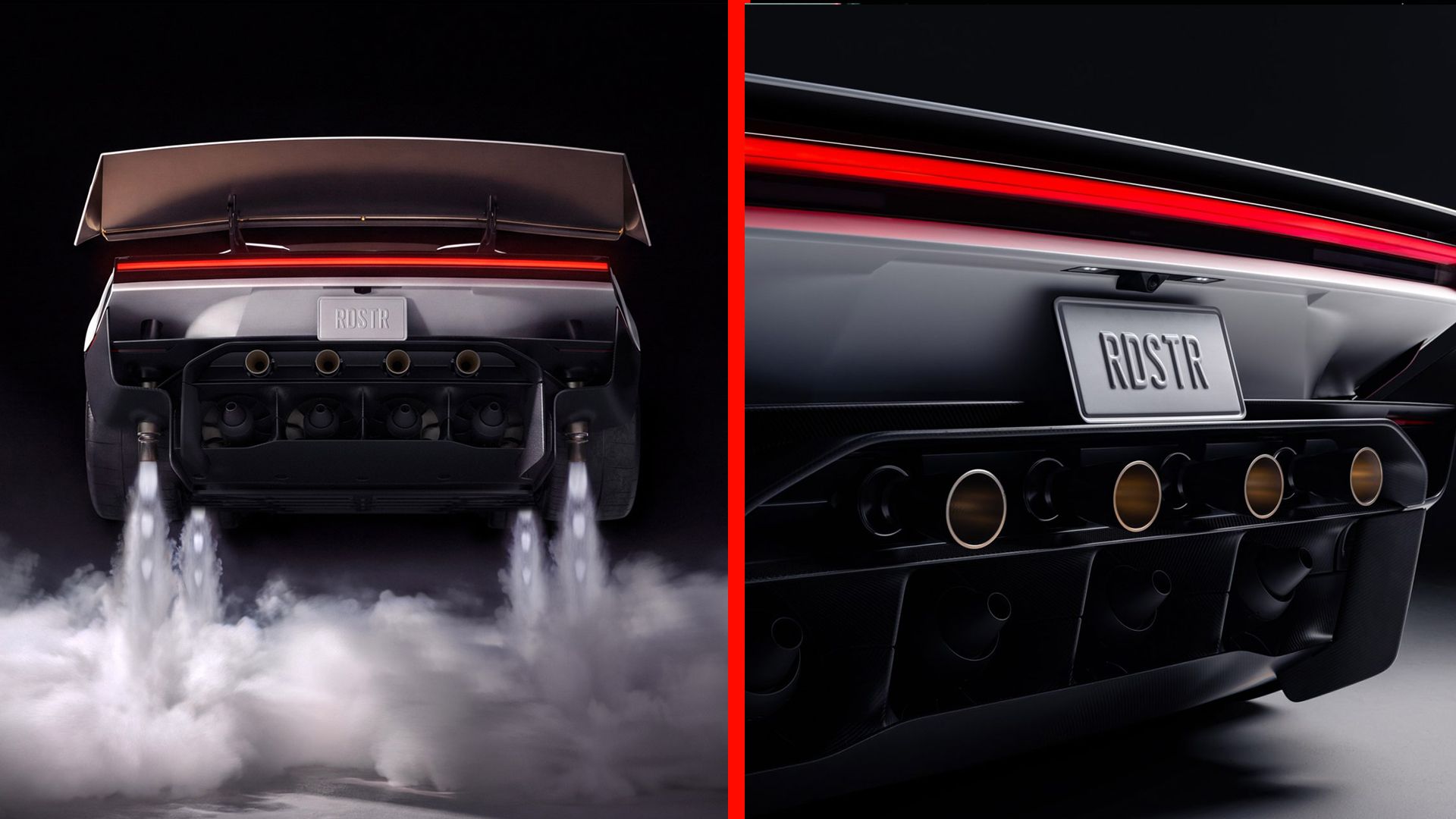
Unlike true flying cars or vertical takeoff and landing (VTOL) aircraft designed for sustained aerial transit, the concept Roadster is engineered for short-duration theatrical bursts. The vehicle is fitted with rechargeable "ultra-high-pressure air tanks" designed to achieve vertical propulsion and cushion high-impact landings.
During the demonstration, the car successfully clung to a steep steel ramp via an integrated fan suction system—a technique borrowed from ground-effects racing and historical experimental track cars like the Chaparral 2J. Furthermore, rearward-facing cold-gas thrusters can fire simultaneously to drastically augment linear force, enabling the concept model to achieve a blistering 0 to 60 mph acceleration time of 0.81 seconds under controlled conditions.
Design Language and Aerospace Aesthetics
Tesla’s chief designer, Franz von Holzhausen, noted that the Roadster’s striking, angular architecture and upward-opening scissor doors were directly inspired by an "aerospace aesthetic." Musk reinforced this sentiment during the event, describing the concept vehicle as "what happens when you have a collaboration with the world’s best car company and the world’s best rocket company."
However, these engineering triumphs come with severe compromises. The inclusion of heavy compressed-air tanks, high-pressure valves, and robust thruster assemblies adds considerable deadweight to the chassis. More importantly, the system’s physics dictate strict limitations: the "flying" capability can only last for a matter of seconds before the onboard tanks must be completely refilled. This extreme inefficiency transforms the vehicle’s aerial gymnastics into a brilliant engineering exercise, but a practical dead-end for daily driving.
Supporting Context, Pricing Tiers, and Market Metrics
Tesla has structured the purchasing tiers for the upcoming Roadster to reflect its split identity as both an elite hypercar and a testing bed for experimental tech. According to official details on the Tesla website:
Base Version: Requires a standard £50,000 deposit, offering high-end electric performance without the propulsion boosters.
"Thrust" Variant: Requires a staggering $250,000 deposit, equipping the vehicle with rearward-facing boosters designed exclusively for track-level acceleration gains.
"Rocket" Variant: A single-seater configuration boasting a "full flight system," available strictly by invitation only.
Industry analysts point out that the "Rocket" variant is almost certainly not road-legal. Regulatory bodies across the globe—from the National Highway Traffic Safety Administration (NHTSA) to the Federal Aviation Administration (FAA)—have stringent frameworks that prevent consumers from casually deploying thrusters, jumping over urban traffic, or scaling building facades on public thoroughfares.
Financial and Market Realities
Despite the electrifying spectacle in Texas, the financial markets have responded with visible fatigue. Tesla shares remained down roughly 4.5% following the announcement, extending a broader downward trend that has seen the stock shed over 16% for the year to date.
Financial analysts suggest that investors are growing weary of long-term moonshot announcements that overshadow core manufacturing challenges and declining margins in Tesla’s high-volume vehicle segments. The "boy who cried wolf" phenomenon appears to be taking a toll on investor sentiment, especially as the competitive landscape shifts beneath Tesla’s feet.
Official Statements and Industry Reactions
The competitive ecosystem wasted no time responding to Tesla’s dramatic re-entry into the conversation. The most poignant critique came from rival startup Alef Aeronautics, which has quietly been making steady progress with its own dual-mode electric vehicle, the Model A. Alef has already begun limited hand-built production for controlled testing.
"Welcome, Tesla, to the flying car race; we’ve been here alone for eleven years," remarked Alef CEO Jim Dukhovny immediately following Tesla’s event.
To emphasize the point, Alef published a video on YouTube demonstrating its lightweight Model A performing a controlled hover flight directly over a stationary Tesla Roadster and Cybertruck. Alef noted that the demonstration marked the 1000th recorded flight for their vehicle.
While Tesla’s approach relies heavily on brute-force compressed air thrusters for dramatic, short-duration hops, Alef’s Model A utilizes distributed electric propulsion via eight internal, enclosed propellers integrated seamlessly into a porous, mesh-like carbon-fiber shell. This fundamental divergence highlights two competing philosophies in modern mobility design: Tesla’s penchant for high-octane theatrical disruption versus pragmatic, federally approvable vertical-flight engineering.
Future Outlook: Can Tesla Retain Its Crown?
When the original Roadster was announced in 2017, Tesla enjoyed an undisputed monopoly over the high-end electric vehicle aspirations of the world. Fast forward to 2028—the newly minted delivery target for the rocket-boosted variant—and the automotive ecosystem looks entirely different.
Traditional hypercar titans and luxury stalwarts have fully mobilized. Competitors such as Rimac, Porsche, Xiaomi, and BYD have flooded the market with blistering electric track cars that have steadily eroded Tesla’s technological halo. Furthermore, an upcoming wave of dramatic luxury EVs—including the Jaguar Type-01, the Bentley Torcal, and the highly scrutinized Ferrari Luce—threaten to redefine prestige in the electric era.
Ultimately, yesterday’s theatrical display at SpaceX was a masterclass in drawing media attention. Yet, as regular customers grapple with nearly a decade of delayed promises, the core question remains: does a multi-second rocket hop change the everyday driving experience, or is it merely an expensive distraction from a maturing EV market?
As the industry looks toward 2028, Tesla must prove that it can transition its sci-fi aspirations into scalable, road-legal reality. Until then, the rocket-boosted Roadster remains a breathtaking marvel of engineering—and a potent reminder of the gap between Elon Musk’s imagination and the laws of physics.