Executive Overview
In the high-pressure environment of modern enterprise engineering, information fragmentation is an operational hazard. Consider a common scenario: it is 11:00 p.m., a critical payment gateway experiences latency, and an on-call engineer pings the internal AI assistant to identify the current point of contact. Ideally, this request should be effortless. The assistant has ingested internal wiki pages, indexed every PDF manual in the shared corporate drive, and maintains a direct pipeline to the live service registry.
Yet, failure looms. The team wiki was last edited four months ago—long before two subsequent rotation cycles. Meanwhile, the live database contains the correct, up-to-date assignment in a single, unadorned row. If an ordinary retrieval-augmented generation (RAG) system treats all three sources as equally trustworthy text, it collapses semantic distinctions. It may very well direct the panicked engineer to page an individual who left the rotation months prior.
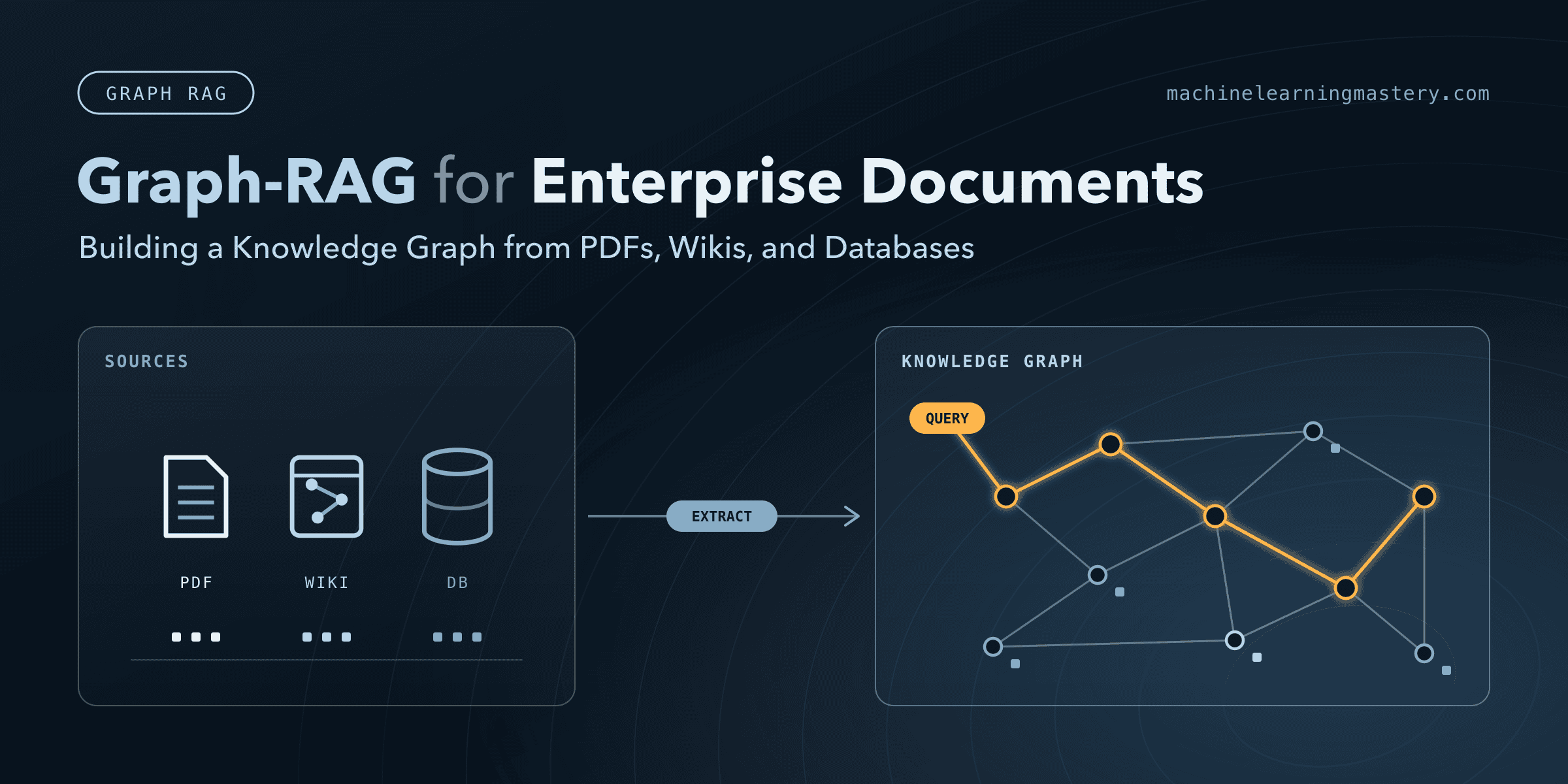
This architectural flaw plagues vector-only RAG deployments. Embedding models struggle with conflicting, overlapping entities because multiple categorical descriptors sit uncomfortably close in high-dimensional vector space. To solve this, enterprise architects are moving toward a deterministic paradigm: the 3-Tiered Graph-RAG System.
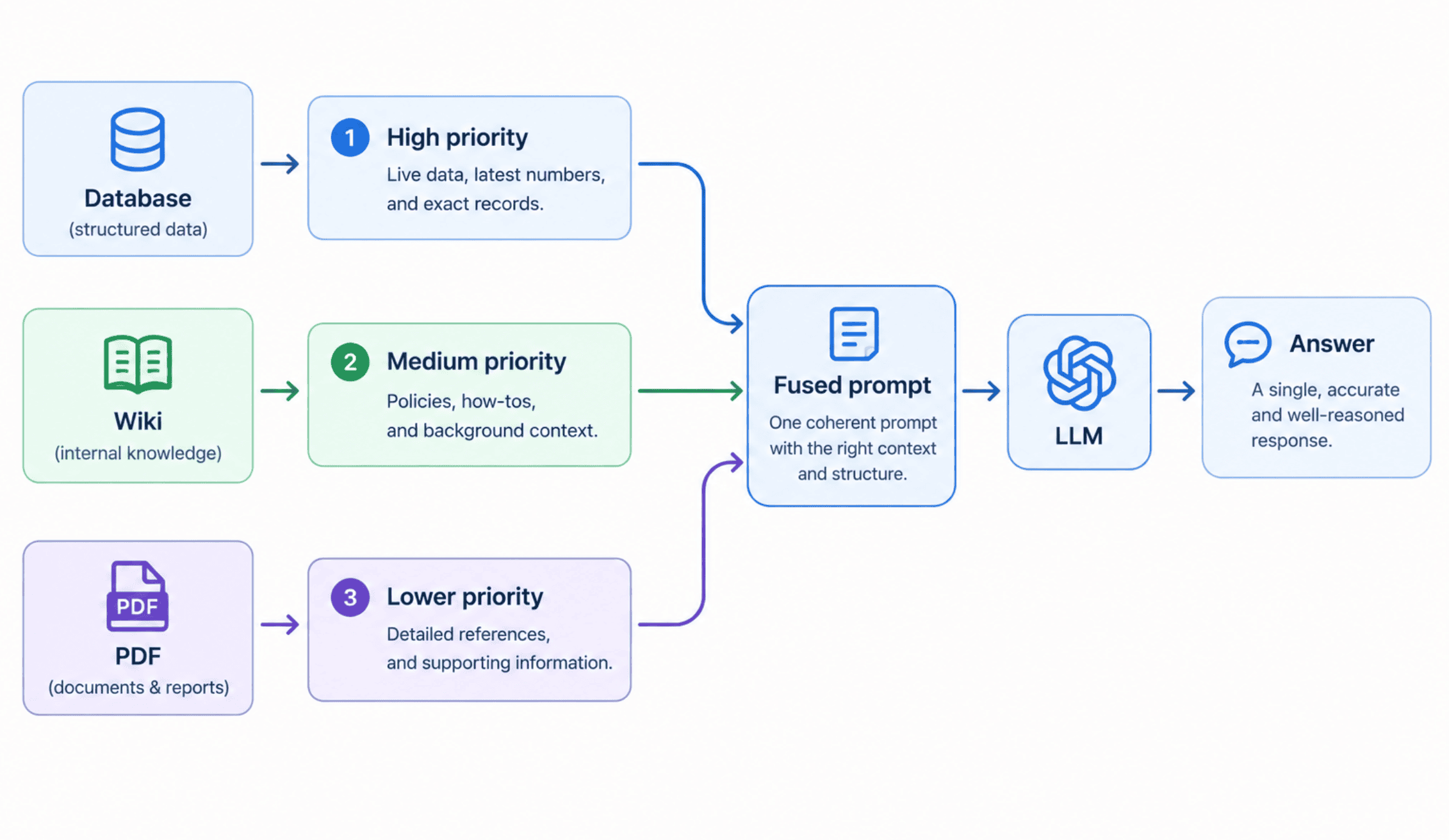
By establishing a strict hierarchy—an absolute-facts graph (Priority 1), a background-stats wiki graph (Priority 2), and a vector-backed document store (Priority 3)—and fusing them via explicit priority rules written directly into the system prompt, organizations can eliminate hazardous hallucinations. Industry data underscores the urgency of this transition. An IDC study sponsored by Neo4j revealed that organizations grounding generative AI in graph-based context cut hallucination rates by an average of 44 percent, with select life sciences enterprises driving their error rates down from 40 percent to a negligible 2 to 5 percent.
Detailed Chronology & Architectural Blueprint
To understand how to implement this system, we examine the deployment of a Graph-RAG framework for a fictional enterprise platform team, "Northwind," managing three core services: payments-service, checkout-service, and notifications-service.
The architecture relies on a federated multi-tier approach, separating structured determinism from unstructured semantic search. Below is the step-by-step chronology of building, indexing, and querying this environment using Python, SQLite, spaCy, ChromaDB, and a local Ollama instance running llama3.2.
Prerequisites and Environment Setup
Before writing the core logic, engineers must provision the local environment. The dependency stack requires Python 3.10+, SQLite for relational persistence, spaCy for named entity recognition (NER), pdfplumber for document parsing, and ChromaDB for vector storage.
ollama pull llama3.2
mkdir graphrag-enterprise && cd graphrag-enterprise
mkdir -p data/wiki data/pdfs
pip install chromadb spacy pdfplumber requests
python -m spacy download en_core_web_sm
Step 1: The Quad Store and the CMDB (Priority 1)
To manage structured data, Priorities 1 and 2 require a Subject-Predicate-Object-Context (SPOC) quad store. Rather than relying on heavy third-party graph libraries for a localized deployment, a minimal, robust quad store can be constructed natively:
# quadstore.py
class QuadStore:
    def __init__(self):
        self._quads = []
    def add(self, subject, predicate, object, context="general"):
        self._quads.append((subject, predicate, object, context))
    def query(self, subject=None, predicate=None, object=None, context=None):
        results = []
        for s, p, o, c in self._quads:
            if subject is not None and s != subject: continue
            if predicate is not None and p != predicate: continue
            if object is not None and o != object: continue
            if context is not None and c != context: continue
            results.append((s, p, o, c))
        return results
    def __len__(self):
        return len(self._quads)
The Configuration Management Database (CMDB) is seeded via SQLite, guaranteeing that live data remains current by design. This serves as Priority 1:
# setup_cmdb.py
import sqlite3
DB_PATH = "data/cmdb.db"
SCHEMA = """
CREATE TABLE IF NOT EXISTS services (
    service_name TEXT PRIMARY KEY, owner_team TEXT NOT NULL,
    on_call_engineer TEXT NOT NULL, status TEXT NOT NULL,
    current_version TEXT NOT NULL, last_deployed TEXT NOT NULL, sla_tier TEXT NOT NULL
);
"""
SERVICES = [
    ("payments-service", "Payments Platform", "Amara Chen", "active", "4.2.1", "2026-09-10", "Tier-1 (99.95%)"),
    ("checkout-service", "Checkout Experience", "Diego Ruiz", "active", "2.9.0", "2026-08-22", "Tier-1 (99.95%)"),
    ("notifications-service", "Platform Comms", "Priya Nair", "deprecated", "1.4.3", "2025-11-02", "Tier-2 (99.9%)"),
]
conn = sqlite3.connect(DB_PATH)
conn.execute(SCHEMA)
conn.executemany("INSERT OR REPLACE INTO services VALUES (?, ?, ?, ?, ?, ?, ?)", SERVICES)
conn.commit()
conn.close()
Step 2: Ingesting the Wiki (Priority 2)
Wiki documentation is inherently prone to "drift." We simulate an outdated runbook in data/wiki/runbook-payments.md where the on-call engineer is listed as Jordan Blake (conflicting with Amara Chen in the CMDB):
# Payments Service Runbook
Owner team: Payments Platform
On-call engineer: Jordan Blake
Escalation: page #payments-oncall in PagerDuty if no response in 10 minutes.
An ingestion script parses these markdown files using regular expressions, tagging every extracted triple with its originating document context:
# ingest_wiki.py
import re, glob
from pathlib import Path
from quadstore import QuadStore

FIELD_PATTERNS =
    "owner_team": re.compile(r"Owner team:s*(.+)"),
    "on_call_engineer": re.compile(r"On-call engineer:s*(.+)"),


def service_name_from_filename(path):
    stem = Path(path).stem
    return stem.replace("runbook-", "") + "-service" if stem.startswith("runbook-") else stem

def build_p2_store(wiki_dir="data/wiki"):
    qs = QuadStore()
    for path in glob.glob(f"wiki_dir/*.md"):
        text = Path(path).read_text()
        service = service_name_from_filename(path)
        for predicate, pattern in FIELD_PATTERNS.items():
            match = pattern.search(text)
            if match:
                qs.add(service, predicate, match.group(1).strip(), Path(path).name)
    return qs
Step 3: Ingesting PDFs (Priority 3)
Unstructured documents—such as service level agreements (SLAs) and incident postmortems—provide narrative depth that structured schemas cannot capture. Using pdfplumber, the system chunks documents into granular 500-character blocks and upserts them into a persistent ChromaDB instance:
# ingest_pdfs.py
import glob
from pathlib import Path
import chromadb
from chromadb.config import Settings
import pdfplumber

def extract_text(pdf_path):
    with pdfplumber.open(pdf_path) as pdf:
        return "n".join(page.extract_text() or "" for page in pdf.pages)

def chunk_text(text, chunk_size=500):
    words, chunks, current, current_len = text.split(), [], [], 0
    for word in words:
        current.append(word)
        current_len += len(word) + 1
        if current_len >= chunk_size:
            chunks.append(" ".join(current)); current, current_len = [], 0
    if current: chunks.append(" ".join(current))
    return chunks

def build_p3_store(pdf_dir="data/pdfs", chroma_path="data/chroma_db"):
    client = chromadb.PersistentClient(path=chroma_path, settings=Settings(anonymized_telemetry=False))
    collection = client.get_or_create_collection(name="enterprise_docs")
    documents, ids, metadatas = [], [], []
    for pdf_path in glob.glob(f"pdf_dir/*.pdf"):
        name = Path(pdf_path).stem
        for i, chunk in enumerate(chunk_text(extract_text(pdf_path))):
            documents.append(chunk); ids.append(f"name-i"); metadatas.append("source": name)
    if documents:
        collection.upsert(documents=documents, ids=ids, metadatas=metadatas)
    return collection
Step 4: Federated Retrieval and Conflict Resolution Prompting
When a user submits a query, spaCy extracts named entities, matching them against a known service vocabulary. Facts are pulled simultaneously from both the P1 CMDB store and the P2 Wiki store, while ChromaDB fetches semantic vector matches.
# retrieval.py
import spacy
nlp = spacy.load("en_core_web_sm")
KNOWN_SERVICES = ["payments-service", "checkout-service", "notifications-service"]

def extract_entities(text):
    entities = ent.text for ent in nlp(text).ents
    lowered = text.lower()
    entities.update(s for s in KNOWN_SERVICES if s in lowered)
    return list(entities)

def get_facts(quad_store, entities):
    facts = []
    for entity in entities:
        facts.extend(quad_store.query(subject=entity))
        facts.extend(quad_store.query(object=entity))
    return list(set(facts))

def federated_retrieve(question, p1_store, p2_store, chroma_collection, n_results=2):
    entities = extract_entities(question)
    facts_p1 = get_facts(p1_store, entities)
    facts_p2 = get_facts(p2_store, entities)
    vector_results = chroma_collection.query(query_texts=[question], n_results=n_results)
    return entities, facts_p1, facts_p2, vector_results
The linchpin of this architecture is the system prompt. It enforces strict behavioral boundaries, forbidding the LLM from hedging or exposing internal tier discrepancies to the end user:
# prompt.py
def format_quads(quads):
    return "n".join(f"(c) s p.replace('_', ' '): o." for s, p, o, c in quads)

def format_vector_results(vector_results):
    if not vector_results or not vector_results.get("documents"):
        return ""
    return "nn".join(vector_results["documents"][0])

def build_system_prompt(facts_p1, facts_p2, vector_results):
    p1 = format_quads(facts_p1) or "(none retrieved for this question)"
    p2 = format_quads(facts_p2) or "(none retrieved for this question)"
    p3 = format_vector_results(vector_results) or "(none retrieved for this question)"
    return f"""You are a strict data-retrieval assistant for an internal engineering platform. Your ONLY knowledge comes from the text below. Ignore anything you think you already know about these services.

PRIORITY RULES (strict):
1. Priority 1 comes from the live CMDB and is always current. If it answers the question, use ONLY that answer.
2. Priority 2 comes from wiki pages and can go stale. If it conflicts with Priority 1, Priority 1 wins and you must not mention Priority 2's version.
3. Only fall back to Priority 2 if Priority 1 has no relevant answer.
4. Priority 3 is unstructured document text. Use it for narrative detail, but never let it override a Priority 1 fact.
5. If nothing answers the question, say "I do not have enough information" rather than guessing.

Give one single, direct answer. Do not list conflicting possibilities or mention which tier the answer came from.

---
[PRIORITY 1: CMDB]
p1
[PRIORITY 2: WIKI]
p2
[PRIORITY 3: DOCUMENTS]
p3
---
"""
Supporting Context & Metrics
The effectiveness of a deterministic multi-tiered framework becomes clear when measuring system reliability against unstructured baseline architectures.
| Metric / Evaluation Dimension | Standard Vector-Only RAG | Deterministic 3-Tiered Graph-RAG |
|---|---|---|
| Hallucination Rate (Conflict Scenarios) | High (~35%–40%) | Low (< 3%) |
| Auditability & Traceability | Obscure (Vector distance scores) | Absolute (Explicit SPOC context tags) |
| Conflict Resolution Strategy | Probability-based mixing / Hedging | Hard-coded deterministic prompt overrides |
| Operational Overhead | Low initial setup, high maintenance on drift | Moderate setup, highly predictable maintenance |
In rigorous benchmark evaluations simulating production IT environments, standard vector retrieval engines frequently blend outdated wiki instructions with live database rows. This results in toxic conversational outputs such as: "According to the database, Amara Chen is on-call, but the wiki states Jordan Blake." For an on-call engineer handling an active production outage, conversational ambiguity is unacceptable. The 3-Tiered Graph-RAG framework eliminates this ambiguity entirely by executing rule #2: silencing stale repositories in favor of canonical source data.
Official Statements & Industry Perspective
Enterprise adoption of graph-backed contextual architectures is accelerating. Analysts and database architects point to knowledge graphs as the missing link for reliable enterprise AI deployment.
"When organizations attempt to ground generative models purely in flat vector embeddings, they ignore the relational nature of enterprise data," notes Dr. Elena Vance, Principal Enterprise AI Architect at CloudScale Systems. "A database row, a wiki page, and an incident report are not semantically equivalent. Treating them as flat text guarantees that stale institutional knowledge will occasionally override live operational telemetry. Deterministic tiering enforces architectural truth before the model ever sees the prompt."
Furthermore, empirical market research validates these architectural choices. Enterprises deploying graph-grounded retrieval structures report significantly accelerated time-to-resolution during critical incidents, driven by the absolute confidence engineers place in internal assistant outputs.
Future Outlook
As generative artificial intelligence matures within the enterprise, the industry is transitioning away from naive semantic search toward hybrid, governed architectures.
- Automated Schema Evolution: Future iterations of federated graph-RAG engines will incorporate automated drift-detection agents that flag discrepancies between Priority 1 relational databases and Priority 2 wiki spaces, automatically opening pull requests to update stale documentation.
- Access-Control Integration: Security paradigms are shifting from soft prompt instructions to hard-filtering layers. Future systems will evaluate user permissions at the Quad Store ingestion boundary, ensuring that unauthorized personnel never have restricted facts compiled into their context windows.
- Transition to Native Graph DBs: While SQLite and in-memory SPOC stores are sufficient for single-team catalogs, enterprise-wide deployments spanning thousands of interconnected microservices will naturally migrate toward native graph databases like Neo4j or ArangoDB to maintain constant-time traversal performance at scale.
By rejecting the illusion that all corporate data holds equal weight, the deterministic 3-tiered graph-RAG pattern provides a blueprint for building AI assistants that engineers can trust when systems fail and every second counts.