Executive Overview
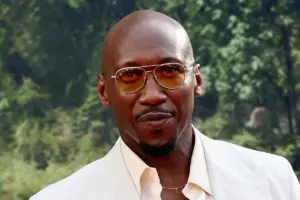
In the upper echelons of contemporary cinema, few actors command the critical reverence and peer respect of Mahershala Ali. As a two-time Academy Award winner—securing the Best Supporting Actor statuette for Moonlight (2016) and Green Book (2018)—Ali occupies a rare tier of artistic distinction. Yet, during a candid, wide-ranging appearance on the 7PM in Brooklyn podcast, hosted by former NBA star Carmelo Anthony and media personality Kazeem “Kaz” Famuyide, Ali stripped away the glossy veneer of Hollywood prestige to reveal a sobering truth: two golden Oscars do not insulate an actor from the grinding, precarious realities of the industry.
Ali’s revelations shed light on a profound disconnect between critical validation and material access. According to the actor, awards do not create roles; they do not bend studio greenlight processes to an artist’s will; and, most importantly, they do not solve the fundamental industry-wide deficit of compelling, substantive material.
This structural limitation serves as the backdrop not only for Ali’s selective career trajectory but also for his recent creative ventures, including his collaboration with director Bassam Tariq on the critically discussed drama Your Mother Your Mother Your Mother. Tariq and Ali’s intertwined artistic journeys—marked most visibly by the high-profile, public unraveling of Marvel Studios’ Blade reboot—offer a compelling case study in the perils of modern franchise filmmaking. Together, their experiences paint an unvarnished picture of an industry grappling with corporate inertia, script development crises, and the ongoing struggle for authentic representation that transcends tokenism.
Detailed Chronology: The Anatomy of Industry Realities and Franchise Collapses
To understand Mahershala Ali’s current industry positioning, one must trace the chronological milestones that have defined his ascent, his frustrations, and his recent professional pivots.
The Oscar Peak and Its Immediate Aftermath (2016–2018)
- February 2017: Mahershala Ali achieves historic distinction at the 89th Academy Awards, taking home the Best Supporting Actor trophy for his tour-de-force performance as Juan in Barry Jenkins’ groundbreaking indie drama Moonlight. The win makes him the first Muslim actor to win an Oscar.
- February 2019: Ali cements his critical dominance by winning his second Best Supporting Actor Oscar for Peter Farrelly’s racial drama Green Book.
- The Industry Paradox: Rather than unlocking an endless horizon of bespoke leading roles, these consecutive victories thrust Ali into a rarified air where the volume of good material remains stubbornly scarce. The awards validated his immense talent to the public, but the pipeline of studio projects featuring complex, multifaceted Black protagonists remained narrow.
The Blade Development Quagmire (2019–2024)
- July 2019: At San Diego Comic-Con, Marvel Studios President Kevin Feige shocks and thrills the entertainment world by casually announcing that Mahershala Ali will star as the Daywalker in a reboot of Blade.
- The Directorial Turmoil: Bassam Tariq is initially tapped to helm the project, bringing a distinct indie-auteur vision to the superhero genre. However, behind the scenes, the production descends into chaos. As Tariq would later reveal, the studio attempts to build a massive tentpole film and cast actors without a finished, functioning script.
- September 2022: With creative differences mounting and the script remaining in an unresolved state, Bassam Tariq officially exits the director’s chair just weeks before scheduled principal photography. Subsequent directors and writers cycle through the project, delaying it indefinitely.
- Late 2024–2025: Marvel Studios officially removes Blade from its release calendar, leaving its future entirely uncertain. Kevin Feige publicly brands the stalled project as the "biggest failure" of his career—a sentiment that Ali openly echoes in subsequent press tours, validating the unprecedented public admission of a corporate misfire.
Artistic Realignment and Independent Resilience (2025–Present)
- September 25, 2025: Seeking creative control and narrative integrity, Ali pivots firmly back to independent cinema, starring in Bassam Tariq’s deeply personal and formally daring film Your Mother Your Mother Your Mother.
- Recent Media Appraisals: Ali appears on 7PM in Brooklyn, dismantling the myth of Hollywood meritocracy, followed by extensive press retrospectives from Tariq and Ali unpacking the systemic dysfunction that dismantled Blade.
Supporting Context & Metrics: The Mathematics of Hollywood Material
To fully appreciate Mahershala Ali’s critique of the studio system, one must examine the underlying mechanics of content production, casting pipelines, and systemic representation in Hollywood.
The Scarcity of Substantive Material
Ali’s central thesis on the 7PM in Brooklyn podcast focused on a harsh economic and creative reality: there are significantly more good actors than there are good scripts.
[Total Active Actors]
        │
        ├──> Vastly Outnumbers ──> [Available Good Material / Scripts]
        │
        └──> Even Further Outnumbers ──> [Greenlit Projects Suited for Specific Talent]
When breaking down this dynamic, industry analysts point to several compounding factors:
- Risk-Averse Corporate Financing: Major studios and streamers increasingly rely on recognizable intellectual property (IP), pre-branded franchises, and algorithmic safety nets. This stifles mid-budget original storytelling where actors like Ali traditionally thrive.
- The Greenlight Bottleneck: Ali noted that the vast majority of greenlit projects simply do not contain roles tailored to his demographic, age, or artistic range. Consequently, even an actor with two Academy Awards cannot bypass the fundamental law of supply and demand: if nobody is writing a role for you, you do not work.
- The Illusion of Self-Production: While actors have the agency to produce their own content—a path Ali acknowledges—the runway required to develop, finance, package, and shoot an independent feature or series is a grueling "three to five year journey." Awards do not accelerate this bureaucratic marathon.
The Myth of Diversity Validation
When pressed by Kazeem Famuyide on whether winning an Oscar fundamentally validates Black actors within the systemic hierarchy of Hollywood, Ali offered a candid rebuke. He rejected the notion that industry accolades act as real-world shields against institutional tokenism:
"It’s kind of just talk. It doesn’t translate to anything real. You don’t want to find yourself in a situation where, oh, that’s ‘the diversity project.’ You just want to do great material as a Black person. You’re not thinking of yourself as this exotic other, per se. You just are living your life."
This commentary cuts to the heart of performative representation in contemporary entertainment. Awards are frequently utilized by studios as retroactive proof of inclusivity, yet they rarely translate into structural equity, long-term multi-picture development deals, or creative autonomy for marginalized artists.
Official Statements & Industry Perspectives
The convergence of Ali’s podcast appearance, Tariq’s retrospective interviews, and Kevin Feige’s candid admissions offers a rare, multi-perspective view of how Hollywood’s highest and lowest tiers operate.
Mahershala Ali on the Limits of Prestige
- On Awards vs. Reality: "There’s more good actors than there is good material… It doesn’t matter if I got 17 Oscars. If someone is not writing something for you or greenlighting something with you in mind, you’re like everybody else waiting and looking and searching."
- On Artistic Identity: "You don’t want to find yourself in a situation where, oh, that’s ‘the diversity project.’ You just want to do great material as a Black person."
Bassam Tariq on the Dangers of Scriptless Filmmaking
Director Bassam Tariq’s disclosures regarding his aborted tenure on Marvel’s Blade provide an invaluable autopsy of modern blockbuster development:
- On Casting Without a Script: "It was funny and strange to start casting and building without a proper script… You’re sitting there and explaining to actors what their role will be, and they just have to believe you. That’s also very dangerous because if the text comes and it doesn’t add up to what you were saying, your credibility gets completely shot."
- On Corporate Disconnect: "If you’re the bearer of bad news to your actors, but you’re not the one making any of these decisions — and it’s actually coming from a corporate entity — that’s not a great way to be a director… I learned I was losing credibility with my actors, and it wasn’t a healthy way to operate as a filmmaker. Life’s too short to make shit films."
Kevin Feige and the Accountability of Failure
Marvel Studios President Kevin Feige’s unprecedented public self-assessment—labeling the Blade debacle a "gigantic loser and failure"—found immediate resonance with its intended star. Ali remarked in a subsequent GQ profile:
- On the Marvel Collapse: "To this day, I don’t know why it didn’t happen. I just know that it was—Kevin, he said it was the biggest failure of his career and I agree."
Future Outlook: Reclaiming Autonomy in Independent Spaces
As the dust settles on the wreckage of Hollywood’s most notorious stalled superhero project, the trajectory of Mahershala Ali and Bassam Tariq offers a clear blueprint for the future of prestige artistry.
The collision between corporate machine filmmaking and auteur-driven storytelling has reached an inflection point. For artists of color who have fought tooth and nail for institutional recognition, the realization that shiny statuettes do not equate to structural power has sparked a strategic retreat from the compromises of blockbuster assembly lines. By returning to uncompromising independent projects like Your Mother Your Mother Your Mother, Ali and Tariq are actively choosing creative integrity over corporate paychecks.
Moving forward, the industry faces a reckoning. If elite talents like Mahershala Ali—actors equipped with global name recognition, critical adoration, and multiple Academy Awards—remain constrained by a lack of brave, original material, the crisis lies not with the performers, but with the risk-averse studio gatekeepers. The future belongs not to those who chase the fleeting validation of gilded trophies, but to those who retain absolute control over their scripts, their integrity, and their art.