Executive Overview
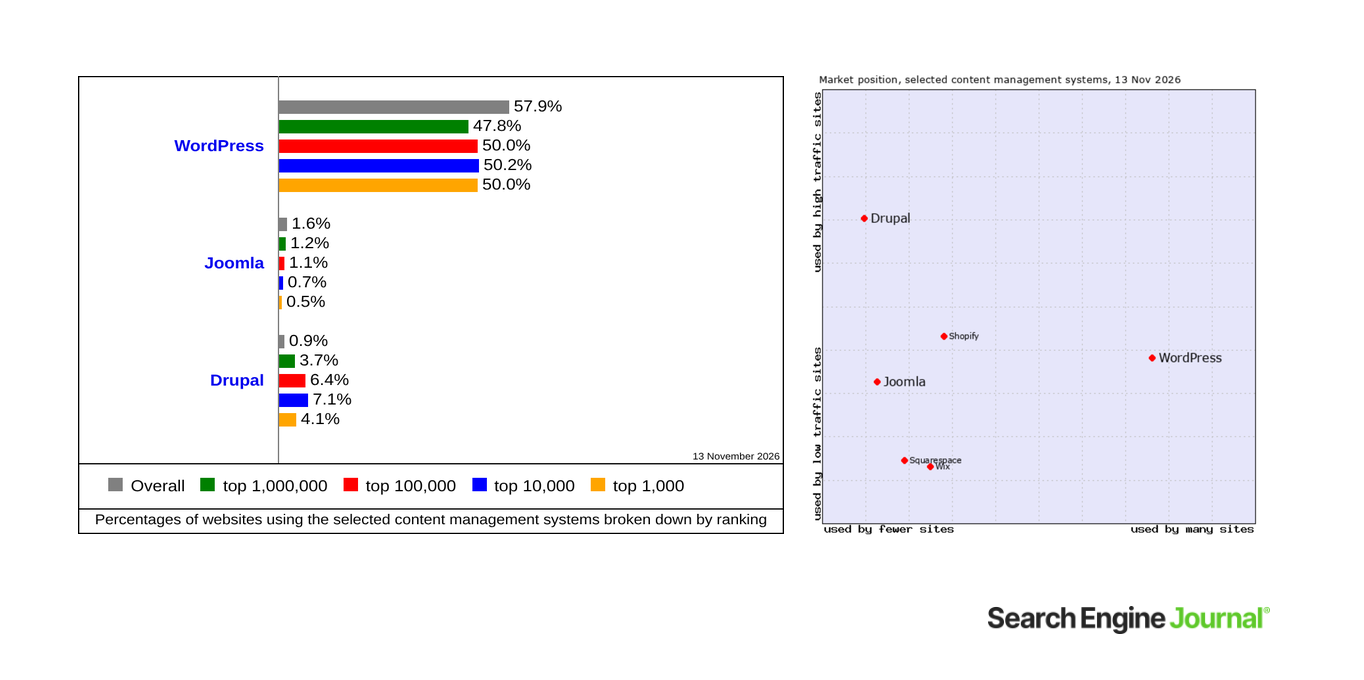
The digital architecture of the web is undergoing a structural realignment. For over a decade, WordPress has reigned as the undisputed monarch of content management systems (CMS), providing the backbone for a significant portion of the internet. However, as of November 2026, the latest data from W3Techs reveals a critical inflection point: WordPress’s CMS market share has slipped to 57.9%, its lowest level since 2013.
While WordPress remains the dominant force, the consistent erosion of its market share since its 2022 peak signals a broader industry shift. As the total number of websites continues to climb—now exceeding 323 million domains according to Netcraft—the market is increasingly favoring Software-as-a-Service (SaaS) solutions. Platforms like Shopify, Wix, and Squarespace are not merely growing; they are successfully capturing the mid-market and small-business segments that previously served as the bedrock of the WordPress ecosystem. This article explores the forces driving this migration, the decline of legacy open-source stalwarts like Joomla and Drupal, and what these trends mean for the future of SEO and digital strategy.

A Detailed Chronology of the CMS Decline
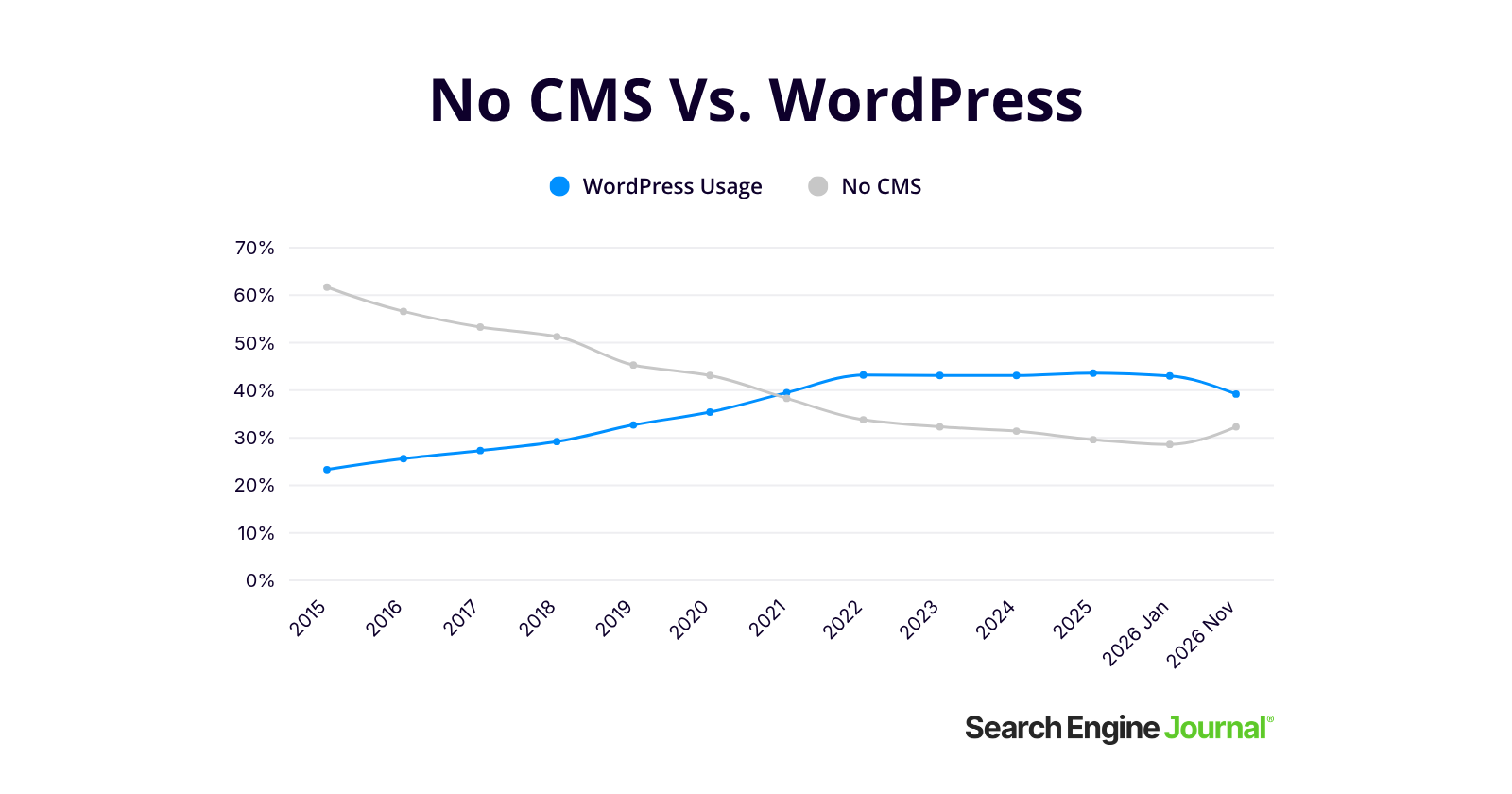
To understand the current state of the CMS market, one must look at the historical trajectory of WordPress. Between 2015 and 2022, WordPress experienced a meteoric rise, with its usage across all surveyed websites climbing from 23.3% to a peak of 43.2%. During this golden era, WordPress was the default choice for virtually every web project, from personal blogs to complex enterprise e-commerce stores.
However, the tide began to turn in early 2022. Since that peak, the platform has seen a gradual but persistent decline. By January 2026, its market share had retreated to 60.2%, and as of November 13, 2026, it sits at 57.9%. This downward trend is not merely a statistical anomaly; it represents a fundamental change in how businesses approach web development.
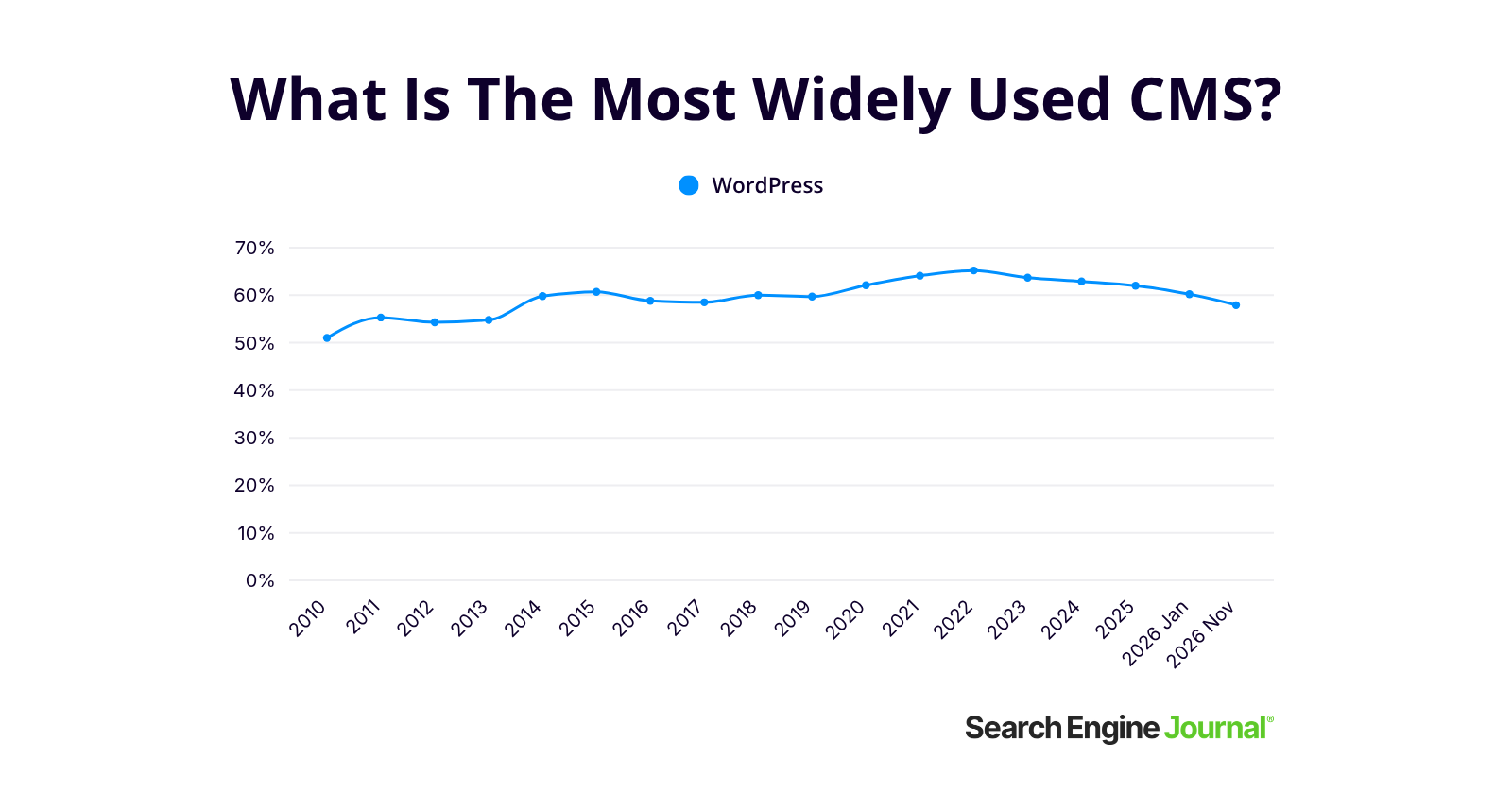
Historically, WordPress dipped below the 60% mark in 2016, 2017, and 2019, but it always demonstrated a capacity for rapid recovery. The current downturn feels different. Unlike previous fluctuations, the 2026 data shows a simultaneous rise in the "No CMS" category (which reached 32.3%) and a steady, accelerated growth among SaaS competitors. The era of "WordPress by default" is clearly being challenged by a "platform of choice" model, where usability, maintenance, and integrated e-commerce features often outweigh the flexibility of open-source self-hosting.
Supporting Context & Metrics: The 2026 Landscape
The current CMS market is vast, with approximately 67.7% of all websites relying on a known CMS to manage their content. With over 323 million domains active globally, this equates to roughly 218.8 million websites built on a managed platform.
Market Share vs. Usage
It is essential to distinguish between market share (a platform’s percentage of websites with a known CMS) and usage (a platform’s percentage of all websites surveyed).
| Platform | Market Share | Usage (All Sites) | Estimated Sites |
|---|---|---|---|
| WordPress | 57.9% | 39.2% | 126.7 million |
| Shopify | 7.9% | 5.4% | 17.4 million |
| Wix | 6.2% | 4.2% | 13.6 million |
| Squarespace | 3.6% | 2.4% | 7.8 million |
| Joomla | 1.6% | 1.1% | 3.5 million |
| Drupal | 0.9% | 0.6% | 1.9 million |
The Rise of the SaaS Contenders
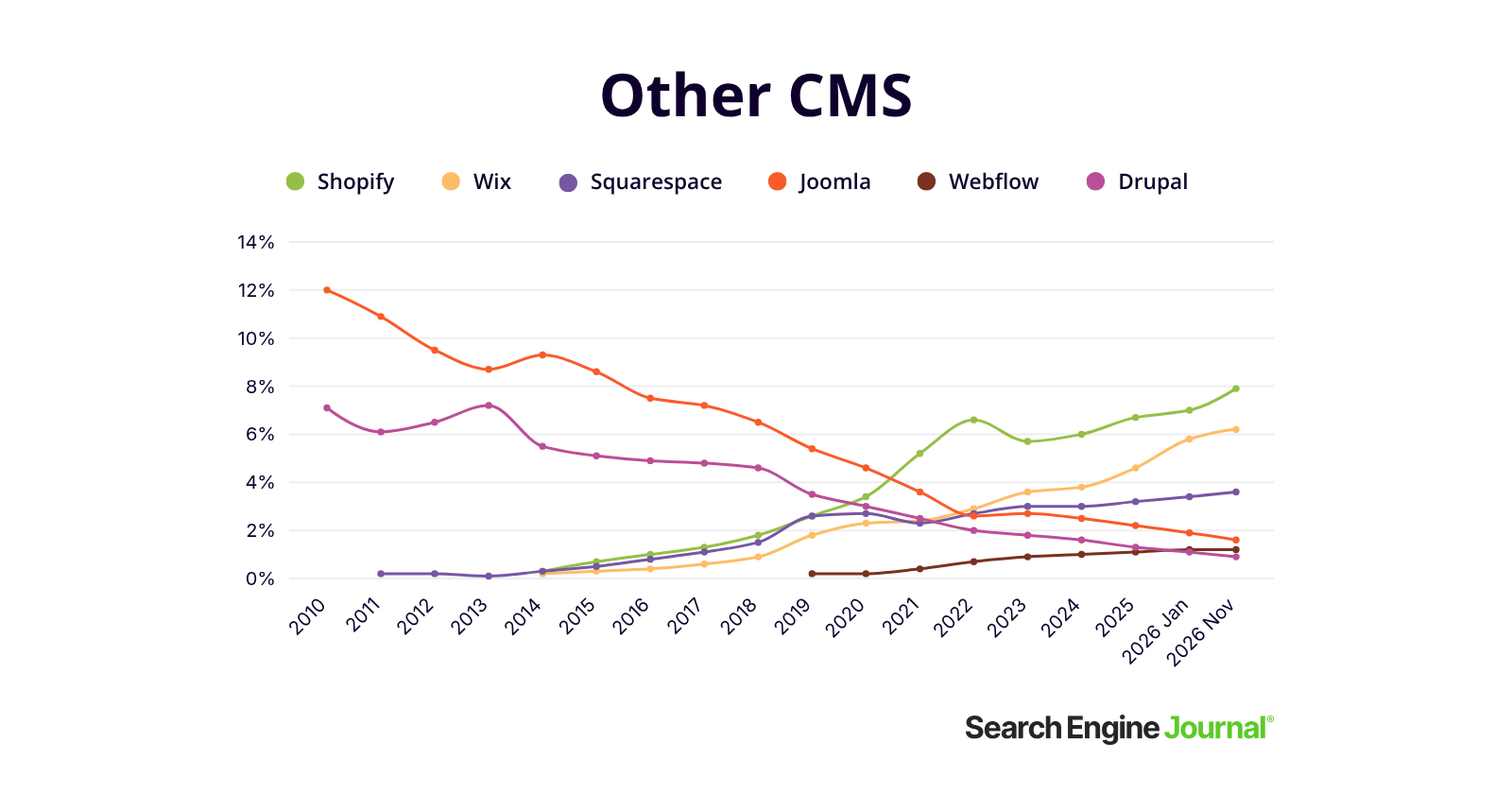
The data paints a clear picture: the growth is happening in the SaaS sector. Shopify, in particular, has emerged as the primary challenger to the WordPress hegemony. Its market share jumped from 7.0% in January 2026 to 7.9% by November. Wix and Squarespace have followed suit, capturing users who prioritize design-forward, low-maintenance environments over the technical overhead associated with managing a self-hosted WordPress instance.
Perhaps most telling is the decline of legacy open-source systems. Joomla, which once competed with WordPress for the top spot, has plummeted to a 1.6% market share, while Drupal has fallen to 0.9%. This shift suggests that the "amateur coder" and "developer-heavy" CMS models are losing ground to intuitive, drag-and-drop interfaces that allow non-technical users to deploy professional-grade sites in minutes.
The E-commerce Pivot: WooCommerce vs. Shopify
One of the most intense battlegrounds in the CMS war is e-commerce. Historically, WooCommerce (a WordPress plugin) was the go-to for online retailers. However, the data suggests a significant migration toward Shopify.
While WooCommerce still leads in terms of the total number of stores (powering 47.0% of e-commerce systems surveyed by W3Techs), its market share is under direct pressure. Shopify now accounts for 32.7% of the e-commerce market and continues to grow. The "Shopify Effect" is likely fueled by the platform’s robust, managed ecosystem—everything from payment processing to inventory management is baked into the platform. Conversely, WooCommerce requires a fragmented stack of plugins, which can lead to "plugin fatigue," security vulnerabilities, and performance degradation. As businesses look to reduce technical debt, the "all-in-one" value proposition of Shopify is proving increasingly difficult to ignore.
Future Outlook: AI, "Vibecoding," and the Path Ahead
What does the future hold for the CMS landscape? We are currently observing a convergence of three major factors:
- The Professionalization of SMBs: Small businesses are less interested in "building" a website and more interested in "buying" a result. SaaS platforms are responding by integrating advanced marketing tools, AI-driven SEO, and seamless logistics, making the DIY approach of WordPress feel increasingly archaic to the average business owner.
- The Rise of "No-CMS" and AI-Driven Development: The increase in the "No CMS" category is fascinating. With the rise of AI-assisted coding and "vibecoding"—where generative AI creates custom, static, or headless architectures—some developers are bypassing traditional CMS platforms entirely in favor of lightweight, custom-built solutions. This allows for superior performance and security that monolithic platforms struggle to match.
- The Plugin Ecosystem Paradox: Elementor remains a dominant force, installed on 12.3% of all websites. It acts as a bridge, allowing WordPress to mimic the usability of Wix or Squarespace. However, this creates a hybrid model that can be complex to maintain. The question for the next five years is whether WordPress can evolve its core experience to be as intuitive as its page builders, or if it will be squeezed from both ends—by ultra-simple SaaS builders on one side and ultra-fast, AI-coded custom sites on the other.
Strategic Recommendations for Digital Professionals
For those in the digital marketing and SEO space, the takeaway is clear: diversify your expertise. While WordPress will remain a cornerstone of the web for the foreseeable future, the growth of Shopify, Wix, and Squarespace means that SEO professionals must become fluent in these ecosystems.
- For WordPress specialists: Focus on site performance and security, as these remain the most common pain points that drive users toward SaaS competitors.
- For E-commerce experts: Understanding the technical nuances of Shopify SEO is now as critical as understanding WooCommerce.
- For Agencies: Position yourself as a "platform-agnostic" partner. The best solution for a client is no longer automatically WordPress; it is the platform that minimizes maintenance and maximizes conversion.
As we look toward 2027, the CMS landscape will likely continue to fracture. The era of a single, dominant platform is fading, replaced by a specialized, competitive market where the right tool for the job is determined less by market share and more by the specific business requirements of the user. Whether WordPress can stem the tide or whether we are witnessing the start of a long-term transition remains one of the most compelling stories in web technology.