Executive Overview
In the evolving landscape of digital marketing, a quiet revolution is taking place beneath the surface of traditional analytics. While search engine optimization (SEO) has long been the primary driver of web traffic, a new, highly engaged visitor source is emerging: Generative AI.
Preliminary data and professional observations suggest that traffic originating from ChatGPT is often significantly more qualified than traditional organic search traffic. Despite its relatively small volume compared to global search giants, ChatGPT users demonstrate higher engagement rates and intent-driven behavior. However, this critical traffic is frequently invisible or misclassified in Google Analytics 4 (GA4), masked by the "noreferrer" tags and "Unassigned" buckets that plague modern reporting. As generative AI becomes the default interface for information retrieval, businesses must pivot their tracking strategies to account for these AI-driven referrals or risk losing visibility into their most valuable future customers.
Detailed Chronology: The Shift from Searching to Asking
For decades, the journey of an online customer began with a search query. A user typed keywords into Google, browsed a list of blue links, and navigated to a landing page. This paradigm—the "Search Engine Result Page" (SERP) experience—defined how businesses measured their success.

In late 2022, the launch of ChatGPT fundamentally altered this user journey. Instead of presenting a menu of options, GenAI provides a direct answer or a curated list of solutions. This transition from "searching" to "consulting" has created a new category of referral traffic.
Initially, this traffic was dismissed by many analysts as a statistical anomaly. Because the volume was low, it rarely appeared in the top-level dashboards of GA4. However, those who dug deeper into the data noticed a striking trend: the users arriving from these platforms were not just "bouncing" or casual browsers. They were intent-focused individuals who had already received a synthesized answer to their problem. They weren’t looking for a website; they were looking for a solution. When they clicked the source link provided by the AI, they arrived at the destination page with a high degree of pre-qualified intent.
Supporting Context & Metrics: Decoding the "Unassigned" Problem
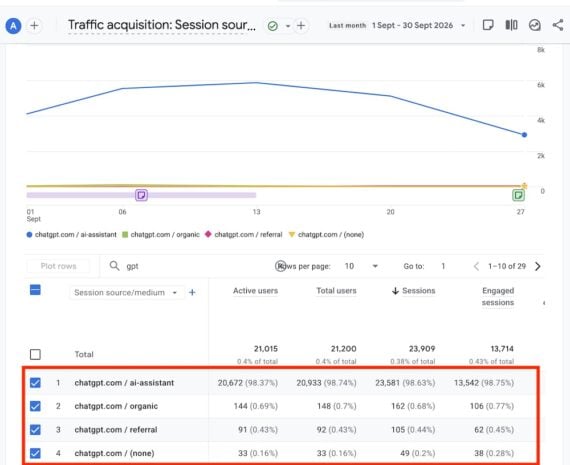
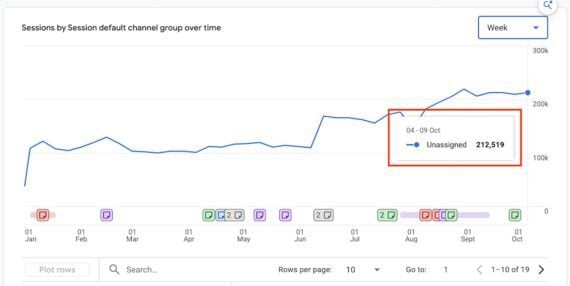
One of the greatest challenges in modern web analytics is the misattribution of AI-generated traffic. A significant portion of referrals from ChatGPT is classified by GA4 as "Direct" or "Unassigned." This occurs because ChatGPT, as a privacy-conscious platform, frequently appends a noreferrer attribute to external links. This attribute strips the referrer header, effectively blinding Google Analytics to the source of the click.
Why GA4 Struggles
Google Analytics relies on the referral string to categorize traffic. When that data is stripped, the algorithm defaults to "Unassigned" or "Direct." For many businesses, the growth of this "Unassigned" traffic category directly correlates with the rise of GenAI usage. If a company sees a spike in unassigned traffic that exhibits high engagement—long session durations and high conversion rates—it is highly probable that the traffic is actually coming from AI platforms like ChatGPT, Claude, or Perplexity.
The Quality of AI Traffic
Why does ChatGPT traffic perform so well? While formal, peer-reviewed academic studies on this specific traffic quality are still in their infancy, two primary theories have emerged:
- The "Pre-Qualification" Effect: When a user asks an AI to solve a specific problem—such as "how to repair a leaky faucet" or "best CRM software for small businesses"—the AI acts as an initial filter. By the time the user clicks a link, they have already been "briefed" on what to expect. They aren’t clicking out of curiosity; they are clicking to verify or implement a solution.
- Contextual Resonance: Unlike a search engine, which offers a broad array of results, an AI provides a contextual summary. The user’s mindset is already primed for the specific content found on the destination page, leading to lower bounce rates and higher engagement metrics.
Operational Strategies: How to Track and Analyze AI Referrals
For marketing professionals and site owners, the inability to track AI traffic is a blind spot that must be corrected. You cannot optimize for what you cannot measure.
Step 1: Building a Custom Filter in GA4
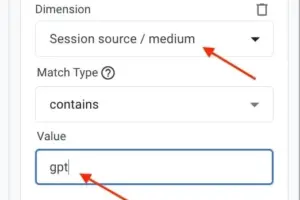
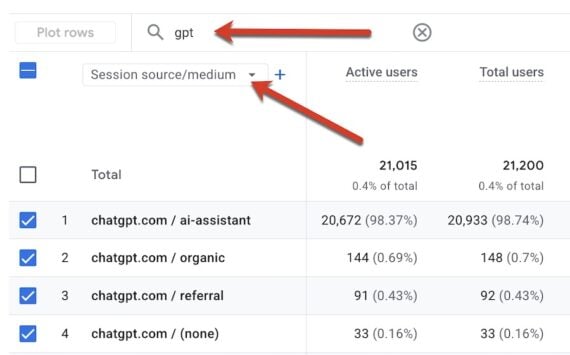
To reclaim your data, you must manually isolate these sources within GA4. Navigate to Acquisition > Traffic acquisition. Since ChatGPT’s referral strings can vary, the most effective approach is to create a custom report that filters for sessions containing the term "gpt."
By applying a filter where the "Session source" contains "gpt," you can isolate traffic from OpenAI’s platforms. This provides a clearer picture of which pages are being cited by the AI.
Step 2: Reverse-Engineering the Prompts
ChatGPT does not provide a "keyword report" for referrals, but you can infer the user’s intent by analyzing the landing pages that receive the most traffic. If a specific "how-to" article receives a high volume of traffic from ChatGPT, it is safe to assume that the underlying prompt was a request for that specific solution.

To confirm this, you can perform an audit of your content. Take the URL of your most-cited page and ask ChatGPT directly: "I am a business owner. This is my URL: [URL]. What user problems or prompts would lead you to cite this page as a definitive solution?"
By understanding the "AI-driven query," you can further optimize your content to appear more frequently in those answers, shifting your focus from traditional SEO keywords to "AI-answerable queries."
Step 3: Utilizing External Tools
Beyond GA4, it is essential to monitor your content’s visibility across the broader AI ecosystem.
- Search Console: Monitor for shifts in click-through rates on information-heavy pages.
- Brand Monitoring Tools: Use tools like Brand24 or Mention to see where your brand is being discussed and linked within the context of AI-generated responses.
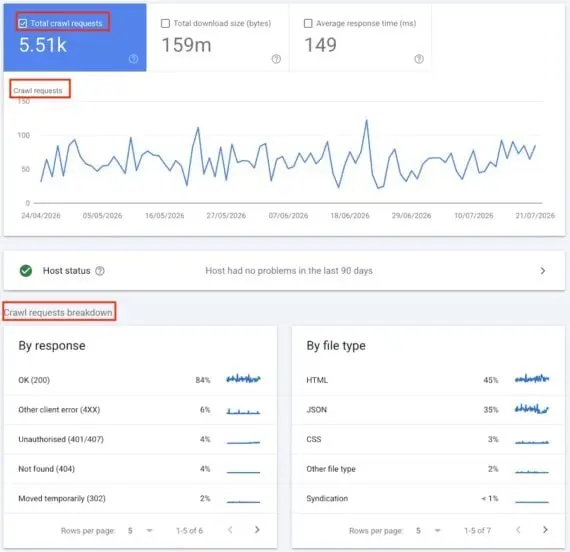
- Third-Party AI Explorers: Use tools that track AI-crawling behavior to see if your site is being indexed by the LLMs that power these chatbots.
Future Outlook: The Maturation of AI Traffic
As Generative AI becomes the primary interface for the internet—moving beyond chatbots and into the OS level of our devices—the definition of "Organic Traffic" will inevitably change. We are transitioning from an era of "Link-Based Browsing" to "Answer-Based Browsing."
In the near future, we expect:
- Standardized Referrer Reporting: As the commercial value of AI traffic becomes undeniable, analytics platforms will likely develop native integrations to identify and categorize AI-referrals automatically, moving away from the "Unassigned" ambiguity.
- AI-Specific SEO (AIO): The practice of "Optimizing for AI Answers" (AIO) will become as standard as SEO. This will require businesses to write content that is highly structured, factual, and easily parsed by Large Language Models.
- Quality over Quantity: As AI reduces the friction of finding information, the total volume of "window-shopping" traffic may decline, but the value per visitor will increase. The winners in this new economy will be those who stop treating AI as a "referral source" and start treating it as a "distribution partner."
Conclusion
The data is clear: ChatGPT is no longer a peripheral traffic source. It is an emerging, high-intent channel that is currently being ignored by standard analytics configurations. By acknowledging the limitations of GA4, implementing manual tracking filters, and optimizing content to be "answer-ready," businesses can turn this blind spot into a competitive advantage. The future of the web isn’t just in the search results—it’s in the answers. It is time for digital marketers to stop watching the blue links and start monitoring the conversation.