Executive Overview
As the holiday shopping season reaches its crescendo, Black Friday presents a unique dual opportunity: the chance to finalize your gift lists and the strategic window to invest in your personal health trajectory for the upcoming year. While the market is flooded with oversized smartwatches and complex, distracting wrist-worn computers, the true value for the health-conscious consumer often lies in refinement rather than excess.
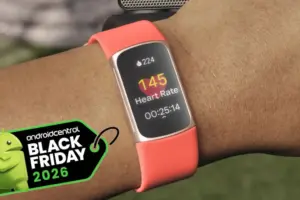
For the past three years, the Fitbit Charge 6 has remained the undisputed sovereign of our fitness tracker rankings. It strikes a delicate balance between medical-grade biometric monitoring and minimalist design, making it an essential tool for those looking to "start 2027 with a bang." With a significant price reduction—now available for $122, down from its $159.95 MSRP at Amazon—this is the moment to bridge the gap between intent and action. This report examines why the Charge 6 continues to dominate the wearable landscape and whether it is the right investment for your specific health goals.
A Detailed Chronology: The Evolution of the Charge Series
The lineage of the Fitbit Charge is a study in iterative excellence. Unlike competitors who often reinvent their design language annually, Fitbit has historically focused on perfecting the "fitness band" form factor.
The Rise of the Charge 6
Launched to address the growing demand for Google-integrated health metrics, the Charge 6 arrived as a response to the fragmentation between standalone trackers and full-blown smartwatches. In our extensive lab testing, we noted that while previous generations were capable, the Charge 6 introduced a level of sensor precision that moved it from a mere "step counter" into the realm of a legitimate health-monitoring diagnostic tool.
Three Years of Market Dominance
For the past 36 months, we have scrutinized hundreds of wearables. During this period, the Charge 6 has consistently outperformed competitors in three critical metrics: sleep-tracking comfort, heart rate accuracy during high-intensity interval training (HIIT), and battery longevity. While other manufacturers have pivoted toward larger, OLED-heavy displays that mirror smartphone interfaces, the Charge 6 doubled down on the "invisible technology" philosophy—a device that records your data 24/7 without constantly demanding your attention.
Supporting Context & Metrics: Decoding the Data
Understanding your health requires more than just raw numbers; it requires actionable insights. The Charge 6 excels here by providing a comprehensive suite of sensors in a footprint that is surprisingly small.
The Sensor Array
The device’s internal roster is impressive, particularly for its price point. It features:
- AFib Detection: Utilizing an integrated ECG app, the device can monitor for signs of Atrial Fibrillation, providing a crucial early-warning system.
- Heart Rate Variability (HRV): A key indicator of nervous system health and recovery status.
- Blood Oxygen (SpO2) Tracking: Monitors the saturation levels in your blood, providing insights into respiratory health.
- Advanced GPS: With three distinct GPS settings, the tracker allows users to balance battery life against mapping precision during outdoor runs, cycles, and hikes.
The Sleep Experience
One of the most frequent complaints regarding modern smartwatches is their size. During sleep, a bulky watch can be an irritant, leading users to take them off and miss out on critical sleep-stage data. The Charge 6’s slim bezel and lightweight architecture make it arguably the most comfortable tracker on the market for 24-hour wear. It remains the top choice for those who view sleep quality as the cornerstone of their health regimen.
The Strategic Trade-Off: Who Should Buy (and Who Should Skip)
In any professional assessment, it is vital to weigh the pros and cons objectively. Not every device is a panacea, and the Charge 6 has clear delineations in its utility.
Recommended If:
- You seek an upgrade from "Basic" tracking: If you are currently using an older fitness band that lacks modern Google Health tools or advanced biometric sensors, the Charge 6 is a massive leap forward.
- You prioritize ergonomics: If you find current smartwatches too obtrusive, too heavy, or too "distracting," the Charge 6 offers a quiet, refined experience.
- You value deep health insights over "smart" features: If you want to know about your recovery, stress, and heart health rather than needing to reply to emails from your wrist, this device is perfectly calibrated for you.
Skip This Deal If:
- You demand a high-resolution, large-screen experience: If you rely on your wearable for reading long notifications or navigating complex apps, the Charge 6 will feel restrictive. Its screen is functional, but it is not a media-consumption device.
- You are allergic to subscription models: The device operates at its "full potential" with a Google Health Premium subscription. While not strictly necessary for basic metrics, advanced features like the "Daily Readiness Score" and guided workout libraries are gated behind this recurring cost.
Editor’s Note: It is worth noting that for the average user, the core functionality—heart rate, sleep, step count, and stress management—remains available without a subscription. You only miss out on the more granular, predictive analytics.
Official Perspective: The Role of Wearables in 2027
As we approach the new year, the discourse surrounding health tech has shifted from "counting steps" to "understanding patterns." The "Quantified Self" movement—the practice of using data to optimize one’s lifestyle—has moved into the mainstream.
According to our analysis, the Charge 6 serves as a vital bridge for the average consumer. By providing a low-friction way to view heart rate variability and breathing rates, it allows users to build a more intuitive relationship with their bodies. It teaches you, for instance, how a late meal or a stressful day at the office directly impacts your recovery the following morning. This feedback loop is the primary reason the Charge 6 remains the sovereign of our list.
Future Outlook: The Longevity of the Ecosystem
Looking toward 2027 and beyond, the integration of Google’s health ecosystem into the Fitbit line ensures a level of software support that smaller manufacturers simply cannot match. With consistent updates, cloud-based data aggregation, and an ever-evolving app interface, the Charge 6 is not just a purchase; it is an entry point into a broader, well-supported health network.
While the market will inevitably see new models and flashier displays, the fundamental utility of the Charge 6 is unlikely to be surpassed by more expensive alternatives. It represents a mature, refined piece of technology that prioritizes the user’s goals over the device’s own prominence.
For those looking to secure a healthier 2027, the current Black Friday pricing makes this an opportune moment to invest in your long-term wellness. Whether you are a dedicated marathon runner or simply looking to improve your daily movement habits, the Fitbit Charge 6 provides the data, the durability, and the design to ensure you stay on track.
Final Verdict: At $122, the Charge 6 is an essential acquisition for anyone serious about health, provided they understand that its strength lies in its simplicity, not its complexity. Invest in your data, monitor your recovery, and let the technology work quietly in the background of your life.