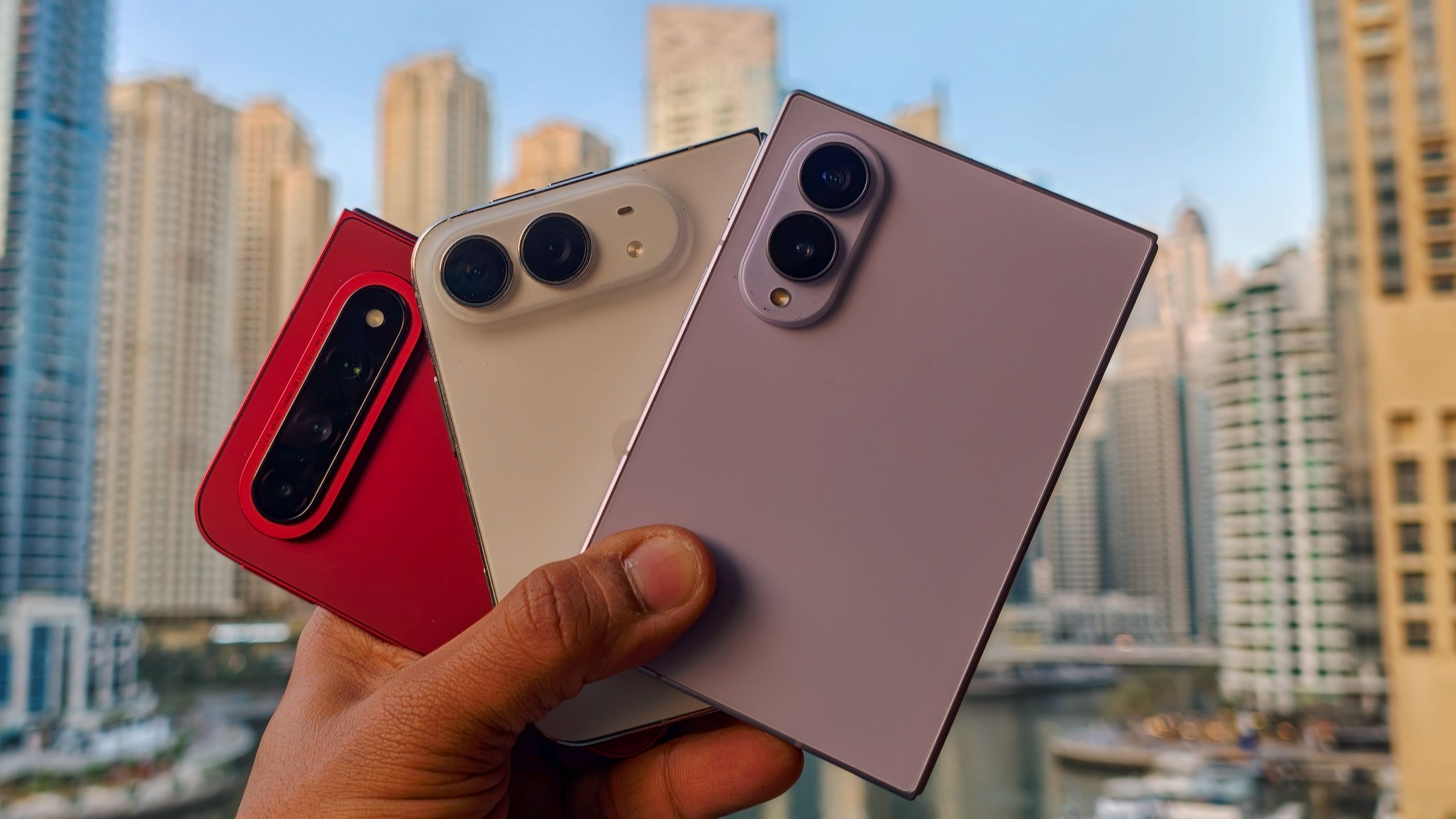
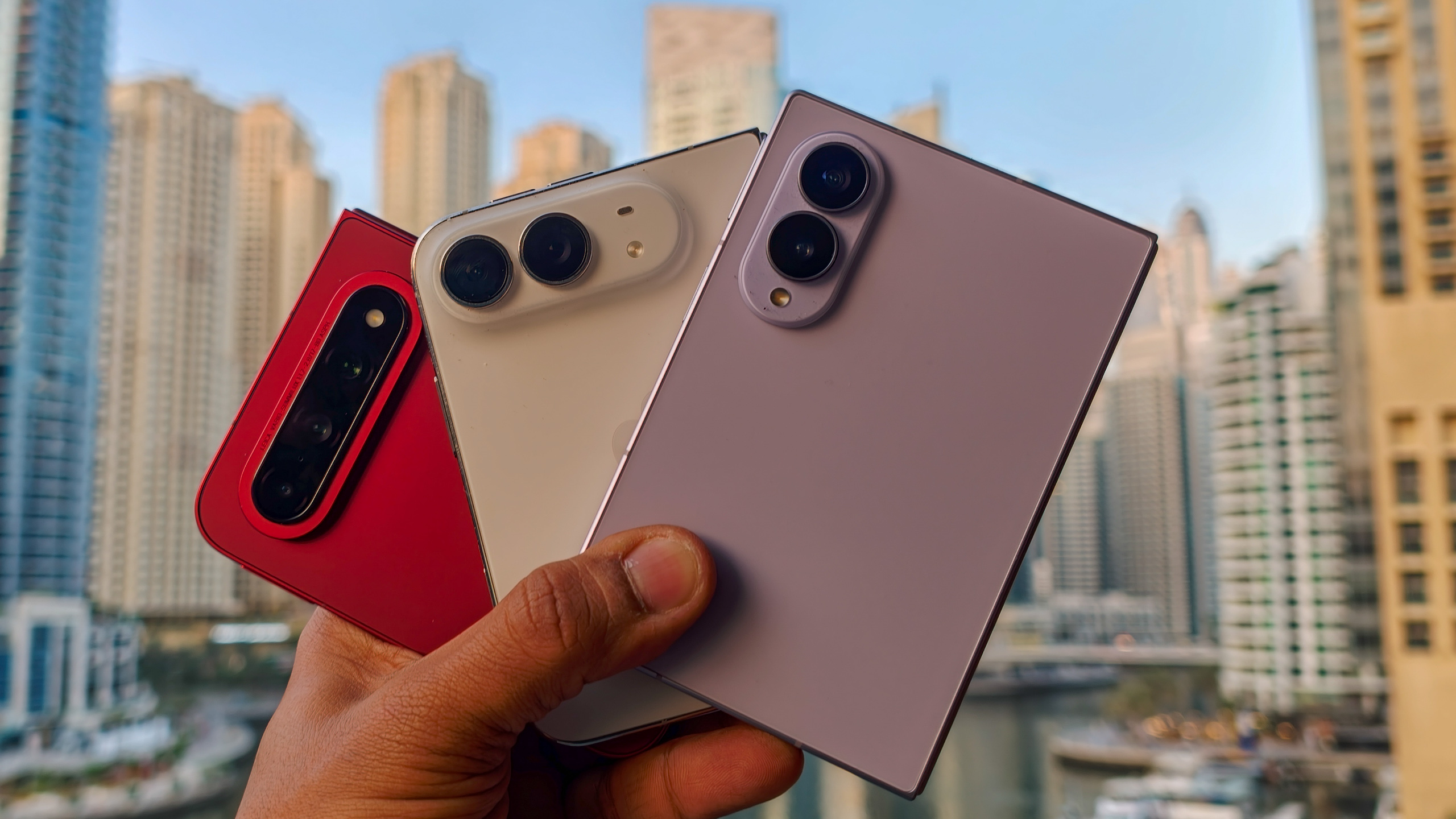
The era of the "passport-style" foldable has officially arrived. For the first time, the three titans of the mobile industry—Apple, Samsung, and Xiaomi—have converged on a singular form factor: a book-style device designed to feel as natural in the hand when closed as it does expansive when opened. This structural standardization, however, belies a radical divergence in engineering philosophy. While the chassis might look similar, the internal camera arrays reveal three distinct approaches to the future of mobile photography.
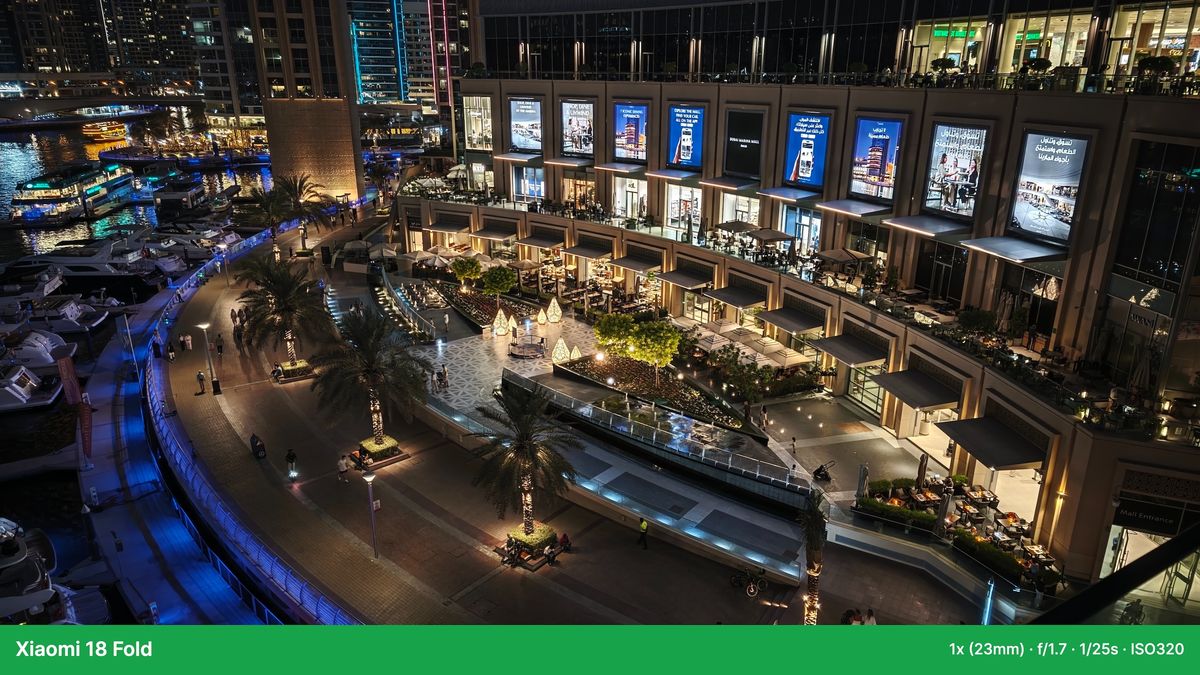
To determine which of these devices truly earns the title of "pro-grade" foldable, I subjected the iPhone Duo, the Samsung Galaxy Z Fold 8, and the Xiaomi 18 Fold to an exhaustive real-world gauntlet. From the blistering, high-contrast midday sun of the Dubai Marina to the complex, neon-soaked challenges of the blue hour, I tested their limits to see if the trade-offs in these thin, folding frames are worth the compromise.
Executive Overview: The Hardware Divide
On paper, the differences are stark. Both Apple and Samsung have opted for a dual-camera primary setup—a wide main sensor paired with an ultrawide—relying on computational upscaling to simulate zoom. In contrast, Xiaomi has aggressively pushed the boundaries of physics, cramming a Leica-engineered triple-camera array into its frame, anchored by a 200MP main sensor and a dedicated 50MP periscope telephoto lens.
The central question for consumers is simple: can a slim, foldable device actually offer the versatility of a flagship slab phone? Our testing suggests that while Apple and Samsung are betting on software and sensor crops to fill the void, Xiaomi’s commitment to optical hardware provides a decisive advantage that software alone cannot replicate.
Detailed Chronology: A Test of Light and Logic
1. The High-Noon Challenge: Daylight and HDR
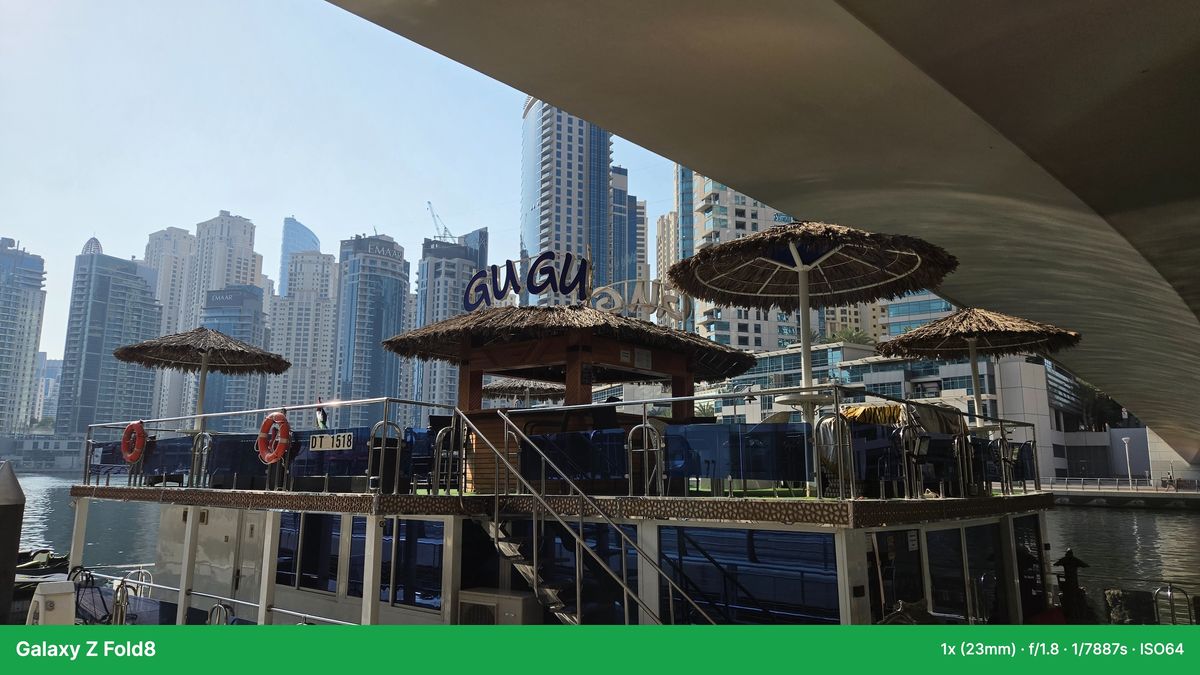
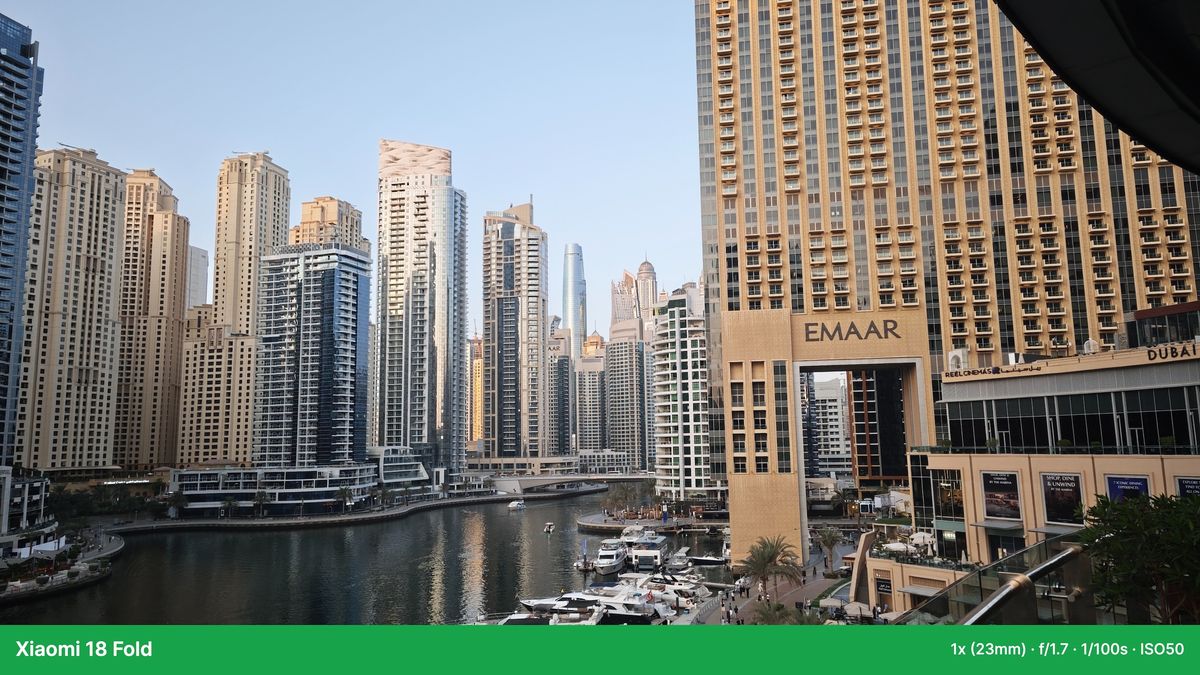
In perfect lighting, all three devices produce results that would satisfy the casual social media user. However, the differences in color science and focal length are immediate. Both Samsung and Xiaomi utilize a wider 23mm focal length, which provides a more expansive field of view. Apple, meanwhile, adheres to a 26mm focal length, resulting in a tighter, more intimate framing that often feels more "composed" but captures less of the surroundings.
When shooting the Ocean Empress yacht, the variance in processing was telling. Xiaomi’s Leica Vibrant profile excelled, rendering the deep red mahogany and gold accents with a warmth and depth that felt true to life. Samsung leaned into its signature high-contrast, cool-toned look, which resulted in slightly crushed shadows. Apple provided the most balanced exposure, demonstrating superior HDR when shooting under the challenging, high-contrast conditions of a concrete bridge overlooking the marina. While Samsung kept the sky the bluest, it sacrificed detail in the shadows, whereas Apple’s computational photography found the perfect middle ground.

2. The Ultrawide Perspective
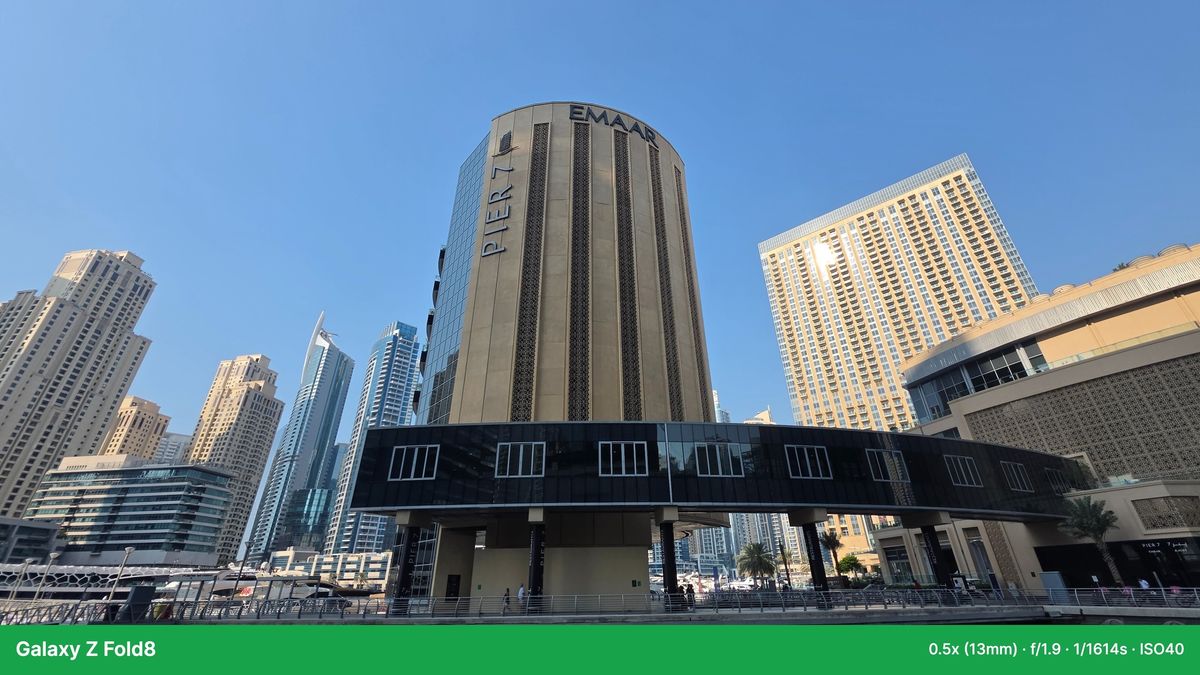
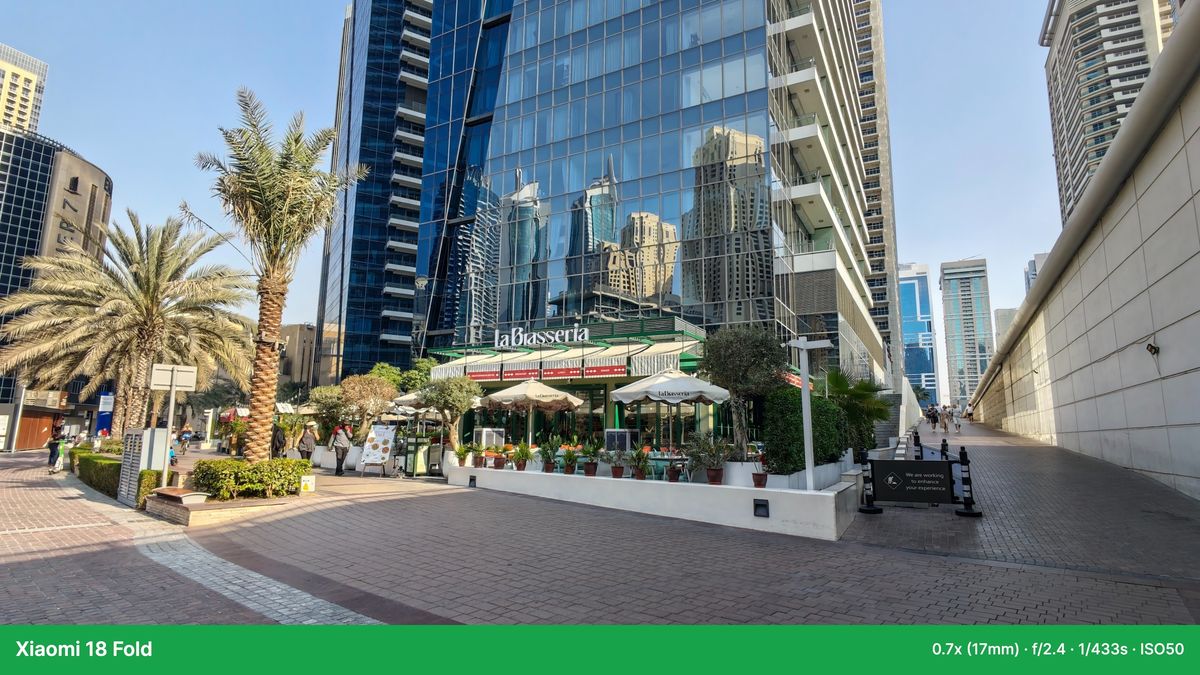
Switching to the ultrawide lenses highlighted the hardware limitations of these thin devices. Samsung (13mm) and Apple (14mm) offer wide, sweeping views, but the Xiaomi 18 Fold (17mm) felt noticeably narrower. In a direct comparison at Pier 7, the 4mm difference was substantial: Samsung captured the entire skyscraper, while Xiaomi’s narrower lens cropped the structure out of the frame. Despite the tighter view, the iPhone Duo proved to be the king of dynamic range in this category, expertly managing reflections on the glass facades of the marina towers.
3. The Zoom Wars: Optical vs. Computational
If you are considering these devices for their camera capabilities, the zoom performance is the deciding factor. The lack of a dedicated telephoto lens on both the iPhone Duo and the Galaxy Z Fold 8 is a glaring omission in 2024.
At 2x, all three phones are indistinguishable, relying on main-sensor crops that look perfectly sharp for mobile screens. However, once you cross the 3x threshold, the competition ends. The Xiaomi 18 Fold’s 80mm (3.3x) periscope telephoto captures genuine, optical-grade detail—individual threads in fabric, fine metallic textures, and distinct signage—that the other two devices simply cannot resolve. Where Samsung and Apple resort to "watercolor" denoising, Xiaomi’s optics hold steady. Even at extreme ranges, the Xiaomi 18 Fold provides usable, high-quality images, while the iPhone and Galaxy struggle with mud-like artifacts.
4. Low-Light and Neon Environments
As the sun sets, the "metering strategy" of each device becomes critical. In low-light scenarios, Samsung’s aggressive noise reduction often leads to dark, grainy shadows. Apple and Xiaomi are much more adept here; the iPhone Duo excels at preserving highlights in neon signs, while Xiaomi’s larger sensor footprint allows for cleaner low-light captures at lower ISO settings.
When facing monochromatic red neon light, Xiaomi’s color science was superior, maintaining deep, rich crimson without the "hot pink" shift that plagued the Galaxy Z Fold 8.
Supporting Context & Metrics
The following performance summary illustrates the hierarchy established during our testing:
| Test | 1st Place | 2nd Place | 3rd Place |
|---|---|---|---|
| Daylight & HDR | Xiaomi 18 Fold | iPhone Duo | Galaxy Z Fold 8 |
| Ultrawide | iPhone Duo | Galaxy Z Fold 8 | Xiaomi 18 Fold |
| Daytime Zoom | Xiaomi 18 Fold | iPhone Duo | Galaxy Z Fold 8 |
| Night/Low-light | Xiaomi 18 Fold | iPhone Duo | Galaxy Z Fold 8 |
| Portrait Mode | Xiaomi 18 Fold | iPhone Duo | Galaxy Z Fold 8 |
| Selfie/Usability | Galaxy Z Fold 8 | Xiaomi 18 Fold | iPhone Duo |
The data confirms a trend: while Samsung leads in the "Selfie and Usability" category—thanks to its intuitive gesture controls and the ability to use the cover screen for dual-person shots—it lags significantly behind its rivals in core imaging performance.
Official Statements and Design Philosophy
The divergence in performance is a direct reflection of the design priorities at each company.
- Apple remains committed to a "computational-first" approach. By keeping the camera module slim and focusing on multi-frame HDR and deep image processing, they aim to offer a consistent, professional-looking photo with minimal user effort.
- Samsung is prioritizing form factor and software features, such as the highly popular "Color Point" portrait mode. They are betting that users prefer a thinner device and software versatility over raw optical zoom power.
- Xiaomi has taken the "Pro" approach. Their partnership with Leica and their decision to include a periscope lens demonstrate a belief that even in the world of foldables, photography enthusiasts demand high-end optical hardware.
Future Outlook: The Next Generation of Foldables
The findings of this shootout are a wake-up call for the industry. The "passport-style" foldable has moved beyond the experimental phase; it is now a mature product category. However, the camera compromises that were acceptable in the early days of folding screens are no longer sustainable.
For Apple and Samsung, the path forward is clear: they must find a way to integrate periscope telephoto technology without sacrificing the slim profile that makes these devices appealing. Xiaomi has set the bar by proving that such hardware is not only possible but superior.
As we look toward the next generation of devices, we expect the competition to shift from "who can make the thinnest phone" to "who can offer the most comprehensive camera array." For now, if photography is your priority in a foldable device, the Xiaomi 18 Fold is the clear winner, leaving its rivals to play catch-up in the high-stakes world of mobile imaging. The foldable revolution is here, but for those who care about the shot, the hardware still matters more than the fold.