Executive Overview: The Dawn of Conversational Fitness
For over a decade, Strava has served as the digital ledger for the world’s endurance athletes, recording millions of miles of sweat, elevation gain, and personal records. However, the data stored within the app has historically been passive—a collection of numbers waiting for the user to interpret them. That dynamic is shifting fundamentally this week as Strava officially rolls out a deep integration with Google’s Gemini AI.
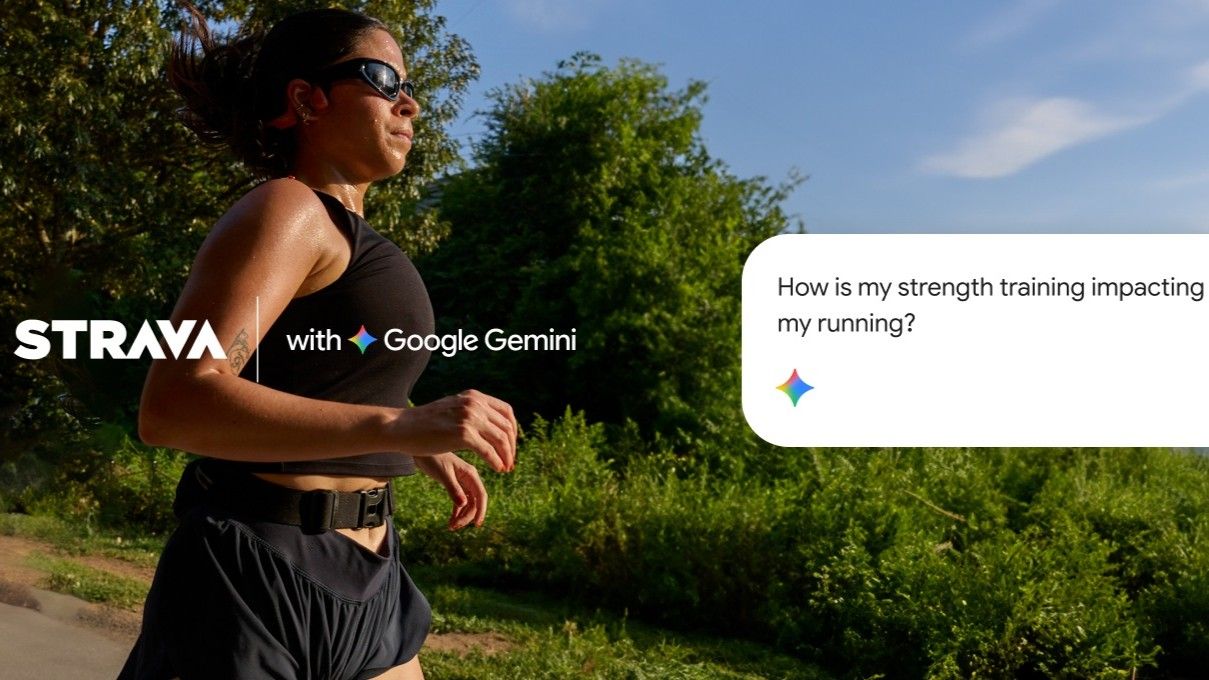
By allowing users to connect their Strava accounts to the Gemini ecosystem, the fitness platform is moving away from static charts and toward a conversational, AI-driven coaching model. This integration enables subscribers to ask natural language questions about their performance, health trends, and recovery cycles, receiving synthesized, personalized insights that go far beyond what a simple spreadsheet could offer. This development represents a significant leap in the "quantified self" movement, positioning AI not just as a data aggregator, but as an active participant in an athlete’s training journey.
A Detailed Chronology: From Static Logs to Generative AI
To understand the magnitude of this integration, one must look at the trajectory of Strava’s software evolution.
The Foundational Era
Initially, Strava was built on the premise of social connectivity—a place to upload GPS files and compete on leaderboards. The data was simple: distance, pace, and time. As the platform grew, so did the complexity of the data, introducing heart rate variability, power zones, and relative effort.
The Rise of "Athlete Intelligence"
Approximately 18 months ago, Strava signaled a strategic pivot by introducing "Athlete Intelligence." This feature was designed to act as a diagnostic tool, capable of interpreting non-GPS activities—such as indoor cycling or treadmill runs—and offering context that was previously ignored by standard algorithms. Following a four-month beta period, the feature gained traction for its ability to compare current efforts against historical data on specific routes, effectively identifying plateaus and breakthroughs in real-time.
The AI Performance Prediction Phase
Building on the success of Athlete Intelligence, Strava introduced AI-driven performance predictions. By analyzing a user’s historical volume and intensity, the system began providing estimated finish times for common race distances, including 5Ks, 10Ks, half-marathons, and full marathons. This required a robust data set—typically at least 20 recorded activities—to provide reliable estimates, grounding the AI in actual user behavior rather than generic physiological models.
The Gemini Integration: The Current State
The integration with Google Gemini marks the third major evolution. By leveraging Google’s large language model (LLM), Strava is effectively giving its data a voice. Users can now move beyond simple dashboard views and engage in diagnostic dialogues. This week’s rollout in the U.S. represents the culmination of this effort, providing a bridge between raw fitness metrics and actionable, human-readable advice.
Supporting Context: Decoding the Athlete’s Journey
The primary value proposition of the Gemini integration lies in its ability to synthesize disparate data points into a coherent narrative. Athletes often struggle to identify the "why" behind a poor performance or a sudden jump in fitness.
The Power of Contextual Analysis
One of the most compelling use cases highlighted by Strava is the ability to query the "why" behind a performance. A user might ask: "Am I getting faster at the same heart rate?" Gemini can now parse through months of volume, consistency, and sports-mix data to answer this with a level of nuance previously reserved for professional coaches.
Furthermore, the integration provides deep-dive breakdowns. If a user wants to know how their racing performance held up on a mile-by-mile basis, Gemini can extract that data and present it in a readable format, identifying where efficiency dropped or where the athlete peaked.
External Variables and Biological Reality
Perhaps most intriguingly, the integration aims to help athletes differentiate between environmental fatigue and physiological adaptation. Users can now ask, "Was I feeling sluggish because of the weather, or is my body fatigued?" By cross-referencing activity data with external conditions, the AI acts as a sophisticated arbiter of physical readiness, helping athletes decide whether to push through a workout or prioritize rest.
Official Statements and Technical Implementation
In its official announcement, Strava emphasized that the goal is to make training insights more accessible and "personalized." The integration is framed as a "Connected App" experience, which is a modular approach to third-party AI integration within the Gemini environment.
Getting Started: A Step-by-Step Guide
For subscribers looking to leverage this new capability, the process is streamlined to prioritize user privacy and control. The integration is currently available for all tiers of the Gemini service in the United States. To activate the service, users must follow these steps:
- Open the Gemini interface.
- Navigate to the Personal Intelligence settings.
- Select Connected Apps.
- Locate Strava within the list of available services.
- Complete the secure sign-in process to grant Gemini read-access to your training history.
This "opt-in" structure is critical, as it addresses the growing concern regarding the privacy of health data. By keeping the integration behind a deliberate, user-authorized wall, Strava is ensuring that athletes retain control over their biometric and performance history.

Future Outlook: The Implications of AI-Driven Coaching
The partnership between Strava and Google Gemini is likely just the beginning of a broader trend in fitness technology. As these models become more sophisticated, we can expect to see several shifts in the industry:
1. The Democratization of Coaching
Historically, high-level analysis of training data was the exclusive domain of those who could afford private coaching. AI integration brings a version of this expert oversight to the masses, potentially reducing the incidence of overtraining and injuries by providing objective, data-backed guidance.
2. The Shift Toward Predictive Health
We are moving toward a future where fitness apps do not just track what happened, but predict what will happen. If an AI can accurately correlate sleep, heart rate, and training load to predict when an athlete is susceptible to injury or illness, the app ceases to be a record-keeper and becomes a preventative healthcare tool.
3. The Challenge of Accuracy
While the insights provided by Gemini are impressive, they are not infallible. As noted during the early testing phases of "Athlete Intelligence," AI can sometimes misinterpret data, particularly when external hardware (like heart rate straps or power meters) introduces noise or connectivity errors. The future success of this integration will depend on the model’s ability to handle outlier data and remain grounded in established exercise science.
4. Integration Beyond the Smartphone
With the advent of smart wearables and head-up displays (such as smart glasses that project performance stats), the ability to query one’s own data in real-time could revolutionize how athletes perform during events. Imagine asking your AI assistant for a pacing strategy mid-marathon based on your actual heart rate variability and the current grade of the hill you are climbing.
Conclusion: A New Chapter for the Global Athletic Community
Strava’s decision to integrate with Google Gemini is more than just a feature update; it is a strategic repositioning of the platform within the broader AI ecosystem. By transforming raw performance metrics into a conversational dialogue, Strava is making the abstract concepts of fitness science tangible for every level of athlete.
As we look toward the future, the integration of generative AI into fitness tracking will likely become the standard. The challenge—and the opportunity—for Strava will be to ensure that as the technology becomes more powerful, it remains focused on the human element. Data is a tool, but for the athlete, the goal remains the same: to move faster, go further, and understand their body better than they did the day before. With Gemini as a digital training partner, that understanding is now more accessible than ever.