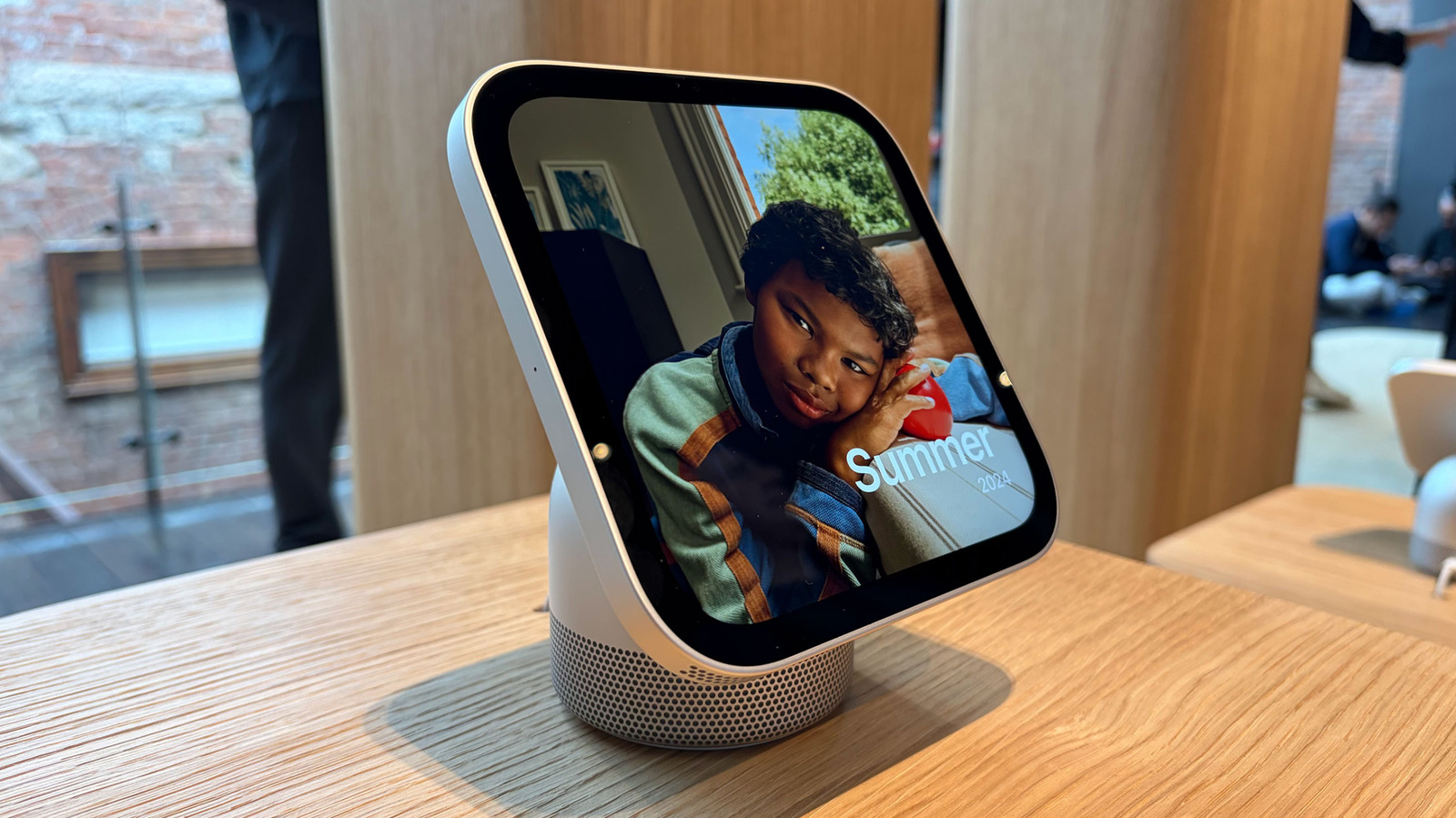
In a strategic evolution of its ecosystem strategy, Apple has officially launched the HomeView—its long-awaited, multi-purpose smart home display designed to serve as both a communal household hub and an intensely personal assistant. Unveiled during an iPhone launch event led by newly appointed CEO John Ternus, the HomeView bridges the gap between stationary smart home appliances and the hyper-personalized computing experience historically confined to personal handheld devices.
Rather than functioning as a standalone tablet or a traditional smart display loaded with its own independent app store, the HomeView operates on a tethered architecture reminiscent of Apple’s CarPlay. It mirrors and extends the user’s existing iOS and iPadOS environments. Beneath its sleek, buttonless exterior lies a complex balance of advanced Siri AI, multimodal sensor arrays, and uncompromising hardware-level privacy controls.
Apple’s design philosophy for the HomeView rests on three distinct pillars: intelligence, personalization, and privacy. To deliver conversational, context-aware AI interactions without exposing sensitive personal data to shared household spaces, the device relies heavily on the physical presence of a nearby, unlocked iPhone or iPad. This architectural choice solves one of the smart home industry’s most persistent dilemmas: how to deliver deeply individualized assistance on a shared, communal screen without compromising user confidentiality.
Detailed Chronology: The Road to HomeView
The genesis of Apple’s HomeView did not happen overnight; it represents the culmination of years of iterative hardware development, software experimentation, and strategic refinement within the company’s smart home division.
Building on the Smart Home Foundation
Apple’s journey into the connected home began in earnest with the introduction of HomeKit in 2014, followed by the launch of the original HomePod in 2018 and the smaller HomePod mini in 2020. While these audio-centric devices successfully integrated Siri into living rooms and kitchens, they lacked a visual interface—a critical component for modern smart home management, media consumption, and digital organization.
Rumors regarding an Apple-branded smart display began circulating within supply chain circles as early as 2021. Industry analysts predicted a wall-mounted or desktop-based command center that would combine the functionality of an iPad with the ambient nature of an Amazon Echo Show or Google Nest Hub. However, Apple’s internal engineering and product marketing teams faced a monumental challenge: avoiding the pitfalls of existing smart displays, which often struggled with clunky interfaces, fragmented software ecosystems, and severe privacy vulnerabilities when placed in multi-user environments.
The Ternus Era and the 2025 Debut
The official unveiling of the HomeView marked a transitional milestone for Apple. During his inaugural iPhone event as CEO, John Ternus framed the iPhone not merely as a communication tool, but as the ultimate "intelligent personal hub." This framing laid the philosophical groundwork for the HomeView, establishing that any future home-based display must remain intimately connected to the user’s primary mobile device.
Upon its release, reviewers and early adopters quickly realized the HomeView was a hybrid device. It synthesizes elements from three distinct product lines: the touchscreen utility of an iPad, the compact form factor and glanceable interface of an Apple Watch, and the room-filling audio of a HomePod. By sidestepping the creation of a standalone App Store ecosystem for the device, Apple instead leveraged the CarPlay operational model—allowing the HomeView to dynamically mirror compatible apps from nearby iPhones and iPads.
Supporting Context & Metrics: Architecture, Privacy, and Ecosystem Synergy
To truly understand why the HomeView depends so heavily on the iPhone, one must examine the underlying security frameworks and design constraints articulated by Apple’s hardware engineering and product marketing divisions.
The Mechanics of Ecosystem Mirroring
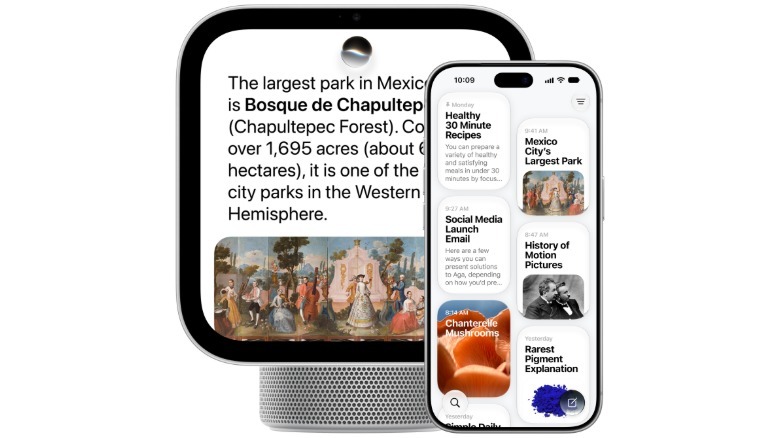
The HomeView does not run native applications downloaded directly from a dedicated store. Instead, it acts as an extended canvas for the user’s iPhone or iPad. Core Apple services—including Calendar, Messages, Reminders, and Weather—alongside third-party applications already installed on the mobile device, populate the HomeView’s interface dynamically.
This mirroring approach offers several distinct advantages:
- Zero-Configuration Onboarding: Because the device draws its app architecture directly from the paired iPhone, users do not need to spend time logging into individual accounts or downloading specialized smart display versions of their favorite apps.
- Seamless Continuity: Leveraging Apple’s Continuity and Handoff frameworks, users can transition media playback, FaceTime calls, and recipe guides effortlessly between devices. For instance, a cooking recipe opened in Safari on an iPhone can be instantly handed off to the kitchen-mounted HomeView with a simple gesture.
- Unified Interaction Paradigms: The swipe gestures, voice commands, and visual hierarchies mirror iOS, drastically lowering the learning curve for consumers already embedded in the Apple ecosystem.
The Privacy Paradox in Shared Spaces
Smart displays have traditionally struggled with a fundamental design contradiction: they are placed in shared common areas (such as kitchens and living rooms) where multiple family members and guests have access, yet they are expected to display highly sensitive, personal data (such as text messages, calendar appointments, and financial alerts).
Apple addressed this challenge by implementing a multi-layered security protocol that combines facial recognition, voice identification, and physical device proximity:
- Facial and Voice Recognition: The HomeView utilizes advanced onboard sensors to identify who is standing in front of the screen.
- The iPhone Tether Requirement: Even if the device recognizes a user via biometrics, personal information (such as incoming text messages or private calendar invites) will not be displayed unless the user’s paired iPhone or iPad is physically nearby and has been recently unlocked.
- Ephemeral Data Handling: As Matthew Costello, VP of hardware engineering, noted, personal data is never permanently housed or cached on the HomeView itself. When a user steps away from the device, their personal layer of information instantly vanishes. If an unrecognized user approaches the display, the HomeView restricts functionality to basic, communal tasks—such as adjusting the thermostat, turning off lights, or viewing a live feed from a front-door security camera.
The Philosophy of the Buttonless Design
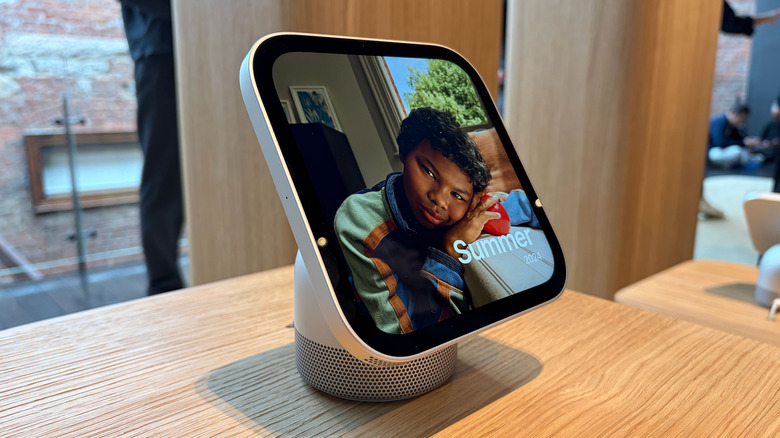
One of the most striking physical characteristics of the HomeView is its absolute lack of physical buttons or controls. Blending the square form factor of an Apple Watch with the touchscreen capabilities of an iPad and the speaker mesh of a HomePod, industry observers initially expected at least a physical volume rocker or a privacy shutter.
According to Apple’s design team, this omission was entirely intentional. The HomeView was conceptualized from day one as a "voice-first, touch-second" device. Siri AI serves as the primary input mechanism, while the touchscreen acts as a visual confirmation and secondary interaction layer. By prioritizing voice and natural language processing, engineers were able to strip away physical clutter, resulting in a minimalist aesthetic designed to blend seamlessly into modern home decor.
Official Statements and Leadership Insights
Apple’s leadership team has been vocal about the strategic rationale behind the HomeView’s design choices, emphasizing that the product’s reliance on the iPhone is a feature, not a limitation.
-
John Ternus (CEO): During his opening remarks at the hardware event, Ternus established the philosophical anchor for the product:
"There’s no product in the world better designed to be your intelligent personal hub than iPhone."
By positioning the iPhone as the undisputed master controller of the user’s digital life, Ternus justified extending that intelligence outward into static home environments.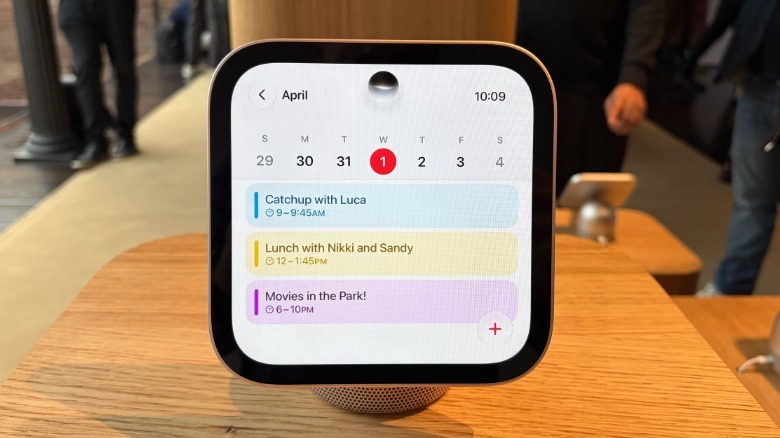
-
Matthew Costello (VP of Hardware Engineering): Elaborating on the balance between communal utility and personal privacy, Costello highlighted the ephemeral nature of the device’s data processing:
"Everything that feels natural on a phone is now available in a subtle, glanceable device that gives you what you need in the moment. It recognizes you and shows you your information, but when you step away, it’s gone."
Costello further emphasized that tying the display’s personalized outputs to a recently unlocked, nearby iPhone ensures that private data remains encrypted and protected within the user’s personal custody. -
Cecilia Dantas (Home Product Marketing Team): Addressing the core tenets guiding the development process, Dantas stressed that the product had to honor three non-negotiable boundaries:
"When we design home products, we always keep three things in mind: They have to be intelligent, personal and private."
Dantas also acknowledged the extreme design restraint required by the engineering team during development. Rather than cramming every feature of an iPad or Mac into the HomeView, the team had to exercise rigorous discipline to determine what belonged in a home display and what should be left out, ensuring the final user experience remained both powerful and remarkably simple.
Future Outlook
The launch of the HomeView marks a critical inflection point for Apple’s smart home strategy. For years, critics argued that Apple was lagging behind competitors like Amazon and Google in the smart display market. However, by refusing to build a standalone, compromise-heavy tablet and instead anchoring the HomeView firmly within the iOS ecosystem, Apple has charted a distinct, privacy-centric path forward.
Implications for the Smart Home Industry
As consumer anxiety surrounding data privacy, smart home security, and device surveillance continues to rise, Apple’s architecture offers a compelling blueprint for the future. By ensuring that personal data never permanently resides on shared hardware, the HomeView mitigates the risk of domestic data breaches or accidental privacy leaks.
Moving forward, industry watchers expect Apple to expand the HomeView product family—potentially introducing varying screen sizes, specialized mounting accessories, and deeper integrations with Apple Health and fitness tracking. Furthermore, as Siri AI continues to evolve with more advanced on-device large language models (LLMs), the contextual intelligence bridging the iPhone and the HomeView will only grow more sophisticated.
Ecosystem Lock-In and Consumer Adoption
For consumers deeply entrenched in the Apple ecosystem, the HomeView represents an intuitive, frictionless extension of their daily digital routines. However, its heavy reliance on the iPhone as a mandatory proximity key may deter Android users or multi-platform households—a trade-off Apple appears entirely willing to make in exchange for unmatched security and ecosystem synergy.
Ultimately, the HomeView redefines what a smart home hub can be: not an independent computer bolted to your kitchen wall, but a secure, intelligent, and ephemeral window into the digital life you already carry in your pocket.