Executive Overview
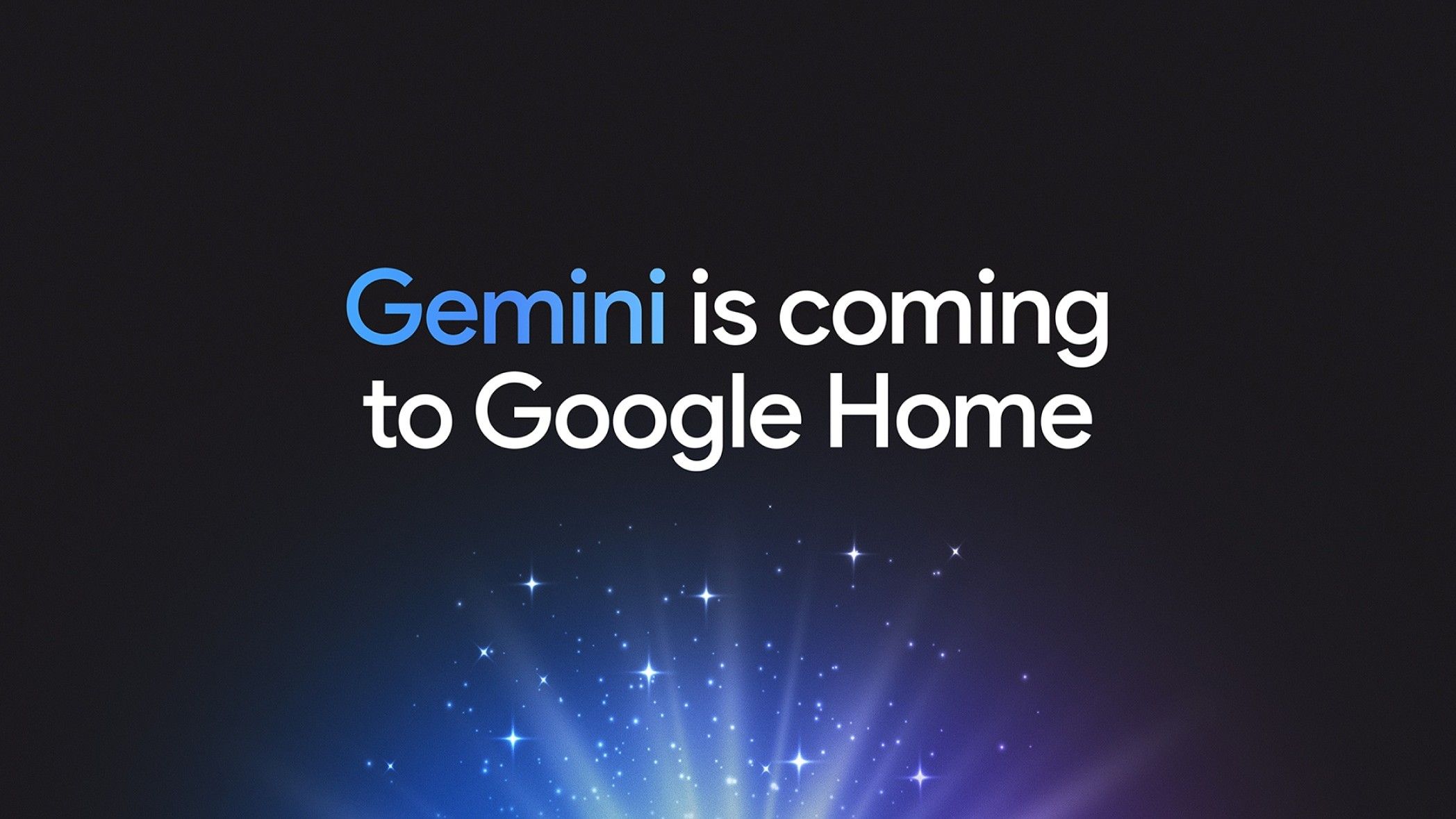
Google has officially released a significant update for its "Gemini for Home" ecosystem and the companion Google Home application, addressing a series of long-standing performance issues that have hindered the user experience. Detailed in the company’s October 29 changelog, this release targets the "early access" phase of Gemini’s integration into the smart home, focusing on correcting erratic AI behavior, improving command reliability, and expanding the functionality of the Google Home app for Matter-enabled devices.
For many users, the update represents a pivotal shift from experimental, often frustrating AI interactions toward a more predictable and refined smart home assistant. By tackling specific pain points—such as phantom error messages and erroneous volume adjustments—Google is signaling a commitment to stabilizing its AI-first strategy for home automation.
Detailed Chronology: Patching the "Ghost in the Machine"
The most prominent aspect of this update is the direct intervention into Gemini’s conversational shortcomings. Since the inception of Gemini for Home, users have frequently reported instances where the assistant would interrupt or respond with the infamous "Sorry, I didn’t understand" error, even when no command had been issued. This "ghosting" behavior—where speakers and displays would trigger responses to silence or ambient noise—has been a major source of user friction.
Resolving Conversational Errors
The latest patch explicitly addresses this "false positive" trigger issue. By refining the wake-word sensitivity and the context-awareness logic, Google intends to eliminate the unprompted interruptions that have plagued smart speakers and displays.
Furthermore, the update tackles the intelligence gap in device-to-device communication. Users often found that moving music playback between rooms or controlling devices in different zones resulted in failure. Google has now deployed more robust command-processing for media services, specifically targeting YouTube TV. Users should expect a higher success rate when directing content across various hardware endpoints, minimizing the "I’m sorry, I can’t play that" responses that often occur during multi-room audio or video streaming.
The Volume Control Crisis
Perhaps the most critical fix in this rollout concerns the reliability of physical environment controls. Reports had surfaced regarding "zero volume" bugs, where users setting alarms or timers would find their devices muted entirely, rendering the alarm system useless.
Google’s patch also addresses a logic error in cross-device volume management. Previously, attempting to adjust the volume of a speaker in a different room often resulted in the local device—the one the user was currently addressing—adjusting its own volume instead. The update introduces a more sophisticated "target-aware" command structure, ensuring that if the intended target device cannot be located or is offline, the AI informs the user rather than defaulting to the wrong hardware.
Supporting Context & Metrics: A Broader Ecosystem Upgrade
Beyond the AI layer, the Google Home app itself has undergone a significant transformation. This update is not merely about patching bugs; it is about maturing the interface for the increasingly complex Matter-enabled smart home landscape.
Matter Integration and Energy Management
The integration of Matter—the universal smart home standard—has been a cornerstone of Google’s recent roadmap. The new update allows Android users to monitor energy consumption for compatible smart plugs and energy monitors in real-time. By displaying power usage in milliwatts (mW) and total consumption in kilowatt-hours (kWh) directly on device tiles, Google is providing users with granular insights into their home’s energy footprint. This data is now surfaced directly on controller screens, eliminating the need to dive into sub-menus to track efficiency.
Organizational Refinements
The Google Home app is also implementing a more intuitive device taxonomy. By automatically organizing hardware into categories such as garage doors, windows, blinds, and gates, the app aims to reduce cognitive load for users with dozens of connected devices. Furthermore, the introduction of quick-access power-saving modes provides an immediate, one-tap solution for managing home power consumption.
For users subscribed to Google Home Premium, the update streamlines access to exclusive benefits. By navigating to Profile > Google Home Premium > Features, users can now more effectively toggle and monitor the premium capabilities they are paying for, ensuring a clearer value proposition for the service.
The Evolution of the Smart Home AI
To understand the significance of this update, one must look at the trajectory Google has taken over the past year. The transition from the legacy Google Assistant to the large-language-model (LLM) powered Gemini for Home has been a "long road," as Google describes it.
Earlier this year, in an effort to accelerate performance, Google claimed to have increased Gemini’s response times by 40%. However, raw speed meant little if the comprehension was poor. Subsequent updates focused on "contextual understanding," allowing the assistant to parse casual, conversational language rather than requiring rigid, syntax-heavy commands.
This latest update is effectively the "polishing" phase. While the AI is now faster and understands intent better than it did six months ago, the focus has shifted toward the reliability of the physical execution. The ability to distinguish between an intentional command and background noise, and the ability to maintain consistent state (such as volume levels), are the foundational elements of a truly "smart" home. Without these, the advanced reasoning capabilities of Gemini remain obscured by the frustration of basic operational failure.
Official Statements and Industry Impact
While Google’s internal communications remain largely focused on technical patch notes, the industry-wide sentiment is that these updates are necessary to maintain competitive parity with Amazon’s Alexa and Apple’s HomeKit. The "Early Access" tag on Gemini for Home is a tacit admission from Google that the product is still being iterated upon in the real world.
By providing transparent documentation of these fixes, Google is attempting to rebuild trust with power users who have been burned by the transition from the legacy Assistant. The focus on Matter—a cross-platform standard—further suggests that Google is pivoting toward an interoperable future where the AI (Gemini) is the interface, but the underlying hardware (Matter) remains agnostic and reliable.
Future Outlook: What Lies Ahead
As we head into the end of 2024, the path forward for Gemini for Home seems clear. The integration of generative AI into the smart home is moving away from simple "if-this-then-that" logic toward a model that understands the home as a holistic, interconnected environment.
We can expect future updates to focus on:
- Predictive Automation: Using the data gathered from energy monitoring and camera feeds to suggest routines before the user asks for them.
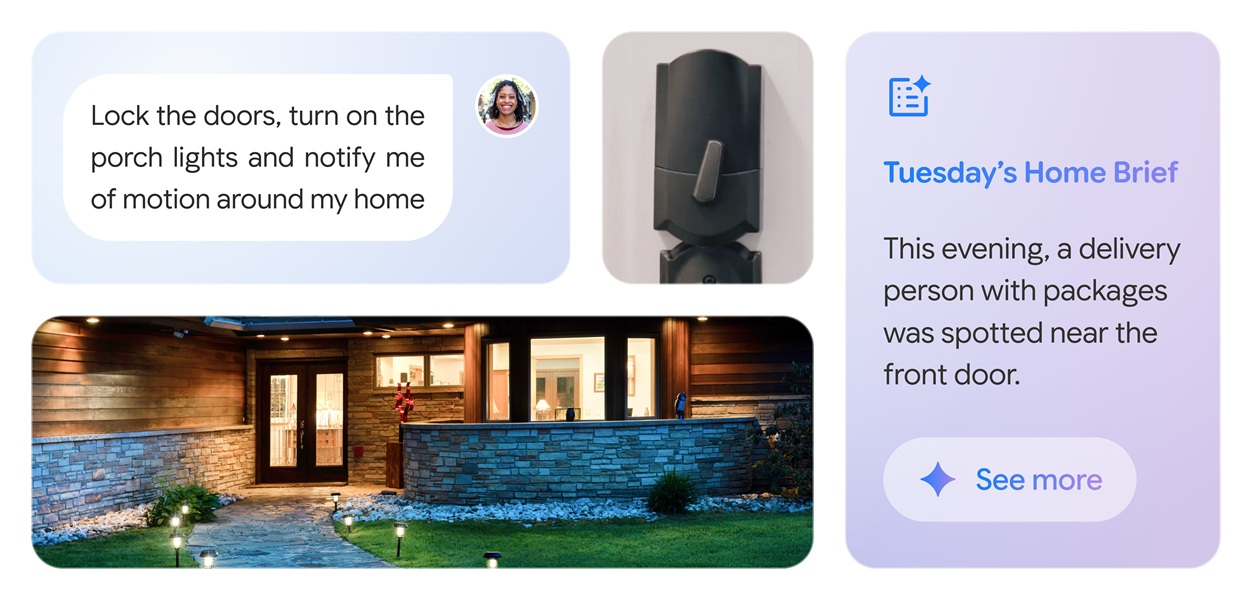
- Advanced Multi-Modal Interaction: Deeper integration with cameras to provide not just a live feed, but an analytical summary of what is happening in the home, similar to the "Home Brief" feature currently in development.
- Hardware Independence: Further decoupling the AI’s intelligence from the specific hardware, allowing Gemini to operate with near-perfect consistency across a diverse array of third-party Matter devices.
For now, the October 29 update serves as a vital reminder that for AI to be truly useful in the home, it must first master the mundane. By fixing the alarms, the volume controls, and the phantom error messages, Google is laying the groundwork for a more stable and reliable smart home future. Users are encouraged to update their Google Home app to the latest version to take advantage of these stability improvements immediately.