Executive Overview: A New Era for Wearable Tech
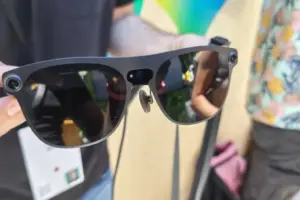
The landscape of extended reality (XR) has long been dominated by bulky, isolating headsets that prioritize immersion at the cost of social presence. However, the industry is witnessing a seismic shift today. Xreal, a pioneer in the AR/XR space, has officially launched its highly anticipated "Aura" glasses, marking a pivotal moment in the evolution of wearable spatial computing.
Available starting October 27 in the United States, Canada, Japan, and South Korea, the Xreal Aura is positioned as a bridge between the digital and physical worlds. By integrating Google’s powerful Gemini AI and Qualcomm’s cutting-edge Snapdragon Reality Elite platform, Xreal aims to deliver a seamless, high-fidelity experience that fits within a 95-gram frame. With a aggressive pricing strategy and a robust ecosystem of partners, the Aura represents a bold attempt to bring sophisticated spatial computing out of the lab and into the consumer’s everyday wardrobe.
Detailed Chronology: From Concept to Consumer
The path to the Aura’s release was paved with calculated anticipation. The project first captured the public’s imagination during Google I/O 2026, where early hands-on reports described the device as an architectural marvel—a full-featured XR headset shrunk into a form factor that feels remarkably like standard eyewear.
The Path of High Expectations
By August 2026, the fervor surrounding the device reached a boiling point. Xreal reported over 10,000 reservations, with several early-access bundles selling out within days. The company leveraged this momentum to confirm that the final retail price would remain under the $1,500 threshold, a promise that resonated deeply with early adopters wary of the "premium tax" often associated with first-generation hardware.
The Launch Day Surprise
On October 27, Xreal disrupted the market further by announcing a limited-time promotional pricing structure. In a move to incentivize early adoption, the company slashed prices by approximately $200 compared to their initial estimates.
- 12GB RAM/256GB Storage Model: Now $1,099 (down from $1,279).
- 16GB RAM/512GB Storage Model: Now $1,299 (down from $1,499).
These promotional prices are slated to remain in effect through December 2026, creating a strategic window for consumers to enter the ecosystem before the pricing reverts to the higher MSRP. Shipping for the initial wave of orders is scheduled to commence in mid-November.
The Technological Architecture
The Xreal Aura is not merely a display device; it is a full-fledged computing node. Its technical specifications suggest a hardware package designed to handle the high-compute demands of modern AI-driven AR applications.

Hardware Specifications
- Display Technology: The device utilizes high-end Sony Micro-OLED panels, delivering a crisp 1200p resolution at a 120Hz refresh rate. This ensures motion clarity, which is essential for reducing eye fatigue during prolonged use.
- Field of View (FOV): A 70-degree FOV provides a significant canvas for virtual interfaces without completely obscuring the user’s peripheral environment.
- Weight & Ergonomics: At just 95 grams, the Aura is a marvel of miniaturization. By utilizing the Snapdragon Reality Elite chip, Xreal has managed to balance thermal performance with a lightweight profile.
- Audio Integration: The device features "Sound by Bose," leveraging the audio giant’s expertise in spatial acoustics to ensure that the audio experience matches the visual fidelity of the XR environment.
The Software Ecosystem
The Aura runs on Android XR, a platform specifically engineered for spatial computing. This OS choice provides users with immediate access to millions of familiar applications via the Google Play Store. Beyond standard mobile apps, the device is optimized for bespoke XR experiences, including:
- Sports Broadcasting: The NBA app on Aura provides a multiview experience, allowing fans to watch games while simultaneously tracking live statistics and player telemetry.
- Motorsports: The NASCAR XR app offers an immersive layer of data, including a 3D track map that allows viewers to visualize the race in real-time.
- Gaming: Exclusive titles like Project Hail Mary: Journey Among the Stars (a collaboration with Amazon MGM Studios) and Fallout: Factions (from Modiphius Entertainment) demonstrate the device’s potential for interactive entertainment.
Official Statements and Vision
Xreal’s leadership is positioning the Aura as a defining milestone in the history of human-computer interaction. Co-founder and CEO Chi Xu expressed a clear vision for the device during the launch announcement.
"This is a defining moment for XR," Xu stated. "We built Aura for people who want the power of spatial computing without being removed from the world around them. We are incredibly proud to finally unlock these new ways for people to work, watch, play, and build."
The company’s focus is on "Optical See-Through" (OST) technology, which allows the user to see the real world clearly while digital overlays are projected into their line of sight. By prioritizing this transparency, Xreal is betting that consumers prefer an "augmented" reality over the "virtual" isolation of traditional headsets.
Supporting Context & Market Metrics
The current climate for wearable technology is competitive, with heavyweights like Meta and Apple defining the high and mid-tier sectors. Xreal’s strategy is distinctive; they are targeting the "wired" XR market, which allows them to bypass the weight of heavy onboard batteries and cooling systems, thereby achieving a sleeker profile.
The Retail Strategy
For now, the Aura is available directly through Xreal’s storefront and select Best Buy locations. This limited distribution strategy allows the company to control the customer support experience during the initial launch phase. However, the roadmap for 2027 is aggressive, with plans to expand into broader retail channels and specific Google Stores across the U.S. and Japan.
Investor and Consumer Sentiment
The decision to keep the price point below $1,300 for the high-end model is a clear attempt to democratize premium XR. Industry analysts suggest that if Xreal can maintain its supply chain stability through the November shipping period, the Aura could become the benchmark for "smart glasses" moving into the 2027 fiscal year.

Future Outlook: What Lies Ahead
As we look toward 2027, the success of the Xreal Aura will likely hinge on two factors: the developer community and the long-term utility of the Gemini AI integration.
The AI-Driven Future
The integration of Google’s Gemini AI is not just a marketing bullet point; it represents a functional shift. By using AI to process environmental data and user intent, the Aura is expected to handle tasks like real-time translation, object recognition, and context-aware notifications more effectively than its predecessors. If Xreal can provide a seamless hand-off between mobile apps and spatial applications, they may successfully define the "work-play" hybrid lifestyle they are promising.
Potential Challenges
Despite the excitement, challenges remain. The reliance on a wired connection, while beneficial for weight, may be viewed as a tether by some consumers. Furthermore, the longevity of the hardware ecosystem will depend on whether developers choose to optimize their apps for the unique 70-degree FOV and Android XR interface.
Conclusion
The Xreal Aura is, by all accounts, a significant achievement in consumer electronics. By focusing on a "ready-to-wear" design and integrating powerful, proven software stacks, Xreal has created a compelling case for the future of wearable computing. Whether this device will replace the smartphone or the laptop remains to be seen, but with the Aura, the barrier between digital information and the physical world has never been thinner.
As units begin shipping in mid-November, the tech community will be watching closely to see if the reality of the Aura matches the ambitious vision presented by its creators. For now, it is safe to say that the era of functional, high-performance spatial glasses has officially arrived.