Executive Overview: When the Web Embraces Chaos
For decades, the web has been a bastion of deterministic design. Developers have meticulously pixel-pushed elements, ensuring that every margin, color, and animation behaves exactly as specified. However, a seismic shift is underway. Inspired by philosophical musings on the "myth of meritocracy" and the unpredictable nature of the universe—as captured in Michael Schur’s The Good Place—the design community is beginning to flirt with controlled chaos.
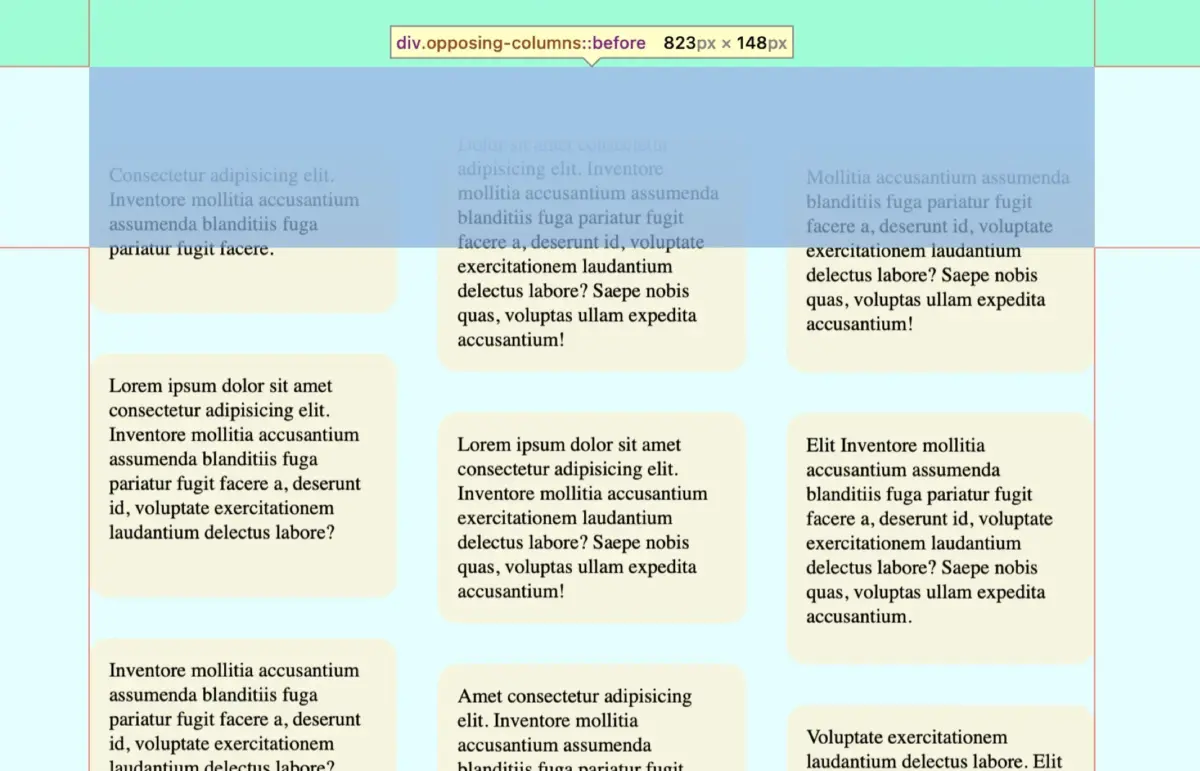
The emergence of the CSS random() specification represents a fundamental change in how we conceive of UI. By allowing browsers to generate random values natively, we are moving away from rigid, static layouts toward "generative UIs" that feel alive, fluid, and uniquely responsive to each interaction. While the tech industry debates whether such non-determinism is a UX breakthrough or a path toward user confusion, one thing is certain: the era of static, predictable interfaces is being challenged by the beauty of the "subtle flux." This article explores the current state of CSS random(), the challenges of cross-browser adoption, and how a new, clever polyfill is bridging the gap for developers who refuse to wait for the standard to go mainstream.
Detailed Chronology: The Evolution of a Standard
The journey toward native randomness in CSS began as a whisper in the W3C drafts, eventually gaining momentum as browser vendors looked for ways to "pave the cowpaths"—solving common developer pain points without requiring heavy JavaScript dependencies.
- Late 2025: A watershed moment occurred when Safari became the first browser to ship support for the CSS
random()specification. This release signaled that the WebKit team viewed randomization not as a niche novelty, but as a core requirement for modern, declarative design. - Post-Safari Launch: Following Apple’s lead, the developer community—led by influential voices like Schalk Neethling and Alvaro Montoro—began experimenting. Demonstrations of the "confetti effect" and randomly generated starfields went viral, proving that CSS was the most suitable language for these tasks, adhering to the "Rule of Least Power."
- The Adoption Gap (2026): As we move through 2026, the industry finds itself in a state of bifurcated progress. While Safari users enjoy native support, Chrome and Firefox users remain largely in the dark. Although bug trackers for Chromium and Gecko show activity, there is no clear timeline for a cross-browser "baseline" release. This has left developers in a predicament: build for the future and alienate non-Safari users, or stick to legacy JavaScript workarounds.
Supporting Context & Metrics: The Philosophy of the Polyfill
Why do we need a polyfill for a feature that is arguably "fun"? The answer lies in the tension between corporate requirements and browser limitations. In the enterprise world, developers are often asked to implement complex, randomized animations—like confetti bursts—that must align strictly with brand guidelines. Previously, this required heavy, brittle JavaScript plugins.
The Performance and Power Equation
Native CSS random() is objectively superior for several reasons:
- Declarative Syntax: It moves logic out of the script tag and into the stylesheet, keeping the presentation layer clean.
- Resource Efficiency: Browsers can optimize CSS rendering pipelines in ways that JavaScript-injected styles cannot match.
- Future-Proofing: By using the native syntax today, developers ensure their code is "forward-compatible." When native support finally hits Chrome and Firefox, the polyfill can be removed, and the site will continue to function seamlessly.
The Technical Hurdle
The css-random-polyfill addresses the current lack of browser ubiquity by acting as a bridge. Unlike older polyfills that attempted to hack CSS selectors—a notoriously dangerous and inefficient practice—this polyfill operates on the principle of intermediate custom properties. By prefixing random values with --random, the polyfill identifies which elements need processing, calculates the value, and injects it into the style object. This approach avoids the "dark side" of polyfilling—avoiding the need to re-fetch or re-parse entire CSS files.
Official Statements & Industry Perspectives
The consensus among industry leaders is cautiously optimistic. Chris Coyier, a seminal voice in frontend development, has praised the native implementation as "pretty darn compelling," noting that the ability to randomize layouts declaratively changes the creative threshold for designers.
Tim Nguyen of the Safari team has become a primary architect of this movement. His work on the "Wheel of Fortune" demo highlighted that random() is not just about choosing numbers; it is about managing state. Through the use of element-shared or fixed arguments, developers can ensure that a random value persists across specific elements—such as ensuring all stars in a field tilt at the same angle—or remains consistent during a session.
However, the "bad news" remains the fragmentation of the web. As one developer noted in a popular YouTube thread: "Can’t wait to use this in prod in four years." This sentiment captures the frustration of the modern web developer: we are often caught between the brilliance of new specs and the slow, grinding pace of cross-browser interoperability.
Future Outlook: Beyond random()
Looking ahead, the discussion is already shifting toward random-item(). While random() provides numeric values, random-item() would allow developers to pick from an array of arbitrary values (colors, strings, or asset paths) directly within CSS.
The Rise of Custom Functions
We are seeing the early stages of a "CSS Renaissance." With the introduction of custom CSS functions and inline conditionals (currently being explored in Chromium), developers are finding ways to simulate functionality like random-item() today. By combining random() with custom functions and if() logic, we can effectively create a "CSS-native switch statement."
For example, a developer can now define a function:
@function --item(--index, --arg-1, --arg-2, ...)
  result: if(style(--index: 1): var(--arg-1); else: var(--arg-2));
This is a game-changer. It represents the move toward a fully capable, logic-aware CSS. Critics might argue that we are pushing CSS too far, turning stylesheets into programming languages. However, the counter-argument is compelling: why rely on an external JavaScript runtime when the browser’s own engine is already equipped to handle these computations?
The Path Forward
The "luck of the draw" is not just a chapter in a philosophy book; it is the theme of the next era of web design. Whether or not you choose to implement a polyfill today, the trajectory is clear. The web is moving toward a more dynamic, chaotic, and aesthetically interesting future.
Developers are encouraged to experiment with the css-random-polyfill to get a head start. By testing these patterns now, you aren’t just playing with experimental syntax; you are actively participating in the "paving of the cowpaths" that will eventually define the standard for the next decade of web development.
In conclusion, as we continue to step into the "river of the web"—which, like Heraclitus’s river, is never the same twice—the adoption of controlled, native randomness will be the defining feature of the modern, responsive, and truly living web. The tools are available, the specs are maturing, and the only limit now is the developer’s own appetite for experimentation. Happy randomizing.