Executive Overview
The convenience of the digital wallet has long been confined to our financial transactions, loyalty programs, and transit passes. However, Google is on the precipice of a significant paradigm shift that promises to redefine the way we interact with our physical living spaces. In a move that signals a deeper integration between the Google Home ecosystem and the Android operating system, the company has announced that Google Wallet will soon support digital home keys.
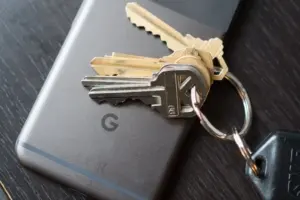
This development transcends simple convenience; it represents a fundamental migration of personal security architecture from the physical realm to the encrypted, cloud-synced environment of the Google ecosystem. By leveraging the Aliro Ultra-Wideband (UWB) standard and the robust infrastructure of the Google Home app, Google is positioning its platform as the central nervous system of the modern smart home. As the rollout begins for Public Preview members, we are witnessing the first steps toward a future where the traditional metal key—a technology that has remained largely stagnant for centuries—is rendered obsolete by NFC and UWB protocols.
Detailed Chronology: From Concept to Implementation
The Foundation of Digital Access
The journey toward a digital home key has been a multi-year project for the Connectivity Standards Alliance (CSA), the organization responsible for the cross-industry Matter protocol. While Google has long offered digital car keys for specific vehicle manufacturers, the transition to residential smart locks required a more nuanced approach to security, battery life, and device interoperability.
The Integration Roadmap
The implementation strategy follows a logical, phased progression:
- Phase I: The Home Hub Infrastructure. Google first established the necessity of a Matter-enabled hub, ensuring that local commands could be processed without constant reliance on cloud latency.
- Phase II: The Aliro Standardization. By championing the Aliro standard, Google ensured that the technology wasn’t a walled garden. This protocol allows for the precise ranging required for passive, proximity-based unlocking.
- Phase III: Wallet Integration. The current phase involves embedding these credentials directly into Google Wallet. By housing the key within the Wallet’s Secure Element, Google ensures that the cryptographic handshake required to unlock a door is as secure as a contactless credit card payment.
- Phase IV: Public Preview. The feature is currently in a "Public Preview" state, allowing early adopters to stress-test the system before the broader rollout anticipated in the coming weeks.
Supporting Context & Metrics: The Tech Behind the Lock
The Power of Aliro and UWB
At the heart of this feature is Ultra-Wideband (UWB) technology. Unlike Bluetooth Low Energy (BLE), which can be prone to "relay attacks" where hackers intercept signal strength to trick a lock into thinking a user is closer than they are, UWB measures the time-of-flight of radio waves. This provides a spatial accuracy within centimeters. When combined with the Aliro open access standard, it allows for a "walk-up-and-unlock" experience that is both seamless and secure.
Security Architecture
A common concern among skeptics is the vulnerability of a phone-based key. Google has addressed this through a multi-layered security approach:
- Secure Element (SE): The digital key is stored in the hardware-backed Secure Element of the Android device, isolated from the primary operating system.
- Automatic Syncing: The key is cryptographically tied to the user’s Google Account, not a specific device. If a user loses their phone, they can revoke access via another device or the Google Home web interface, effectively "deactivating" the key instantly.
- Granular Sharing: The Google Home app enables homeowners to grant access to family members or guests. This access can be managed, revoked, or time-limited, providing a level of administrative control that physical keys can never replicate.
System Requirements
To ensure stability, Google has set clear thresholds for hardware compatibility:
- Operating System: Android 9 (Pie) or newer.
- Smart Home Hardware: A Matter-certified smart lock compatible with Aliro, and a Matter-enabled Google hub (such as the Nest Hub Max or the latest Nest Mini).
- Ecosystem: The Google Home app must be installed and configured as the primary controller for the smart home environment.
Official Statements and Industry Impact
While Google has remained characteristically understated regarding the specific launch dates for general availability, the official support documentation provides a clear vision of their strategy. A spokesperson for the Google Home team emphasized that "the goal is to move beyond the friction of individual device management. By linking the digital key to the Google Home profile rather than the lock itself, we are creating a persistent, universal identity for the homeowner."
Industry analysts suggest that this move is a direct challenge to the fragmented smart lock market. Previously, a consumer might have had to use a dedicated app for their August lock, another for their Yale lock, and a third for their garage door opener. By centralizing these under the Google Wallet umbrella, Google is effectively commoditizing the smart lock hardware, making the software experience the primary differentiator.
Future Outlook: The Road Ahead
The Wear OS Omission
Perhaps the most notable absence in the current update is support for Wear OS smartwatches. While the current implementation is limited to smartphones, the hardware for UWB exists in many modern wearables. The absence of this feature is likely a deliberate choice to ensure the stability of the smartphone rollout before extending the architecture to devices with smaller batteries and different radio configurations. Industry speculation suggests that Wear OS integration is already in the testing phase and could arrive as early as Q2 of next year.
The End of the Physical Key?
The psychological barrier to ditching a physical key remains the biggest hurdle for mass adoption. Most households currently treat a digital key as a "convenience feature" rather than a primary method of entry. However, as the ecosystem matures and reliability metrics improve, the digital key is poised to become the default.
Looking ahead, we can expect:
- Biometric Integration: Increased reliance on Android’s biometric (fingerprint/face) unlock as a prerequisite for engaging the digital key, adding a second factor of authentication.
- Commercial Adoption: Transitioning this technology from residential to commercial settings—such as office buildings, gym access, or hotel room keys—using the same Google Wallet interface.
- Emergency Protocols: Development of "offline mode" capabilities where the digital key functions even if the phone is powered down (a feature already available for some transit cards in the Wallet).
Conclusion
Google’s entry into the digital home key space is not merely an incremental update; it is a strategic maneuver to integrate the physical world into the digital sphere. By prioritizing the Aliro standard and utilizing the deep, secure integration of Google Wallet, the company is betting that the future of home security lies in the hands of the software, not the locksmith.
For the average consumer, the shift will be subtle at first—a notification here, a tap there—but the implications are profound. We are witnessing the slow but inevitable sunset of the metal key, replaced by a secure, shareable, and intelligent digital credential that moves with us. As the Public Preview continues to gather data and feedback, the smart home is about to get a whole lot smarter, and significantly more accessible. The only question remains: are you ready to trust your front door to your digital wallet? If current trends in mobile security are any indication, the answer is a resounding "yes."