
Executive Overview
The retail landscape of the 21st century has fundamentally shifted, with holiday shopping traditions creeping ever earlier into the calendar year. Nowhere is this more apparent than in the technology and maker sectors, where major brands now bypass traditional shopping bottlenecks to capture consumer attention weeks ahead of schedule. Breaking tradition once again, industry-leading 3D printing manufacturer Bambu Lab has officially launched its landmark Black Friday sale, rolling out sweeping price cuts nearly a full month before the official November shopping holiday.
This early rollout represents a strategic pivot for the company, offering some of the lowest prices seen across its product ecosystem throughout the entire year. Positioned as both a consumer-friendly move and a calculated competitive strike, the sales event features profound markdowns on high-end creative hubs, deeply discounted entry-level hardware for absolute beginners, and extensive bulk-buying incentives for essential consumables like filaments and model kits.
For hobbyists, engineers, and creative professionals who have been sitting on the fence waiting for the right moment to invest in advanced desktop manufacturing equipment, this early-bird event is shaping up to be the definitive purchasing window of the year. With discounts slashing hundreds of dollars off flagship machinery and ancillary supplies, demand is expected to surge well ahead of the official December 1st expiration date. This comprehensive report explores the timeline, the hardware, the strategic implications, and the broader market context surrounding Bambu Lab’s early holiday blitz.
Detailed Chronology: The Evolution of Early Holiday Tech Sales
To understand the weight of Bambu Lab’s early November pricing event, one must examine the shifting timeline of modern retail promotions. Historically, Black Friday was a localized, single-day American phenomenon anchored strictly to the Friday immediately following Thanksgiving. Campouts outside brick-and-mortar storefronts, doorbuster deals, and frantic dash-and-grab consumer behavior defined the era.
Over the past decade, the rise of e-commerce transformed Black Friday into a digital marathon, stretching into Cyber Monday and eventually swallowing the entirety of November. However, the current trend among high-tech hardware manufacturers—particularly within the burgeoning consumer 3D printing space—has accelerated this timeline even further. Companies are no longer waiting for November to kick off their holiday campaigns; they are initiating them concurrently with, or immediately following, the tail end of the autumn retail season.
- Mid-October: Industry trackers noted early whispers of inventory staging and supply chain positioning across major Chinese and North American warehouses. Manufacturers began anticipating a compressed Q4 shopping season due to shifting global logistics costs and consumer caution driven by broader economic pressures.
- Late October: Bambu Lab deployed initial promotional testing, leveraging seasonal themes (such as Halloween-adjacent branding) to soft-launch early-bird specials. These preliminary promotions served as a testing ground for website traffic load balancing and inventory resilience.
- Early November (Current Phase): The floodgates opened officially. Bambu Lab formally transitioned its promotional framework into a full-scale Black Friday event running continuously through December 1st. By cutting prices by up to $250 on multi-functional hubs and discounting beginner-friendly models to under $200, the company effectively hijacked the pre-holiday news cycle, starving competitors of oxygen during the critical consideration phase for holiday gift shoppers.
This aggressive timeline offers distinct advantages. By beating competitors to the punch, Bambu Lab secures early holiday budget allocations from consumers who might otherwise have saved their capital for late-November tech deals from rival firms like Creality, Prusa, or AnkerMake.
Hardware Breakdown: Analyzing the Flagship Discounts
Bambu Lab has built its formidable reputation on a blend of high-speed printing capabilities, automated calibration, out-of-the-box reliability, and seamless multi-color printing integrations via its Automatic Material System (AMS). The current sale hits several critical pillars of the company’s hardware lineup, catering to both industrial-grade tinkerers and absolute novices.
The All-in-One Powerhouse: H2D AMS Combo
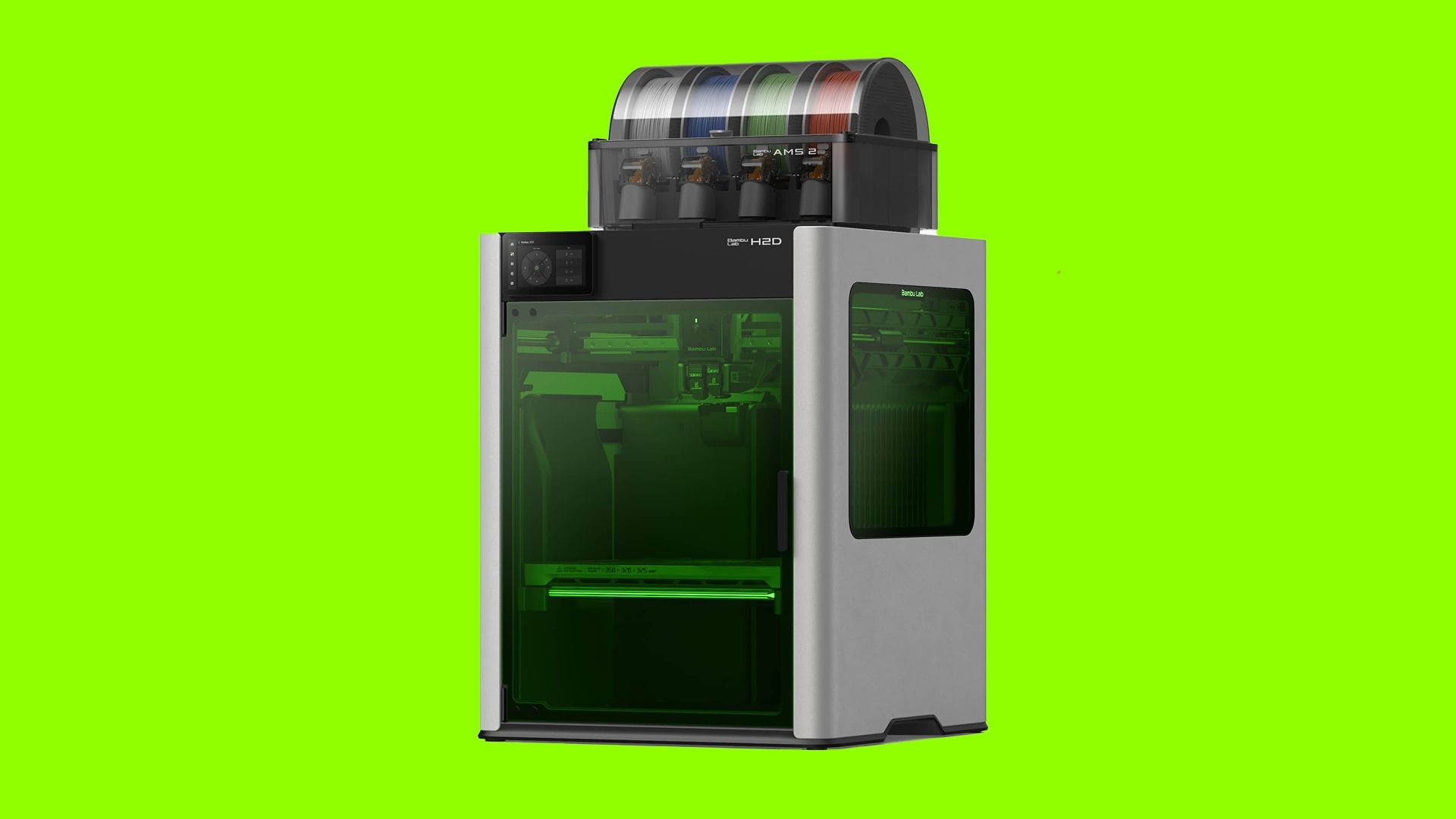
At the pinnacle of the current hardware discounts is the H2D AMS Combo, which has received a staggering price cut of up to $250 off. This machine represents a significant evolutionary step for desktop creative hubs. Moving beyond traditional additive manufacturing confines, the system bridges the gap between 3D printing, plotting, and precise cutting.
For small business owners, prototype developers, and advanced creators, the H2D AMS Combo functions as a micro-factory. The integration of Bambu Lab’s renowned multi-material handling system allows users to seamlessly switch between different filaments—whether for soluble support structures, complex multi-color artistic prints, or flexible engineering polymers—while the supplementary plotting and cutting functions enable mixed-media workflows that are rarely found in a single footprint.
The Entry-Level Champion: A1 Mini
While advanced multi-function hubs grab headlines, the democratization of 3D printing relies heavily on accessible, low-barrier-to-entry devices. For beginners, students, and casual hobbyists who may feel intimidated by the complexities of bed leveling, extrusion calibration, and firmware flashing, Bambu Lab has positioned the compact A1 Mini at a remarkably accessible price point of just $199.
Despite its diminutive physical footprint, the A1 Mini inherits the DNA of its larger siblings, boasting exceptional print speeds, vibration compensation, and reliable first-layer adhesion out of the box. Reviewers and industry experts consistently rank the A1 series among the best consumer-tier machines on the market because it effectively removes the "hobbyist friction" that historically plagued entry-level 3D printers, turning what used to be a frustrating trial-and-error process into a plug-and-play appliance experience.
Consumables, Maker’s Supply, and Bulk Incentives
Hardware alone does not sustain a maker ecosystem; the ongoing consumption of raw materials dictates long-term brand loyalty. Recognizing this, Bambu Lab’s early Black Friday event extends far beyond hardware chassis:
- Filament Bulk Discounts: Users can secure up to 35% off filament when purchasing in bulk. Given the high volume of material consumed during iterative prototyping, artistic projects, and holiday gift production, bulk filament savings provide immediate ongoing value to active operators.
- Maker’s Supply Model Kits: Capitalizing on the growing demand for project-based making, the company has slashed prices by up to 40% on Maker’s Supply Model Kits. These kits bundle necessary hardware (such as motors, fasteners, and electronics) with pre-designed printable files, encouraging users to build functional kinetic sculptures, household gadgets, and mechanical toys.
Supporting Context & Market Metrics: The Rise of Consumer-Grade Additive Manufacturing
To contextualize why Bambu Lab’s sales strategy is generating such substantial industry chatter, one must look at the broader macroeconomic and technological shifts transforming the 3D printing market over the past three years.
| Metric / Trend Indicator | Historical Context (2018–2021) | Current Market Reality (2023–2024) |
|---|---|---|
| Primary User Base | Engineers, hardcore tinkerers, tech hobbyists | General consumers, designers, educators, entrepreneurs |
| Setup & Calibration | Manual bed leveling, extensive tuning required | Fully automated, AI-assisted monitoring, plug-and-play |
| Print Speeds | Average 50mm/s – 80mm/s standard | High-speed coreXY architectures exceeding 500mm/s |
| Multi-Color Capabilities | Complex manual filament swaps or expensive dual-extruder mods | Automated multi-material docking systems (AMS) |
| Holiday Sales Strategy | Late-November single-day doorbusters | Extended, multi-week promotional campaigns beginning in October |
The entry of disruptors like Bambu Lab fundamentally reset consumer expectations. Where older iterations of desktop printers demanded deep technical literacy—often requiring users to spend more time troubleshooting hardware than actually designing objects—modern iterations emphasize reliability and speed.
Consequently, the consumer base has expanded exponentially. No longer confined to engineering labs and basement workshops, 3D printers now sit in school classrooms, professional design studios, and family living rooms. This democratization has turned seasonal shopping events into critical battlegrounds. Companies must offer aggressive pricing to capture first-time buyers who view these machines as creative appliances rather than complex engineering projects.
Expert Perspectives & Industry Standing
Independent reviewers and industry analysts have closely monitored Bambu Lab’s meteoric rise. In comparative roundups of the best 3D printers on the market, the brand consistently secures top placements, lauded primarily for its execution of high-speed kinematics and the sheer reliability of its automated features.
Industry analysts note that promotional pricing events like the current early Black Friday sale serve a dual purpose:
- Market Share Consolidation: By capturing price-sensitive buyers early in the fourth quarter, brands lock consumers into their proprietary ecosystems (such as Bambu Studio slicer software, cloud ecosystems, and RFID-tagged filament spools).
- Inventory Optimization: Moving high volumes of hardware ahead of the fiscal year-end allows logistics networks to clear warehouse space for upcoming next-generation research and development releases.
"The shift we are seeing is that consumers are no longer waiting for permission to buy based on a calendar date," notes one retail technology analyst. "When a manufacturer with Bambu Lab’s brand equity drops prices on proven hardware by hundreds of dollars in mid-October, they effectively signal to the market that waiting until late November carries a real risk of stock depletion."
Future Outlook: What the Early Sale Signals for the Rest of Q4
As the clock ticks down toward the hard deadline of December 1st, when the current promotional window officially closes, the ripple effects across the consumer electronics and additive manufacturing sectors will become increasingly apparent.
Several key trends are likely to emerge as the holiday shopping season reaches its zenith:
- Intensified Competitor Response: Rival manufacturers who traditionally rely on late-November shock-and-awe discounting will likely be forced to accelerate their own promotional timelines or sweeten their bundles to counter Bambu Lab’s early land grab. Consumers should monitor competing platforms closely for counter-offers.
- Supply Chain Strains: Early holiday events heavily test international shipping lanes and local fulfillment centers. Buyers who delay purchases until the final days of November risk encountering out-of-stock notices, shipping delays, or backorders that could jeopardize holiday delivery timelines.
- The Shift Toward Ecosystem Lock-In: As hardware prices drop, the long-term economic model for manufacturers increasingly relies on consumables (filament, replacement parts, and accessories). The aggressive discounts on bulk filaments seen in the current sale are likely a harbinger of a broader industry trend: hardware as an accessible entry point, with recurring revenue driven by material consumption.
Final Purchasing Advice for Consumers
For those considering an investment in desktop manufacturing technology, the current Bambu Lab sale represents a rare confluence of aggressive discounting, proven hardware reliability, and ample runway before the holiday rush. Whether opting for the heavy-duty versatility of the H2D AMS Combo with its $250 discount or dipping a toe into the hobby with the $199 A1 Mini, prospective buyers would do well to act before inventory depletion or the December 1st cutoff brings an end to one of the most comprehensive tech sales of the fourth quarter.