Executive Overview: A Strategic Pivot or a Software Cleanse?
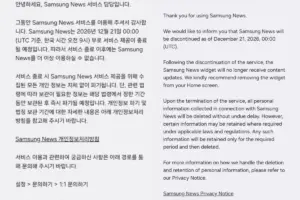
In an era where smartphone manufacturers are increasingly looking to declutter their user interfaces, Samsung has announced a significant shift in its software ecosystem. The company has confirmed that it will be officially discontinuing the "Samsung News" application, a dedicated news aggregator that has served as a fixture on Galaxy devices for the past several years. The service is slated to cease all operations on December 21, 2026, at 00:00 UTC.
This move marks more than just the removal of an app; it represents the end of a long-standing, albeit turbulent, experiment by Samsung to capture the daily news consumption habits of its massive user base. For years, the leftmost pane of the Galaxy home screen—often a prime piece of digital real estate—has hosted various iterations of news and content feeds. With the impending sunset of Samsung News, that space is set to become a void, signaling a potential retreat from the "content aggregator" market in favor of streamlined, minimalist software experiences.
For the average Galaxy user, this change will be felt in the disappearance of the dedicated news widget, the decommissioning of the swipe-to-access media page, and the total erasure of personalized user data associated with the service. While Samsung has yet to provide a definitive roadmap for what, if anything, will replace this functionality, the move leaves little doubt that the company is refining its focus, likely leaving the heavy lifting of news curation to established giants like Google Discover.
Detailed Chronology: A History of Rebranding and Retrenchment
To understand why Samsung News is being shuttered, one must look at the historical context of Samsung’s software strategy. The company has spent nearly a decade struggling to find the "perfect" iteration of a pre-installed content feed.
The Era of Bixby Home (2019)
The journey began with the push for Bixby, Samsung’s proprietary AI assistant. Bixby Home was designed to be an all-encompassing hub, aggregating news, weather, and smart home controls. It was an ambitious attempt to create a "Samsung-first" ecosystem that mirrored the utility of the Google Feed. However, users often found the interface bloated and the content suggestions hit-or-miss.
The Rise and Fall of Samsung Daily (2020)
By 2020, Samsung recognized that the Bixby branding was not resonating as a media consumption tool. The company rebranded the leftmost screen to "Samsung Daily." The intent was clear: move away from the "AI assistant" branding and toward a daily digest format. Despite the name change, the core functionality remained largely similar, and user engagement metrics failed to reach the levels Samsung hoped for in a competitive market dominated by social media and dedicated news aggregators.
The Samsung Free Experiment (2021–2023)
Samsung Free was the next iteration, attempting to gamify or at least diversify the experience by bundling news, podcasts, and even instant games. It was a "catch-all" approach that felt increasingly disconnected from the core utility of a smartphone. By this point, the "swipe-left" gesture had become a point of contention for power users, many of whom opted to disable the feature entirely to improve home screen performance.
The Final Iteration: Samsung News (2023–2026)
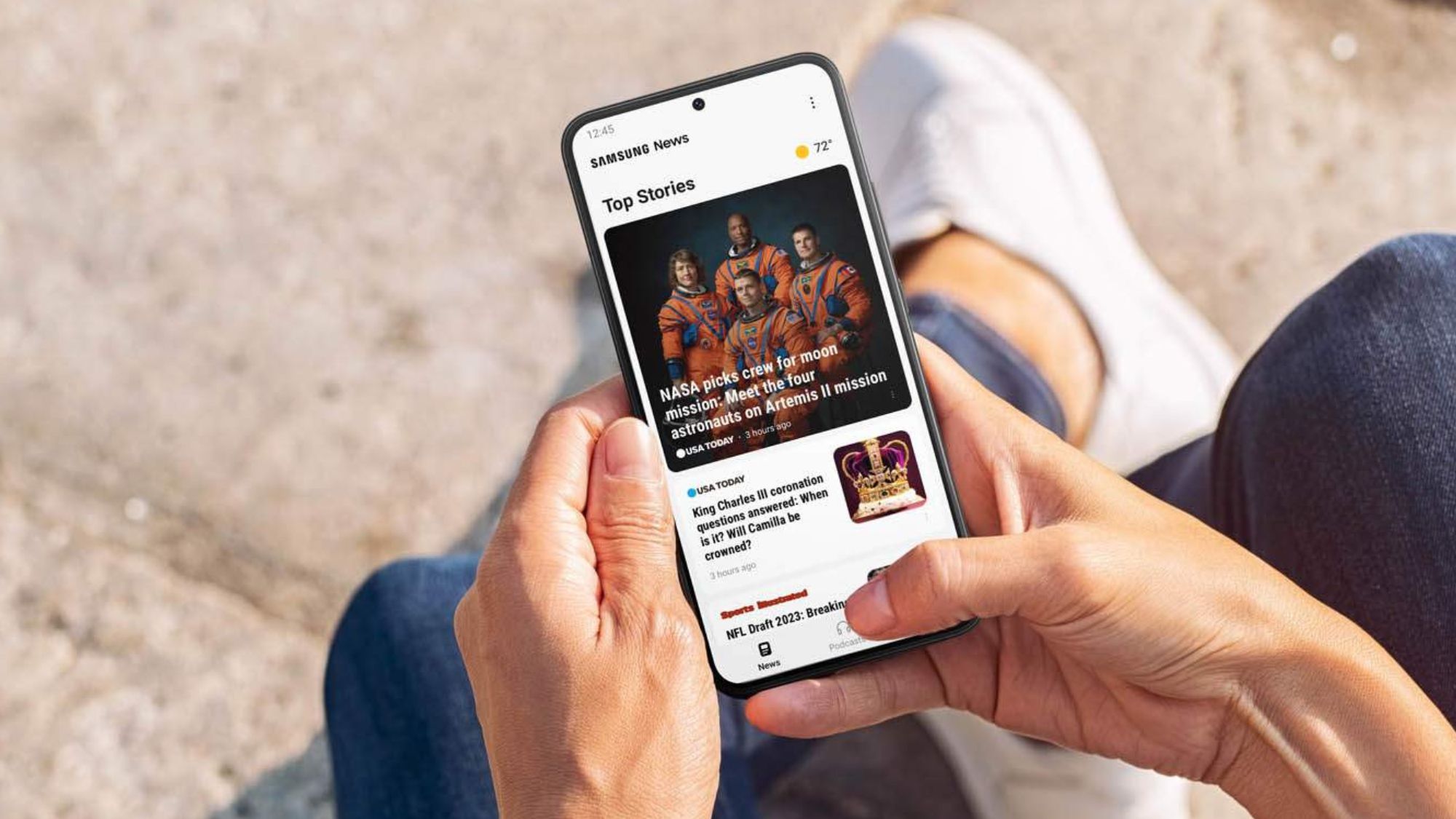
In April 2023, Samsung rebranded the feed once more to "Samsung News." The goal was to pivot toward a more professional, news-focused platform. It was cleaner and more focused, but as the company’s recent announcement proves, it was unable to capture sufficient market share to justify the overhead of maintaining the infrastructure, licensing content, and ensuring data privacy compliance for a global user base.
Supporting Context & Metrics: Why Aggregators Are Struggling
The shuttering of Samsung News is not happening in a vacuum. It is a reflection of a broader trend in mobile technology: the "app-ification" of smartphones is being replaced by a preference for platform-agnostic tools.
The Rise of Google Discover
Google Discover has effectively cornered the market on mobile news aggregation. By leveraging the massive data pool of Google Search, the YouTube algorithm, and Chrome browser history, Google provides a level of personalization that hardware manufacturers find difficult to replicate. When a user can access a highly relevant feed directly from the Google app or the home screen of a Pixel device (or via the Google app on Samsung devices), the value proposition of a secondary, OEM-specific feed diminishes significantly.
User Fatigue and UI Streamlining
"Feature creep" is a common criticism leveled against Android manufacturers. Users have increasingly expressed a preference for "cleaner" software—a trend popularized by the simplicity of iOS and the "stock" Android experience. By removing the Samsung News app, the company is effectively trimming the fat. This not only reduces the maintenance burden on Samsung’s software engineers but also frees up system resources, potentially improving battery life and overall device responsiveness.
Data Privacy and Compliance
The announcement specifically highlights the total deletion of user data, including profiles and personalization settings. Managing a news feed involves processing vast amounts of personal interest data. In the current regulatory environment—with the GDPR in Europe, the CCPA in California, and similar laws in South Korea and India—maintaining such a service comes with significant legal and operational responsibilities. Samsung’s decision may be, in part, a strategic move to reduce its data footprint and minimize liability.
Official Statements and Operational Impact
Samsung has already begun notifying users in key markets, specifically India and South Korea. These notifications serve as a final call to action, urging users to manually remove widgets and prepare for the transition.
What Happens to Your Data?
According to the official communication, Samsung intends to perform a "hard reset" on the service’s backend. All personal information, account profiles, and history associated with Samsung News will be purged from their servers. The company has clarified that while some data might be retained temporarily to satisfy local legal requirements (such as financial records or mandatory data retention laws), it will eventually be destroyed. This is a standard, albeit important, procedure for sunsetting a cloud-connected service.
The Regional Rollout
While the formal notices are currently limited to India and South Korea, it is standard industry practice for a global rollout to follow. The December 21, 2026, date is a global deadline. Users in North America, Europe, and other regions should anticipate similar notifications as the date approaches. There is no indication that the service will remain active in any market; it appears to be a total global cessation of the product.
Future Outlook: The Post-News Era for Galaxy Users
What does a post-Samsung News future look like? For the end-user, the impact will likely be minimal, if not positive.
A Pivot to Google
For those who relied on the swipe-to-left screen for their morning headlines, the transition to Google Discover is the most logical step. Google Discover is already integrated into the Android ecosystem. Most Samsung users already have the Google app installed, and the transition will be seamless. Users can simply long-press on their home screen, access settings, and enable the Google Discover feed as their primary news source.
Potential for "One UI" Simplification
Looking ahead, this move suggests that Samsung’s "One UI" might continue to lean into minimalism. By removing redundant services, Samsung can focus on its core strengths: hardware integration, advanced camera software, and Bixby (for voice control rather than feed curation). This could result in a faster, more stable experience for Galaxy users.
The Evolution of the "Left-Screen"
Will the leftmost screen remain a feature? It is possible that Samsung will allow users to choose their own content providers or simply disable the screen entirely to save resources. Given the company’s recent focus on "Galaxy AI" and other transformative features, it is likely that the space once occupied by the News app will eventually be repurposed for AI-driven widgets or more personalized dashboard experiences that don’t rely on external news licensing.
Final Thoughts
The retirement of Samsung News is a testament to the fast-paced and unforgiving nature of the mobile software landscape. What was once considered a "must-have" feature—a built-in content feed—is now seen as an unnecessary hurdle to a streamlined user experience. As Samsung prepares to turn the page on this chapter, it is clear that the company is prioritizing efficiency and focus. For the Galaxy user, the headline is simple: the news is changing, and it’s time to move on to the next feed.