Executive Overview: A Strategic Reclaiming of Narrative
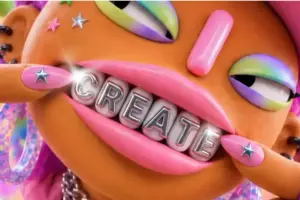
In an era where the rapid proliferation of generative artificial intelligence has cast a shadow of uncertainty over the creative industries, Adobe has chosen to double down on its foundational identity. At its annual flagship conference, Adobe MAX, held this year in Miami, the software titan unveiled its “Made to Create” campaign—a sweeping, ambitious marketing initiative designed to bridge the chasm between cutting-edge automation and the irreplaceable spark of human ingenuity.
This campaign represents a pivotal moment for Adobe. For the first time in half a decade, the company has synchronized its fragmented product ecosystem into a singular, cohesive narrative. By showcasing the work of over 30 artists from 18 countries, Adobe is not merely promoting its software suite; it is actively positioning its tools as the essential bridge between human vision and technological output. As the creative economy grapples with the existential implications of AI, Adobe’s strategy is clear: define the future of creation as a collaborative, human-led endeavor, rather than a robotic replacement.
Detailed Chronology: From Fragmentation to Unified Vision
To understand the significance of “Made to Create,” one must look back at Adobe’s marketing trajectory over the last five years. Since approximately 2019, Adobe’s brand communications have largely been siloed. The Creative Cloud suite—comprising powerhouse applications like Photoshop, Illustrator, Premiere Pro, and After Effects—was marketed in distinct pockets, targeting specific user bases (designers, video editors, photographers) with individualized value propositions.
The Shift at Adobe MAX
The unveiling in Miami marked a departure from this decentralized approach. During the keynote presentations, the company shifted its focus toward a holistic ecosystem. The "Made to Create" initiative serves as a visual and philosophical umbrella under which all these tools now sit.
The campaign’s rollout was meticulously staged:
- The Global Call: Adobe commissioned 30 artists, spanning diverse disciplines and geographies, to produce works that would serve as the campaign’s heartbeat. This was not a generic stock-asset campaign; it was a curated display of technical mastery.
- The Product Integration: Rather than highlighting AI as a standalone "magic button," the campaign demonstrated how AI-powered features (such as Firefly) function as extensions of the artist’s hand, accelerating the workflow without supplanting the creative intent.
- The Multi-Platform Launch: The campaign’s release was synchronized across social, digital, and out-of-home platforms, marking a significant investment in brand equity at a time when many tech companies are tightening their marketing spend.
Supporting Context & Metrics: The Economics of Creativity
The creative software market is currently experiencing its most volatile period since the transition from perpetual licenses to the Creative Cloud subscription model. The emergence of generative AI—specifically image and video synthesis—has disrupted the economic foundations of creative work. When high-fidelity imagery can be generated in seconds, the value of traditional "craft" is being fundamentally reassessed.
Navigating the AI Disruption
Adobe’s business model relies on the continued value of the "professional creator." If AI commoditizes creative output to the point where the skill of the artist is rendered obsolete, the demand for high-end professional software could theoretically decline. Therefore, Adobe’s pivot to a human-centric campaign is an economic imperative as much as a creative one.
- The "Human-in-the-Loop" Metric: Adobe’s internal data suggests that the highest satisfaction rates among power users are found when AI handles tedious, repetitive tasks (masking, object removal, color grading), leaving the artist free to focus on high-level conceptualization.
- Creative Confidence: A recent survey of the Adobe creative community indicates that while 70% of professionals are concerned about the impact of AI on job security, 85% believe that tools which integrate AI into existing workflows (rather than replacing them) are vital to their professional growth.
- Market Reach: By highlighting 18 countries in this campaign, Adobe is signaling that the "creative class" is a global, borderless phenomenon. The campaign’s reach is designed to reassure enterprise and freelance customers alike that Adobe remains the "standard" in a world where open-source, non-standardized AI models are proliferating.
Official Statements: The Corporate Philosophy
Lara Balazs, Adobe’s Chief Marketing Officer, has been the primary architect of this unified messaging. In her remarks at the summit, she emphasized that the intent behind "Made to Create" is to anchor the brand in the reality of the creative process.
"This is the first time in five years that we have brought the breadth of our products together in a single campaign execution," Balazs noted. "We are moving away from the ‘feature-first’ marketing that defined the last decade and moving toward a ‘creator-first’ narrative."
The internal sentiment at Adobe, echoed by various product leads during the Miami sessions, is that AI is not a competitor but an apprentice. The official stance is that Adobe’s AI, particularly the Firefly family of models, is trained on a "commercially safe" dataset—a point of distinction intended to provide legal and ethical comfort to enterprise clients who are wary of the copyright liabilities associated with competing AI models.
Future Outlook: Defining the "Co-Pilot" Era
As we look toward the next 24 to 36 months, the "Made to Create" campaign serves as a precursor to a deeper integration of generative intelligence into the fabric of the creative software industry.
Challenges on the Horizon
Adobe faces two significant headwinds:
- The "Uncanny Valley" of Trust: As AI-generated content becomes indistinguishable from reality, Adobe must lead the conversation on digital provenance. Their "Content Authenticity Initiative" (CAI) will likely become a secondary, yet critical, pillar of their brand narrative alongside "Made to Create."
- The Price-Value Paradox: If AI significantly lowers the time required to complete a project, will clients pay less for creative work? If creative output becomes cheaper, Adobe must justify its subscription pricing. The company is betting that by positioning its tools as "professional-grade co-pilots," they can maintain the premium status of their ecosystem, even as the barrier to entry for creative production drops.
The Long-Term Vision
The future of Adobe is not in being an "AI company," but in being a "Humanity Augmentation company." By framing their tools as catalysts for human imagination, Adobe is attempting to insulate itself from the commoditization of generative AI.
If the "Made to Create" campaign succeeds, it will have redefined the professional landscape. It will shift the industry’s focus from the fear of replacement to the excitement of enhancement. For Adobe, the goal is to ensure that when a creative director or a designer thinks of "creation," they think of the human hand guided by the Adobe suite—a partnership where the software disappears, leaving only the artist’s vision behind.
The "Made to Create" campaign is not just a marketing slogan; it is a defensive wall and a growth strategy combined. By celebrating the human, Adobe is securing its relevance in a future where the only thing that cannot be automated is the unique, subjective experience of the human creator. As the industry moves forward, the success of this initiative will be measured not in views or impressions, but in the continued adoption of Adobe tools by the next generation of visual storytellers who refuse to be sidelined by the algorithms they employ.