Executive Overview: A Season of Unprecedented CSS Evolution
As we transition into the latter half of 2026, the web development landscape is experiencing a period of accelerated refinement. The latest edition of What’s !important (#18) captures a pivotal shift: we are moving away from "hacky" workarounds toward native, high-performance browser implementations. From the long-awaited standardization of complex UI patterns like tooltips to experimental CSS selectors that promise to replace decades-old attribute-based hacks, the browser is becoming more capable by the day.
This report synthesizes the most significant technical advancements from the past fortnight. We are witnessing the emergence of the <geolocation> element, the rise of the Custom Highlight API, and the groundbreaking introduction of the class prefix selector. For developers, the message is clear: the bridge between complex JavaScript-driven behavior and declarative CSS is narrowing.
Detailed Chronology: Technical Breakthroughs
1. The Tooltip Revolution: Delay and Instancy
Tooltips have historically been a source of UX friction—either appearing too aggressively or lingering when the user has clearly moved on. Abhishek Jakhar’s recent exploration of "delayed-then-instant" tooltip logic has sparked a necessary conversation. The core philosophy is simple: introduce a slight hover delay to prevent accidental triggers, but allow for near-instant dismissal once the user moves away.
Chris Coyier pushed this discourse further by introducing "interest invokers." By utilizing the new CSS properties interest-delay-start and interest-delay-end, developers can now offload complex state-management logic to the browser engine. While currently limited to Chrome, this represents a major step forward in progressive enhancement.
2. The <geolocation> Element
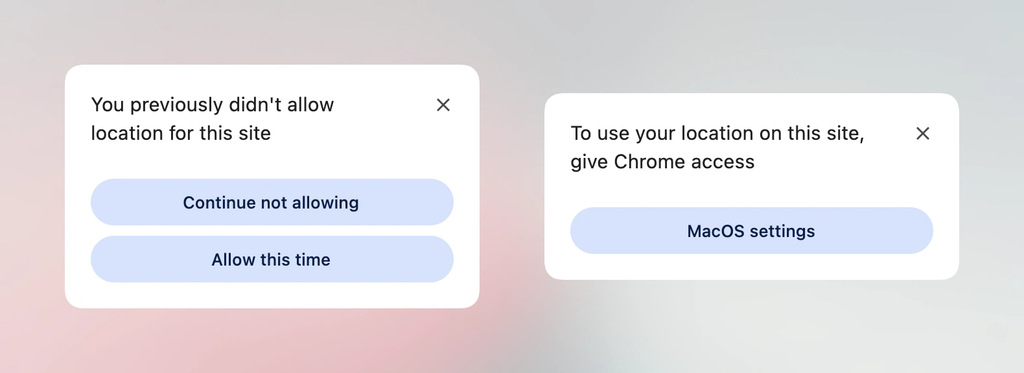
The Geolocation API has long been a notorious pain point, burdened by the heavy overhead of satellites and Wi-Fi triangulation, not to mention the brittle nature of permission states. The new <geolocation> element seeks to simplify this. While it introduces unique styling constraints, it provides a much more robust framework for location-based services. By wrapping the existing Geolocation API in a hybrid strategy, developers can bridge the gap between legacy support and modern functionality, ensuring stability for end-users.
3. MicroLighter and the ::highlight() API
Dave Rupert has unveiled MicroLighter, a lightweight syntax highlighter leveraging the native ::highlight() pseudo-element. By utilizing the Custom Highlight API, developers can achieve high-performance syntax highlighting without the DOM-heavy overhead of traditional libraries. This shift from span-heavy markup to browser-native highlighting is a massive win for web accessibility and performance.
4. CSS Grid to Custom Properties
Temani Afif has unlocked a new dimension of layout control by demonstrating how to map CSS Grid information directly into CSS Custom Properties. By calculating the number of rows, columns, and cell coordinates, developers can now build dynamic layouts that react to their own structural geometry. While this currently requires uniform column widths, the implications for responsive, data-aware design systems are profound.
Supporting Context: The War on Selectors
The CSS specification is undergoing a philosophical shift regarding how we target elements. Bramus’s introduction of the class prefix selector is perhaps the most anticipated syntax change in years. Currently, developers rely on attribute selectors like [class^="something-"], which are computationally expensive and syntactically verbose.
The proposed .something-* syntax provides a cleaner, more performant alternative. By reducing the overhead of string matching in the DOM, this feature promises to optimize rendering times in large-scale applications. When paired with the new @supports named-feature() function—which allows for the detection of granular browser capabilities—we are entering an era where CSS is becoming increasingly programmable and feature-aware.
Official Insights: The Debate on Dark Mode
One of the more contentious discussions this month involves the implementation of dark mode toggles.
- The Two-State Perspective: Lea Verou advocates for a binary switch, maintaining simplicity for the average user.
- The Tri-State Perspective: Bramus argues for a tri-state approach (Light/Dark/System), providing more granular control for power users.
- The Hybrid Approach: As noted by Vale.Rocks, the "auto-until-overridden" two-state model remains the industry gold standard. It respects the system preference by default but persists user choice once an explicit preference is recorded. This avoids the "flash of unstyled content" often associated with aggressive script-based theme switching.
Future Outlook: Balancing the Web
Looking toward the remainder of 2026, the trend is clear: automation of layout and UX primitives.
The introduction of flex-wrap: balance in Chrome is a direct descendant of the successful text-wrap: balance implementation. By automatically distributing flex items to achieve visual equilibrium, browsers are taking over the burden of aesthetic layout. This is not merely a quality-of-life improvement; it is a fundamental change in how we structure interfaces.
Key Metrics for Implementation
As these features move from experimental to stable, engineering teams should track the following:
- Rendering Performance: Monitoring the paint times of
::highlight()vs. traditional JS-based syntax highlighters. - Selector Efficiency: Measuring the reduction in style recalculation time when migrating from attribute selectors to class prefix selectors.
- Progressive Enhancement Ratio: Tracking how many users benefit from the "modern" path vs. the "fallback" path in geolocation and tooltip implementations.
Concluding Thoughts
The web is becoming an increasingly sophisticated ecosystem. The tools being developed today—whether it be the named-feature() function for better feature detection or the flex-wrap: balance property—are designed to make the browser do the heavy lifting that developers were previously forced to handle with brittle, performance-draining JavaScript.
As we head into the autumn of 2026, developers are encouraged to experiment with these features. The "progressive enhancement" mindset is more vital than ever; by building for the future while maintaining the stability of the present, we ensure that the web remains a resilient, performant, and accessible medium.
Stay tuned for the next edition of What’s !important, where we will likely see these experimental selectors move toward wider browser support and further refinements in the CSS Grid specification. The pace of change is rapid, but the direction is undeniably toward a cleaner, more declarative, and more powerful CSS.