Executive Overview
In an era where modern digital artists command boundless digital canvases boasting millions of individual colors, infinite layers, and processing power capable of real-time photorealistic rendering, a growing counter-movement is quietly gaining momentum. Artists are looking backward to move forward, rediscovering the creative purity enforced by hardware constraints of the late 20th century.
Nowhere is this phenomenon more vividly demonstrated than in the latest project by acclaimed Swedish pixel artist and author Klas Benjaminsson. Best known for his definitive Masters of Pixel Art book series, Benjaminsson has stepped away from modern creative suites and high-powered workstations to complete a brand-new, bespoke digital illustration. The catch? He created it entirely on a piece of original 1990s hardware: a Commodore Amiga 1200.
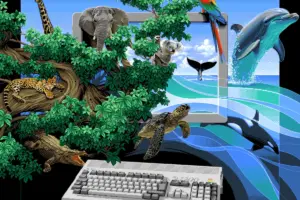
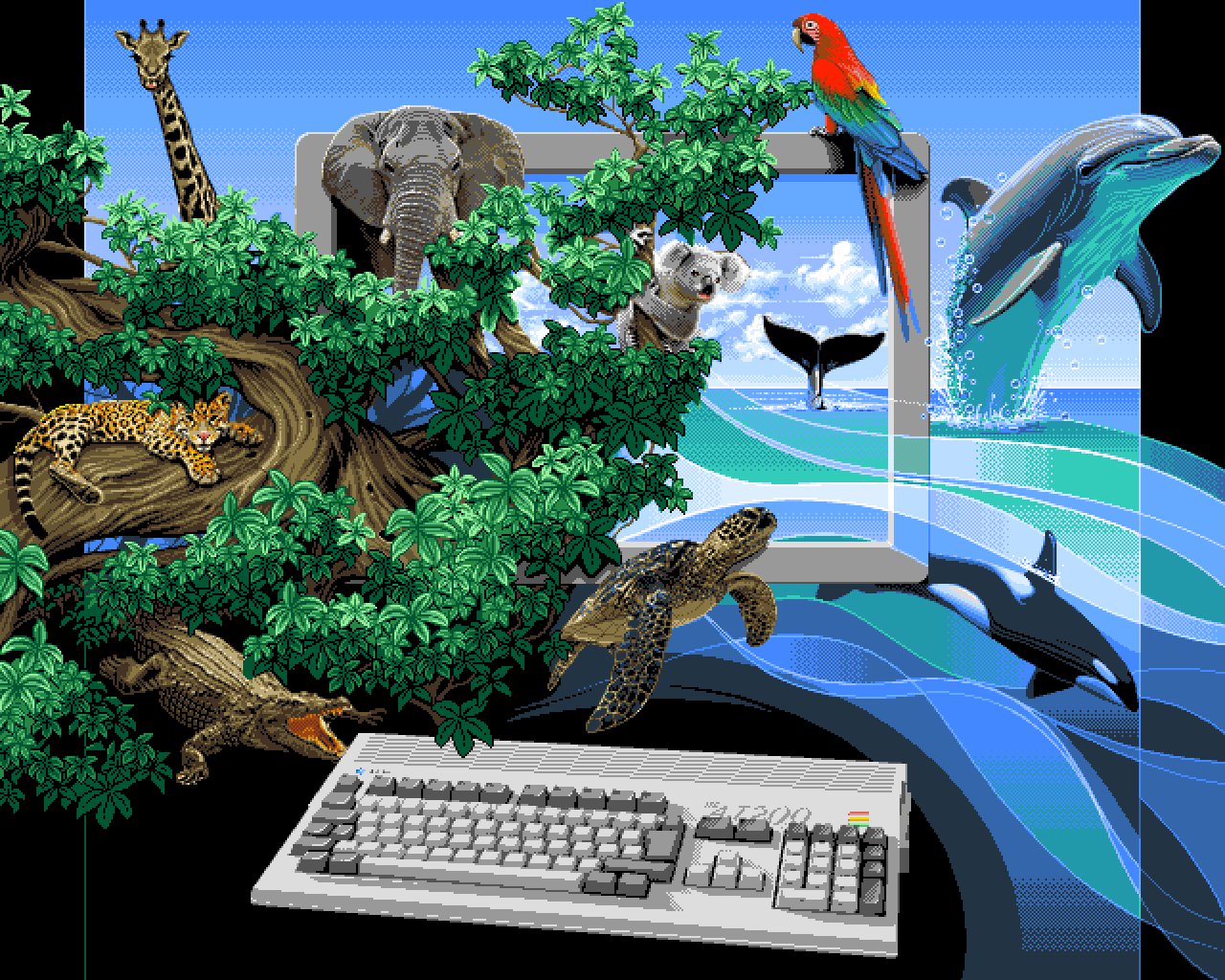
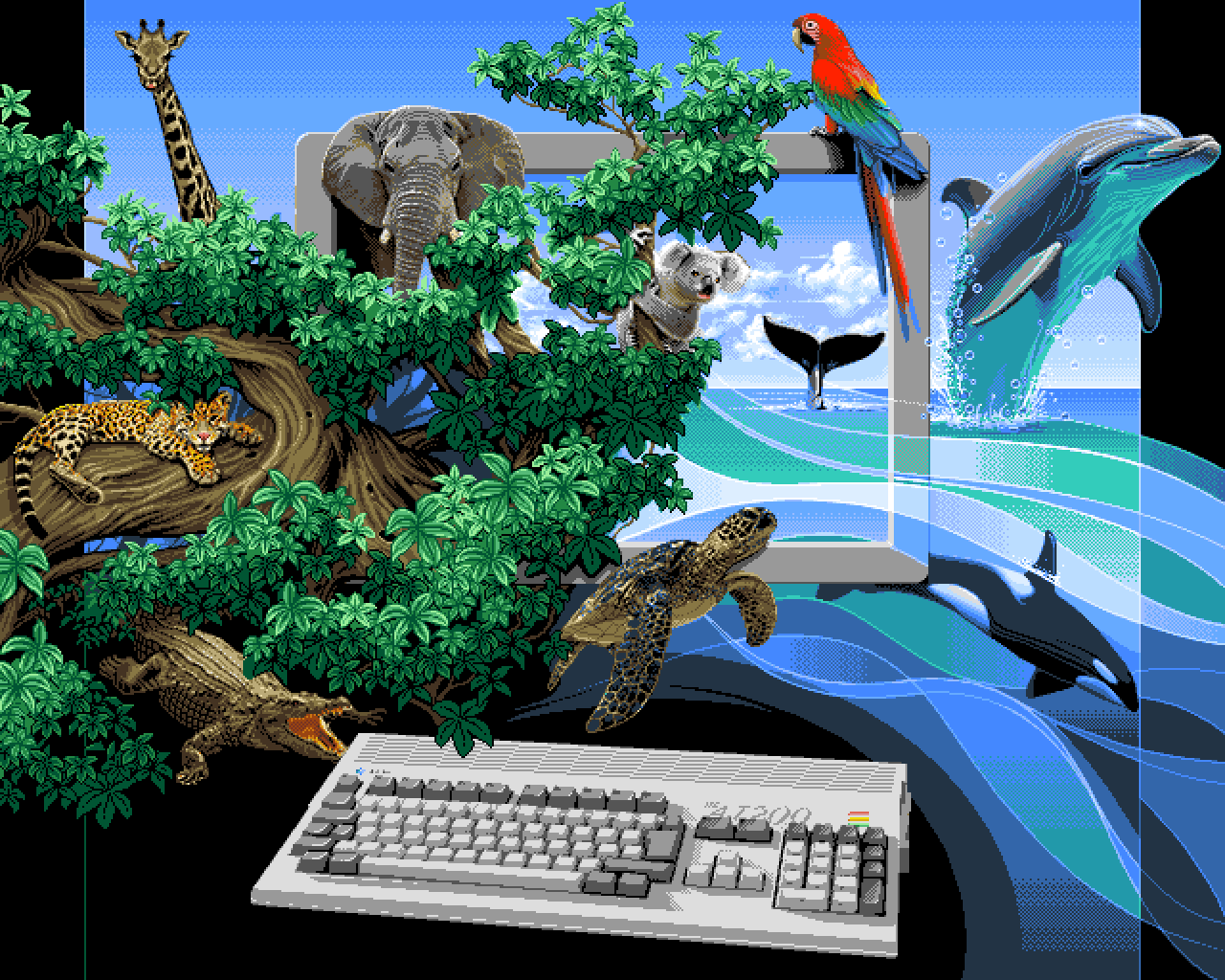
Entitled Beyond the Screen, Benjaminsson’s latest work is a vibrant explosion of exotic wildlife, lush botanical growth, and rich ocean life physically bursting outward from the glowing CRT-style display of a retro computer. Built under the grueling technical limits of a 640 x 512 pixel resolution and a restricted palette of just 32 simultaneous colors, the artwork serves as both a technical triumph and an emotional love letter to a foundational era of digital design.
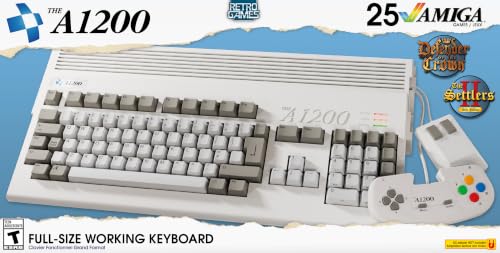
This hardware homecoming is far from coincidental. It arrives right on the heels of the impending commercial launch of THEA1200—Retro Games’ highly anticipated full-size replica of the iconic Commodore home computer, featuring a functional mechanical keyboard and authentic Workbench desktop. By utilizing the very machine that shaped his formative years, Benjaminsson has sparked an international dialogue about the value of strict technical limitations, the evolution of digital artistry, and why modern creators are continually drawn back to the analog and retro-computing trenches.
Detailed Chronology: From Pencil Sketches to Deluxe Paint 4
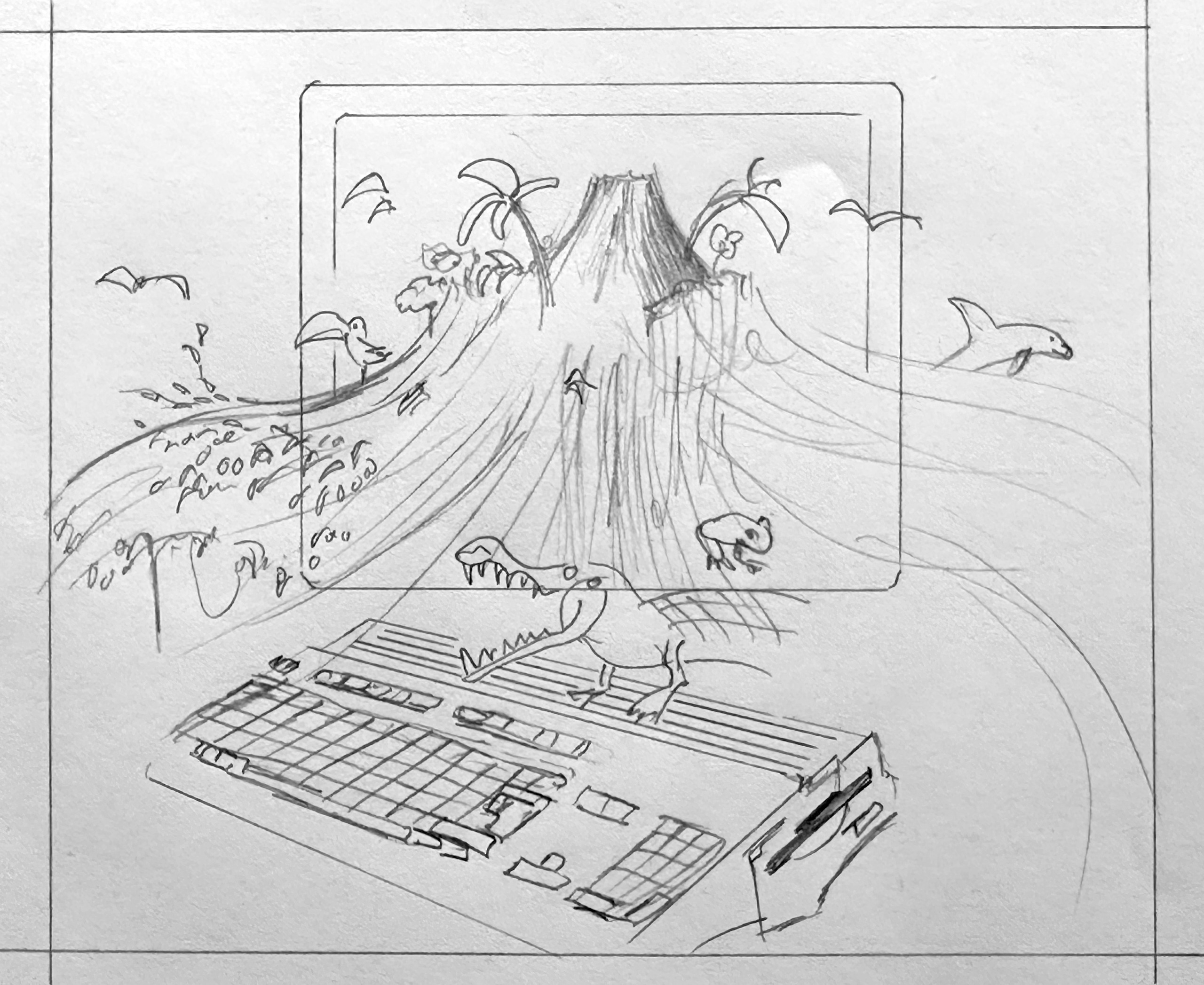
The genesis of Beyond the Screen traces back months before a single pixel was plotted on an aging cathode-ray tube monitor. For Benjaminsson, every digital composition begins in the traditional realm with a humble graphite pencil sketch.
"Klas Benjaminsson’s pixel art starts with a pencil sketch," notes the foundational design process behind the poster. Translating organic, flowing pencil lines into a rigid grid of square pixels requires careful structural planning, especially when working within a constrained canvas size that would make contemporary mobile phone wallpapers appear expansive by comparison.
The Creative Pipeline
- Ideation and Rough Sketching: Benjaminsson initially mapped out the conceptual framework on paper, establishing the core motif of natural elements—fauna, flora, and aquatic life—spilling out of a retro terminal.
- Platform Transfer: The physical sketches were scanned and transferred to contemporary computing environments using software like Photoshop and GrafX2 on a PC to handle asset conversion and palette testing.
- Hardware Execution: The heavy lifting of the project took place directly on original Amiga 1200 hardware utilizing Deluxe Paint 4 (DPaint IV), the industry-standard raster graphics editor of the Amiga era.
Working directly on vintage hardware introduced unique operational hurdles. File transfers, memory management, and data backups demanded a deliberate, methodical pacing vastly different from the instantaneous autosaves and cloud syncs of modern software ecosystems. Yet, it was precisely this friction that infused the creative process with focus and intentionality.
Supporting Context & Metrics: The Amiga 1200 Legacy
To fully appreciate the technical achievement of Beyond the Screen, one must examine the hardware specifications that governed Benjaminsson’s workspace. Released in 1992 by Commodore International, the Amiga 1200 was a watershed moment for 16/32-bit home computing. Powered by a Motorola 68EC020 microprocessor running at 14.3 MHz and equipped with the Advanced Graphics Architecture (AGA) chipset, it was capable of displaying up to 256 colors on screen from a master palette of 16.7 million.
However, for classic pixel art compositions that respect traditional retro constraints—such as the 32-color configuration chosen by Benjaminsson—the artist operated under severe restrictions:
- Native Resolution: 640 x 512 pixels (interlaced) or 320 x 256 pixels (non-interlaced).
- Color Depth: 32 simultaneous colors (5 bitplanes) selected from a 24-bit RGB master palette.
- Software Toolset: Deluxe Paint 4, a program whose revolutionary user interface concepts laid the foundational groundwork for modern raster editors, including early versions of Adobe Photoshop.
These strict boundaries forced an economy of line and color that modern digital creators rarely encounter. Every single pixel carried profound weight; dithering techniques had to be deployed manually to create gradients, and individual color registers were meticulously tuned to maximize visual impact.
The Jim Sachs Influence
Benjaminsson’s piece is also a deliberate, respectful nod to legendary digital artist Jim Sachs and his iconic Amiga masterpiece, Amiga Lagoon. For a generation of budding creators in the late 1980s and early 1990s, Amiga Lagoon served as an eye-opening revelation of what personal computers could achieve artistically. By paying homage to Sachs’ visionary work, Benjaminsson bridges a decades-long generational gap, reminding contemporary audiences of a time when computer graphics were viewed as a breathtaking frontier of human imagination.
Official Statements & Artist Q&A
In an exclusive deep-dive interview with Creative Bloq, Klas Benjaminsson opened up about his motivations for returning to native hardware, the philosophy of technical constraints, and the enduring legacy of Commodore’s legendary machine.
On Returning to Original Hardware
Creative Bloq: You’ve created this new artwork entirely on an original Amiga 1200. What was your thinking behind returning to the original hardware instead of using modern art apps?
Klas Benjaminsson: One key point in the initiative of THEA1200 is to recreate the Amiga 1200 in modern shape, so it made sense to honor the original platform.
On Concept Development and the Homage to Jim Sachs
Creative Bloq: Can you talk us through how you approached this particular artwork? Where did the initial idea come from, and how did it develop during the creative process?

KB: To be honest, the work "Amiga Lagoon" by Jim Sachs was a very important piece from the beginning. It visualised the power and creativity of the Amiga, and we agreed that an indirect homage to this masterpiece would be suitable for this occasion.
There was an idea to create a "flow" coming out from the screen, showing waves of animals, nature and wildlife—flowing and growing out from this creative computer. I wanted a feeling that communicated "only your imagination sets the limits." From sketch to finish, animals changed and shifted positions. But I felt the core idea was good and continued the work until the end.
On the Sweet Spot of Technical Limitations
Creative Bloq: The Amiga 1200 has some fairly significant technical limitations by today’s standards. How do those constraints influence your creative decisions?
KB: For me personally, growing up with the Amiga 500 and 1200 graphic standards, these limitations became something of a sweet spot for me. Limited enough to make it interesting to push the borders on what could be done, but also good enough to make it possible to create some great designs.
The Amiga provides an interesting set of limitations to work with if you are into pixel art. Enforcing a specific resolution and a limited colour palette when creating pixel art is a very challenging and demanding practice, which forces the artist to be precise. With these clear restrictions in place, much more focus can be aimed at the actual creative work instead.
On Modern Pixel Art vs. Retro Craft
Creative Bloq: Pixel art is now a popular aesthetic in games and digital illustration; what do you think modern artists miss when they simply recreate a retro aesthetic?
KB: To be honest I think many of modern pixel artists are doing a great job. There are hundreds of active pixel artists right now, posting pixel art on a daily basis with no direct platform or set rules for limits in their work space, but they still set a limited palette and a certain pixel area for their work. I think it’s an awesome homage to the old platforms, which lives on so vividly in these modern pixel art works even today.
On the Amiga as an Educational Foundation
Creative Bloq: What was your own introduction to the Amiga, and how important was the computer in shaping your development as an artist?
KB: Digital graphics had a big impact in my youth. As a kid I enjoyed playing video games, but as a young aspiring "artist" I also studied the graphics of the many games I tried (both Arcade and on my own C64). It took several years until a friend of mine showed me his brand new Amiga 500 with Deluxe Paint—that was the moment I realised I might be able to create something like that myself.
I took the first steps on a very long and interesting journey on finally becoming an art director. The Amiga was my first school that defined much of my professional life. There are many techniques that more or less could be described as artistic knowledge, which I learned on the Amiga but aren’t unique for this medium/platform. But there are some routines that could be blamed on my background with old-school pixel art: the importance of setting a palette early on in the design process, and keeping full control of the pixels and resolution.
On the Analogue Resurgence
Creative Bloq: We’re seeing renewed interest in older creative technology, from film cameras to analogue synthesisers and retro computers. Why do you think artists are drawn back to these tools, and is there something about the creative process that we’ve lost with modern hardware?
KB: I personally find it fascinating to take photos with a classic analogue camera, and see how the film can change with exposure settings. It’s a special and rewarding experience to go through the processes by hand. You try and learn by mistakes, testing ideas, creating and discarding concepts, and finally finding a way to express your ideas. Digital tools can be a great help, working alongside you when sketching and trying out ideas. But there is a certain magic about when doing it by yourself, learning the craft.
Recommendations for Aspiring Amiga Creators
Creative Bloq: With THEA1200 arriving this Christmas, what would you say to someone who wants to explore the Amiga as a creative tool rather than simply revisit its games?
KB: If you are into pixel art, don’t hesitate to try out Deluxe Paint or Brilliance! These are the original software from which most modern pixel art tools have taken their UI concepts, as well as the early versions of Photoshop.
If you are into creating music, try out some of the tracker software such as ProTracker, or AHX for unique chip sounds. For young people learning to code, AMOS is a fun and powerful language to start with—something that could transition into C++ later on. Another nice tool was Dir Opus, file-handling made easy and logical. I wish Microsoft or Apple would have picked it up back in the days.
Future Outlook: The Retro Renaissance and THEA1200
As the digital landscape marches relentlessly toward generative artificial intelligence, cloud-rendered graphics, and increasingly complex software suites, projects like Klas Benjaminsson’s Beyond the Screen highlight an enduring human desire for tactile engagement and structural discipline.
The launch of Retro Games’ THEA1200 on December 4 marks a significant milestone in this retro-computing renaissance. Unlike previous downscaled micro-consoles—such as the A500 Mini reviewed by Creative Bloq in 2022—THEA1200 arrives in a full-size chassis equipped with a fully functional mechanical keyboard and an authentic Workbench desktop environment. It is explicitly engineered not just for nostalgic gaming, but for creative generation, coding, and artistic exploration.
Concurrently, collaborative cultural initiatives—such as PosterSpy inviting digital creators to reimagine Benjaminsson’s piece in their own signature styles—demonstrate that the community around retro computer art is thriving, dynamic, and forward-looking.
Ultimately, Benjaminsson’s journey back to the Amiga 1200 offers a timeless lesson for modern creatives across all disciplines. When technological barriers are infinite, creative paralysis often follows. But when an artist embraces a defined canvas, a strict color palette, and the physical constraints of classic hardware, true imagination is finally unleashed to flow beyond the screen.