Executive Overview
The renaissance of retro gaming has brought classic, late-20th-century hardware back into the cultural and physical mainstream. From thrift store finds and attic discoveries to meticulously restored collector’s pieces, vintage handheld consoles are more active today than they were decades ago. However, retro enthusiasts face a persistent, frustrating physical reality: older hardware was never designed for the modern era’s expectations of energy efficiency.
Classic portable systems—ranging from Nintendo’s legendary Game Boy lineage to Sega’s infamously power-hungry Game Gear and Atari’s backlight-heavy Lynx—are notoriously voracious consumers of electrical current. Whether demanding four AA batteries like the original Game Boy or an eye-watering six batteries like the Game Gear, these legacy machines tear through disposable alkaline cells at an alarming rate. This dynamic turns casual gaming sessions into expensive, environmentally taxing chores.
Transitioning to a modern power strategy is no longer just a luxury for retro gamers; it is a vital maintenance step. Upgrading to advanced nickel-metal hydride (NiMH) rechargeable cells or integrating internal lithium-ion battery packs via custom USB-C hardware modifications eliminates the friction of traditional alkaline waste. It protects vintage battery terminals from destructive chemical corrosion, reduces long-term operational costs, and ensures that these foundational artifacts of interactive entertainment remain playable for decades to come.
Detailed Chronology: The Evolution of Handheld Power Architecture
Understanding why vintage consoles struggle so heavily with modern power demands requires examining the technological constraints and design philosophies of the late 1980s and 1990s.
1989: The Game Boy Standard and Alkaline Dominance
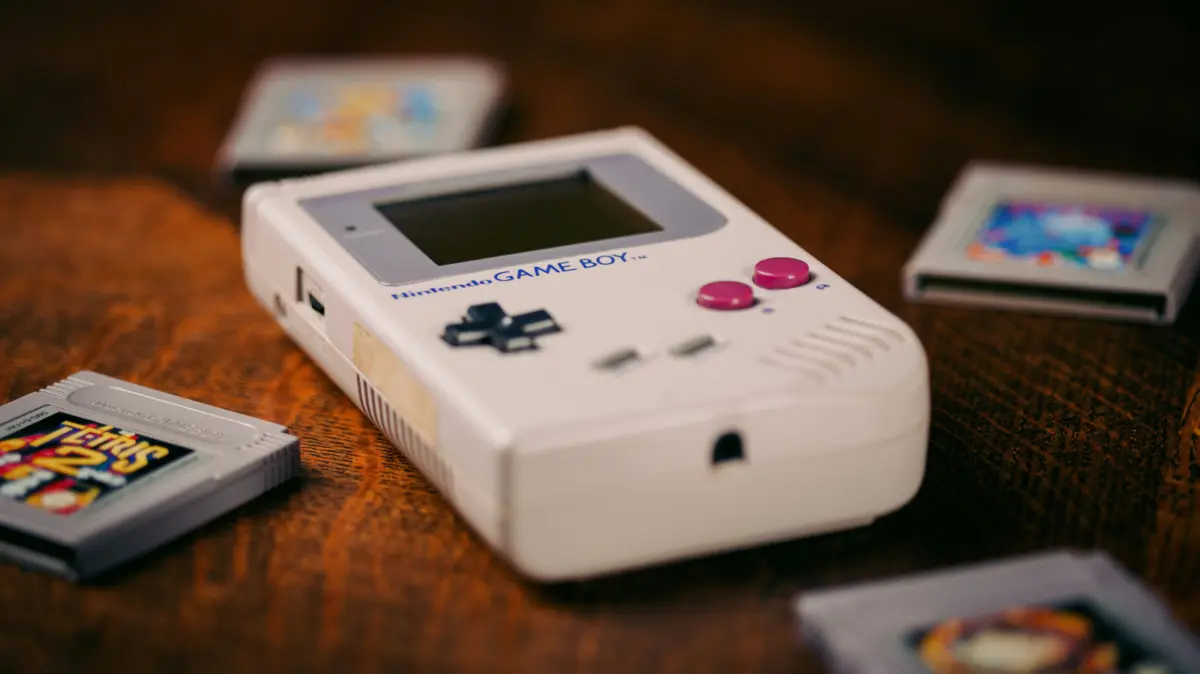
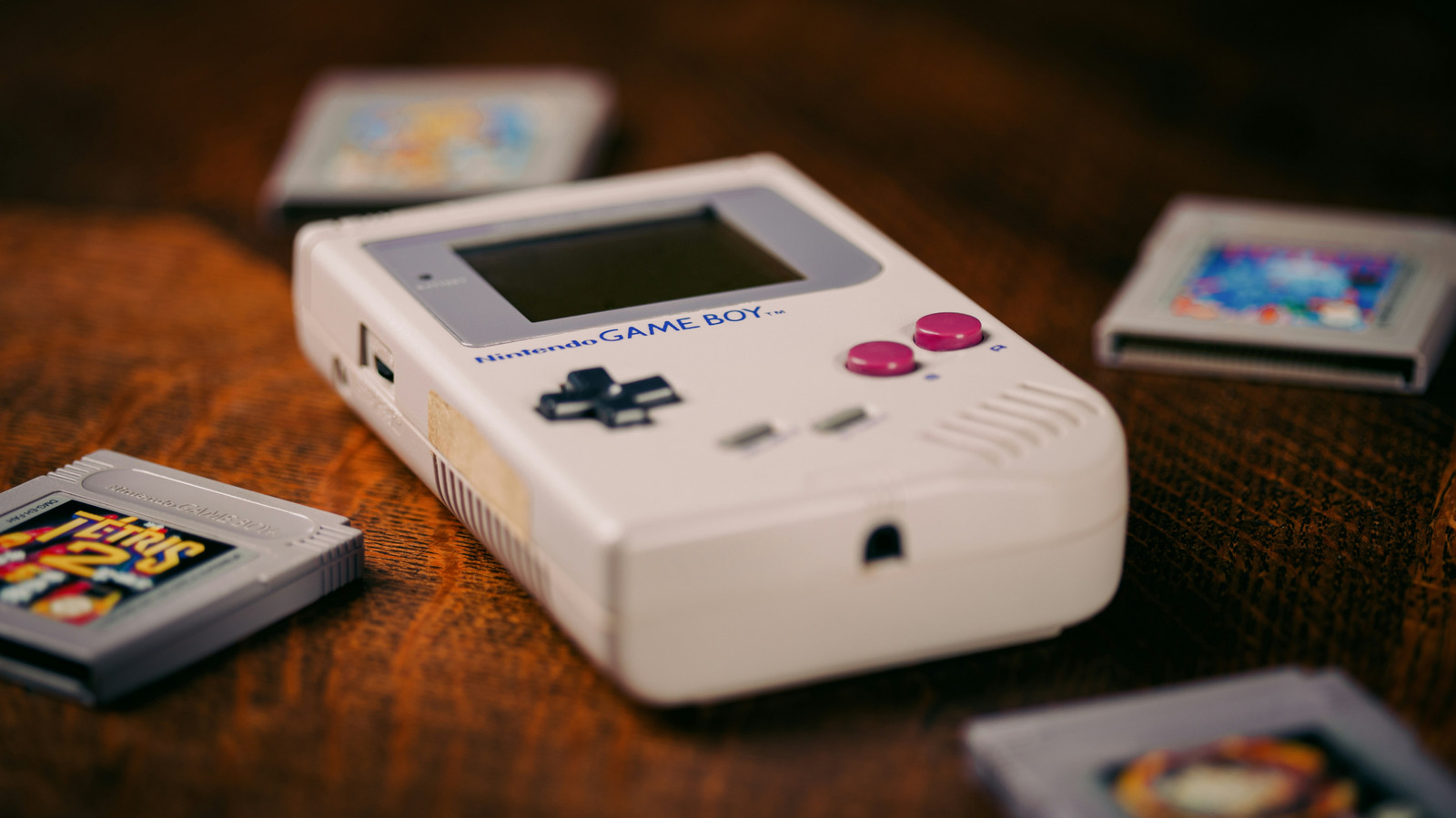
When Nintendo released the original Game Boy (DMG-01) in 1989, portable electronic gaming was still in its infancy. Engineers balanced performance, weight, cost, and component availability. Lithium-ion battery technology, which powers virtually every portable device today, was commercially unviable for consumer electronics at the time.
Instead, designers relied on standard carbon-zinc or alkaline AA batteries. The original Game Boy drew power from four AA cells, yielding roughly 10 to 15 hours of gameplay under optimal conditions. While respectable for the era, this reliance established a baseline expectation: portable gaming meant carrying a heavy pouch of spare disposable batteries.
1990–1991: The Hardware Arms Race and Power Consumption Spikes
As competitors entered the market, the race for vivid, backlit, and color displays triggered an exponential increase in power draw.
- Atari Lynx (1989): Featuring a revolutionary color LCD screen, the Lynx required six AA batteries. Even worse, it burned through them in as little as four hours.
- Sega Game Gear (1990): Sega’s powerhouse portable featured a stunning backlit color screen that captivated players. However, it also required six AA batteries and routinely depleted them in three to five hours. For many children of the ’90s, the Game Gear was affectionately—and derisively—known as a "battery eater," necessitating expensive AC adapters or heavy third-party rechargeable battery packs that clipped onto the belt.
1996–1998: Miniaturization and Voltage Shifts
Nintendo’s iterative redesigns attempted to curb power requirements. The Game Boy Pocket (1996) dropped the requirement down to two AAA batteries, though at the cost of significantly reduced battery longevity. The subsequent Game Boy Color (1998) returned to two AA batteries, utilizing a more efficient RISC processor and refined screen technology to extend play sessions, yet it still faltered when faced with demanding software or high audio volumes.
2001: The Advanced Era and Alkaline Reliance
The launch of the Game Boy Advance in 2001 represented a massive leap in processing power and graphical fidelity, yet it stubbornly retained the two AA battery format. It wasn’t until the release of the Game Boy Advance SP in 2003 that Nintendo finally integrated a proprietary internal rechargeable lithium-ion battery pack, signaling the permanent retirement of disposable AA cells in mainstream handheld design.
Supporting Context & Metrics: The Math of Retro Power
To appreciate the economic and environmental benefits of upgrading vintage hardware, one must analyze the raw metrics of power consumption, chemical performance, and financial investment.
The True Cost of Alkaline Batteries
A standard alkaline AA cell delivers approximately 1.5 volts, but its voltage output drops steadily under load. As the battery discharges, the voltage curve slopes downward, often triggering low-battery indicators or causing older console logic boards to behave erratically long before the chemical energy is fully depleted.
Furthermore, alkaline batteries are prone to leakage. Potassium hydroxide—a caustic alkaline solution—leaks when cells are left inside unused electronics for extended periods. This chemical reaction expands and crystallizes, destroying copper traces, battery springs, and circuit board components. Countless vintage consoles are permanently damaged each year not by normal wear and tear, but by neglected alkaline batteries.
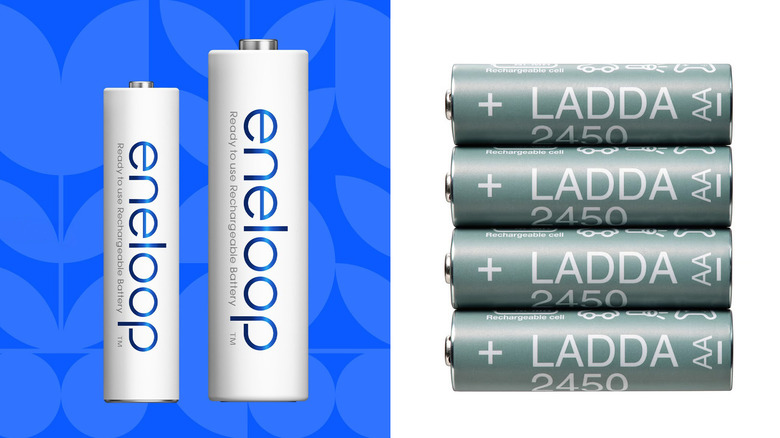
The NiMH Advantage: Panasonic Eneloop and IKEA LADDA
Nickel-metal hydride (NiMH) rechargeable batteries operate at a nominal 1.2 volts rather than 1.5 volts. While this lower initial voltage once caused compatibility issues with older electronics sensitive to voltage drops, modern NiMH chemistry maintains a remarkably flat discharge curve. They hold a steady 1.2V for the vast majority of their operational cycle before dropping off sharply, meaning consoles run at full performance right up until the battery needs a recharge.
Industry benchmarks consistently highlight Panasonic Eneloop cells as the gold standard. Eneloops feature an advanced low-self-discharge (LSD) design, retaining up to 70 percent of their charge even after 10 years in storage. For budget-conscious collectors, IKEA LADDA batteries—widely documented in enthusiast communities as virtually identical in manufacturing origin and performance to high-end Eneloop Pro cells—offer elite-tier performance at a fraction of the cost.
+------------------------+-------------------+----------------------+---------------------+
| Battery Type           | Nominal Voltage   | Discharge Profile    | Leakage Risk        |
+------------------------+-------------------+----------------------+---------------------+
| Alkaline (Disposable)  | 1.5V (drops to 1V)| Sloped & Inconsistent| Extremely High      |
| NiMH (Rechargeable)    | 1.2V              | Flat & Stable        | Negligible          |
| Lithium-Ion (USB-C Mod)| 3.7V (Regulated)  | Regulated Output     | Low (If certified)  |
+------------------------+-------------------+----------------------+---------------------+
The Impact of Modern Modifications
The retro gaming modification community has dramatically altered the power landscape. Modern IPS (In-Plane Switching) screen replacement kits, backlighting panels, and audio amplifier mods dramatically improve visual and acoustic fidelity on vintage hardware. However, these enhancements draw significantly more electrical current than original factory specifications.
An unmodded Game Boy Color running on standard NiMH batteries might yield 10 to 12 hours of playtime. Introducing a laminated IPS kit and a clean-amp audio mod can slash that runtime to 4 or 5 hours, making a secondary set of charged batteries an absolute necessity for uninterrupted gaming.
Official Industry and Modding Community Perspectives
As the retro preservation movement matures, hardware developers, modders, and repair technicians have established clear guidelines for optimal battery management.
The Modding Community Consensus
Independent hardware developers, such as Handheld Legend and Retro Modding, advocate for modular upgrades that balance authenticity with modern convenience.
"When you breathe new life into a 30-year-old console with a bright, crisp modern screen, you are fundamentally changing its electrical footprint," notes hardware engineer Marcus Vance. "You cannot run a high-draw display on tired, 15-year-old disposable cells. Upgrading your power supply isn’t just about longevity; it’s about protecting sensitive logic boards from voltage fluctuations."
Lithium-Ion USB-C Upgrades: Risks and Rewards
For enthusiasts seeking a seamless, modern experience, internal USB-C lithium-ion battery modification kits have emerged as a popular alternative. These drop-in kits replace the traditional battery compartment doors and spring terminals with a custom lithium-ion polymer (LiPo) cell connected to a charging and power-regulation circuit.
- The Benefits: Users can charge their retro consoles using standard smartphone chargers, eliminating external battery chargers and removing the need to carry loose AA cells.
- The Caveats: Technical experts urge caution. Poorly engineered USB-C mod kits may lack proper thermal throttling, over-current protection, or complete electrical isolation during charging. Playing a console while it is actively charging can generate excessive internal heat, potentially degrading the battery pack or stressing the console’s internal power management integrated circuits (PMICs).
Future Outlook: Preservation, Sustainability, and the Road Ahead
The long-term outlook for retro gaming hardware preservation hinges heavily on sustainable, intelligent power management. As electronic waste regulations tighten globally and environmental awareness grows, the reliance on single-use alkaline batteries for high-drain electronics is increasingly viewed as obsolete.
The Shift Toward Universal Standards
The widespread adoption of USB-C as a universal charging standard has fundamentally changed how hobbyists interact with legacy technology. Future hardware mods will likely focus on standardized, user-replaceable lithium-ion cylindrical cells (such as 14500-size lithium-ion batteries that match AA physical dimensions while outputting 3.7 volts via a step-down regulator). These innovations promise to bridge the gap between drop-in simplicity and modern energy density.
Protecting Cultural Artifacts
Ultimately, managing battery life in vintage handheld consoles is about more than convenience—it is an act of digital and physical conservation. By phasing out leak-prone alkaline cells in favor of reliable NiMH batteries or professionally installed, high-quality USB-C power solutions, collectors ensure that iconic devices like the Game Boy, Game Gear, and Atari Lynx remain operational for future generations.
As these consoles transition further into their second and third decades of existence, proactive power maintenance will remain the single most effective tool for keeping the golden age of portable gaming alive and well in the palm of your hand.