In the intricate and ever-shifting ecosystem of search engine optimization (SEO), visibility is inextricably tied to discoverability. Before a webpage can captivate a user, answer a query, or convert a visitor, it must clear a fundamental, non-negotiable hurdle: it must be crawled.
Google’s recently updated “Crawling Infrastructure” documentation introduces a pivotal new section titled “Optimize your crawl budget.” This comprehensive guide provides website administrators, developers, and digital marketers with explicit directives on how to maximize the efficiency with which Googlebot navigates, indexes, and surfaces digital properties.
At its core, a crawl budget is the allocation of resources—specifically, server capacity and processing time—that Google dedicates to exploring a website during a given timeframe. Because the sheer volume of global URLs on the internet is staggering, Google cannot—and will not—crawl every page on every site infinitely. Poorly organized web architectures, sluggish servers, and bloated inventories risk being left behind in the digital shadows, resulting in suppressed indexing and diminished search engine results page (SERP) visibility.
This article provides an in-depth, authoritative analysis of Google’s updated crawl budget recommendations. Drawing on the latest documentation, expert industry commentary, and technical best practices, we dissect how new sites can scale their footprints, how established domains can optimize their technical infrastructure, and why a newly introduced recommendation regarding URL caching and HTTP 304 status codes demands a sophisticated, cautious approach from site owners.
Detailed Chronology: The Evolution of Google’s Crawling Infrastructure
Understanding how crawl budgets operate today requires context on how Google’s crawling architecture has matured over time.
The Early Days of Unlimited Discovery
In the formative years of search engines, crawling was treated as an exhaustive, brute-force endeavor. Googlebot would attempt to follow every link, scrape every document, and ingest as much data as server limitations allowed. However, as the explosive growth of the World Wide Web outpaced hardware scaling, this approach became untenable. The concept of the "crawl budget" was born out of necessity—a mechanism to protect both Google’s web-scale server infrastructure and the operational integrity of individual host servers.
The Rise of Programmatic and Dynamic Web Applications
As the web shifted from static HTML pages to dynamic, JavaScript-heavy single-page applications (SPAs), e-commerce stores with millions of filtered product variations, and user-generated content platforms, crawl efficiency became a primary battleground for enterprise SEO. Google realized that millions of URLs were being wasted on faceted navigation loops, session IDs, and low-value utility pages.
The Modern Framework: Intentional Resource Allocation
Google’s latest documentation revision marks a refined shift toward collaborative efficiency. Rather than treating crawl budget management as a defensive strategy against server crashes, Google is now framing it as an active partnership. By providing clear technical levers—such as XML sitemap integration, gradual content publishing schedules, and refined server response codes—Google is teaching webmasters how to co-design their sites with the Googlebot’s resource constraints in mind.
Supporting Context & Metrics: Decoding the New Google Guidelines
To successfully navigate Google’s updated recommendations, site owners must dissect the specific pillars that dictate how Googlebot values, prioritizes, and traverses a domain.
1. The Conservative Start for New Sites
“Every new site starts with a ‘conservative’ crawl budget.”
When a brand-new website launches, Googlebot operates under an abundance of caution. Because Google has no historical performance data, trust metrics, or established server response benchmarks for the domain, it initiates a low-frequency crawl rate.
The Strategic Implication: Launching a massive, multi-thousand-page e-commerce store or content network all at once is a critical SEO misstep. If a site drops 50,000 URLs on day one, Googlebot will quickly hit server latency walls, abandon the crawl, and leave the vast majority of the inventory unindexed.
The Best Practice: Start with a modest, curated selection of foundational pages. Ensure that Google can comfortably parse and index this core content without placing an undue load on your web hosting infrastructure. As stability and trust are proven, expansion can begin.
2. Gradual Scaling and Content Velocity
“Over time, the crawl budget increases based on the site’s size and updates.”
Google rewards consistency and operational health. If a website demonstrates that its content updates reliably—and that these updates are clearly communicated via clean, structured XML sitemaps—Googlebot will increase the frequency of its visits.
The Content Velocity Trap: Many e-commerce brands make the mistake of batch-uploading massive product catalogs intermittently. If you have 300 new products to launch this month, publishing them all on a single Tuesday afternoon creates a sudden bottleneck.
The Recommended Approach: Implement a gradual rollout strategy. Publishing roughly three products per day over the course of a month mimics a natural, organic growth curve. This measured cadence trains Googlebot to check the site more frequently, seamlessly integrating new items into the search index in near real-time.
3. Page Speed as a Crawl Catalyst
“Improving your site’s load time may increase its crawl budget.”
The correlation between site performance and crawl efficiency is direct and measurable. Googlebot operates on a strict time-allocation model per site. If a server takes three seconds to respond to a bot’s request, Google can only fetch a fraction of the pages it could have retrieved if the server responded in 200 milliseconds.
Server Response Time (TTFB): Reducing Time to First Byte is paramount. Upgrading hosting environments, implementing edge caching, and optimizing database queries directly influence how deeply Googlebot can dig into your architecture.
Performance Monitoring: Leveraging diagnostic tools like Google Search Console’s Core Web Vitals reports and automated performance testing suites allows technical teams to continuously eliminate bottlenecks that choke crawl efficiency.
4. Link Equity and Popularity Metrics
“Popular pages receive more frequent crawls.”
The structural hierarchy of your internal and external linking ecosystem plays a monumental role in crawl prioritization. Pages that accumulate high volumes of authoritative inbound links—both from external domains and deep within your own internal architecture—signal high value to Googlebot.
The Internal Linking Lifeline: Orphaned pages (pages with no internal links pointing to them) are notoriously difficult for Google to discover and crawl. By establishing robust, logical internal linking strategies (such as breadcrumb navigation, "related products" modules, and contextual blog links), you create clear pathways that guide Googlebot straight to your most important revenue-generating pages.
Official Statements and Technical Analysis: The URL Caching Controversy
Perhaps the most debated addition to Google’s updated documentation is the new recommendation concerning URL caching and HTTP 304 status codes.
The Official Recommendation
Google’s documentation explicitly suggests:
"Support 304 (Not Modified) HTTP status codes. If a page hasn’t changed since Google last crawled it, returning a 304 code tells Google to reuse the cached version, saving your server bandwidth and resources."
On paper, this sounds like a win-win scenario. For massive enterprise sites dealing with billions of requests, returning a 304 Not Modified header dramatically reduces server CPU load, lowers bandwidth costs, and signals technical sophistication.
The Expert Counter-Perspective: A Hidden SEO Risk
While the technical efficiency of 304 status codes is undeniable, seasoned SEO professionals urge extreme caution. Blindly applying 304 caching across an entire website can introduce catastrophic indexing and ranking consequences.
Why Unqualified 304 Caching Can Damage SEO:
Stale Signal Interpretation: When your server tells Google via a 304 status code that a page is completely unchanged, Google relies on its cached index. However, if your underlying template updates—such as dynamic pricing, updated user reviews, or modified internal promotional banners that aren’t captured by your modification timestamps—Google may misinterpret the page as stagnant.
SERP Volatility and De-indexing: Over-relying on 304 responses for critical, revenue-driving pages can inadvertently signal to Google that the content is no longer actively maintained. In worst-case scenarios, prolonged staleness signals can lead to suppressed rankings or exclusion from competitive search engine results pages.
The Pragmatic Compromise:
Industry best practice dictates a nuanced, segmented approach to 304 implementation:
Where to Use 304s: Reserve HTTP 304 status codes strictly for unimportant or low-volatility pages—such as archived historical content, permanently expired product pages (where inventory is intentionally dead), legal disclaimers, and static privacy policy documents.
Where to Avoid 304s: Never rely on aggressive 304 caching for core category pages, active product detail pages, or high-velocity blog content where freshness and continuous optimization are critical competitive advantages.
Future Outlook: The Intersection of AI, Chatbots, and Crawl Budgets
As we look toward the future of digital discovery, the optimization of crawl budgets is no longer just about traditional web search ranking—it is about powering the next generation of artificial intelligence.
The ChatGPT and AI Search Factor
As platforms like OpenAI’s ChatGPT, Google’s Gemini, and other generative AI search engines increasingly rely on real-time web crawling and indexing pipelines, the demand for pristine crawl efficiency has never been higher. When AI systems synthesize information to answer complex user queries, they require rapid, up-to-date access to structured data.
Sites that fail to manage their crawl budgets effectively will find themselves excluded not only from traditional Google SERPs but also from the foundational training and retrieval-augmented generation (RAG) datasets that power modern conversational AI agents.
Key Takeaways for Webmasters Moving Forward
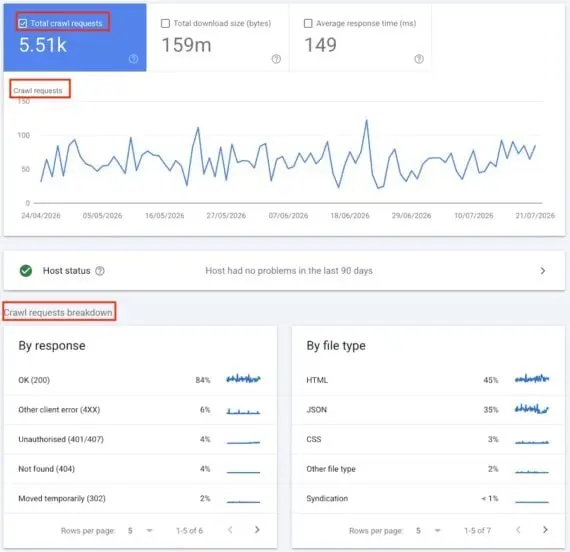
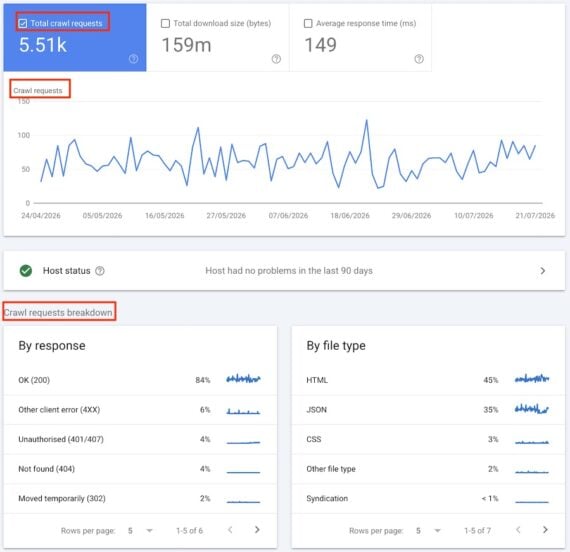
Audit Your Crawl Stats Regularly: Dive deep into the Crawl Stats report within Google Search Console. Monitor daily request trends, host status anomalies, and file-type distributions to spot crawl traps before they hurt your index coverage.
Prioritize Architectural Cleanliness: Eliminate infinite faceted navigation loops, fix broken internal redirects, and prune low-value "thin content" pages that drain your precious crawl budget.
Balance Technical Efficiency with SEO Agility: Embrace server-side optimizations like 304 caching and load-time reductions, but apply them strategically to ensure your core commercial assets remain fresh, dynamic, and fully visible to Googlebot.
By treating crawl budget optimization not as a one-time technical fix, but as an ongoing, strategic discipline, digital marketers and web developers can ensure their content stands out in an increasingly crowded, AI-driven digital landscape.