Executive Overview
As the modern workforce increasingly shifts toward remote and hybrid setups, the physical environment of the home office has come under intense scrutiny. For millions of professionals who split their time between corporate environments and poorly lit spare bedrooms, the changing seasons bring a familiar, unwelcome guest: seasonal fatigue, exacerbated by short daylight hours and suboptimal indoor lighting.
Enter the monitor light bar—a seemingly niche peripheral that has rapidly evolved from an ergonomic luxury into an essential productivity and wellness tool. At the forefront of this trend is the Quntis Monitor Light Bar, a device that has captured the attention of remote workers, designers, and gamers alike. Recently spotted at a steeply discounted price of $33 on Amazon (down from its standard $60 MSRP), this accessory highlights a broader consumer movement toward affordable ergonomic interventions.
This article explores the physiological impacts of poor home office lighting, evaluates the mechanics and benefits of monitor light bars, analyzes market pricing trends, and provides a comprehensive outlook on how small workspace upgrades can yield significant dividends in mental health and productivity.
Detailed Chronology: The Rise of the Screen-Mounted Light Bar
To understand how we arrived at an era where a light clipped to the top of a computer monitor is considered a vital wellness tool, it is necessary to examine the evolution of workspace ergonomics over the past decade.
Phase One: The Desk Lamp Era (Pre-2018)
For decades, desk illumination relied almost exclusively on traditional desk lamps. While these fixtures provided ample light for reading paper documents, they presented severe limitations for digital workers. Traditional lamps cast asymmetric light across desks, created glaring reflections and hotspots on glass and matte monitor panels, and occupied valuable desktop real estate. Furthermore, positioning a lamp to illuminate a keyboard often resulted in light spilling directly into the user’s eyes or casting harsh shadows across the workspace.
Phase Two: The Premium Pioneer (2018–2021)
The modern screen-mounted light bar category was largely popularized by high-end accessory manufacturers seeking to solve the optical physics problem of desk illumination. By mounting an asymmetric optical design directly above the display, these devices project light downward onto the desk surface and keyboard without allowing light rays to hit the glass of the monitor. Early iterations were often expensive, with pioneering models commanding upwards of $100 to $150. While praised by tech enthusiasts and software developers, these premium price points kept them out of reach for the average remote worker.
Phase Three: Democratization and Budget Adoption (2022–Present)
As remote work solidified into a permanent fixture of the global economy following the COVID-19 pandemic, demand for home office upgrades skyrocketed. Brands like Quntis recognized the mass-market potential for eye-care peripherals and introduced budget-friendly alternatives that matched the core functionality of their premium counterparts at a fraction of the cost.
Today, monitor light bars have achieved mainstream status. The recent promotion dropping the Quntis model from $60 to $33 exemplifies how competition and supply chain maturation have driven down the cost of advanced ergonomic tech, making workplace wellness accessible to a broader demographic.
Supporting Context & Metrics: The Science of Screen Glare and Eye Strain
To fully grasp the utility of a monitor light bar, one must understand the physiological toll that modern computer work takes on the human body—particularly during the darker months of the year.
The Physiology of Digital Eye Strain
Digital Eye Strain (DES), also known as computer vision syndrome, affects a vast majority of knowledge workers. Symptoms include blurred vision, headaches, dry eyes, and neck and shoulder pain. These symptoms are frequently exacerbated by poor ambient lighting conditions.
When a worker stares at a brightly lit computer screen in a dark room, the human eye is forced to constantly adjust to extreme contrast variations between the luminous display and the dark surroundings. This perpetual pupillary adjustment accelerates muscle fatigue within the eye. Furthermore, staring at a screen reduces blink rates by up to 50%, leading to dryness and irritation.
+-----------------------------------------------------------------+
|                  Factors Contributing to DES                    |
+-----------------------------------------------------------------+
|  • High contrast between bright screen and dark room            |
|  • Glare and reflections bouncing off the display surface       |
|  • Reduced blink rates during intense concentration             |
|  • Lack of balanced, neutral ambient desk illumination          |
+-----------------------------------------------------------------+
The Optical Mechanics of Asymmetric Lighting
Monitor light bars utilize specialized internal reflectors and LEDs designed to project light at a precise angle—typically a 45-degree forward trajectory. This engineering feat ensures that:
- Zero Glare Hits the Screen: Light rays are directed away from the glass panel, eliminating the distracting reflections that force users to strain their eyes or awkwardly reposition their heads.
- The Workspace is Evenly Illuminated: The desk surface, keyboard, and physical documents receive a uniform wash of light, creating a seamless transition zone between the digital display and the physical desktop.
- Color Rendering and Temperature Control: Modern units feature adjustable color temperatures (ranging from warm, relaxing 3000K light for evening wind-downs to crisp, focus-enhancing 6500K daylight for daytime productivity) and high Color Rendering Indices (CRI), ensuring true-to-life color perception for creative professionals.
Seasonal Affective Disorder (SAD) and Home Office Design
For remote workers in northern latitudes, the winter months bring drastically reduced exposure to natural sunlight. This reduction can trigger Seasonal Affective Disorder (SAD), characterized by lethargy, depressed mood, and difficulty concentrating.
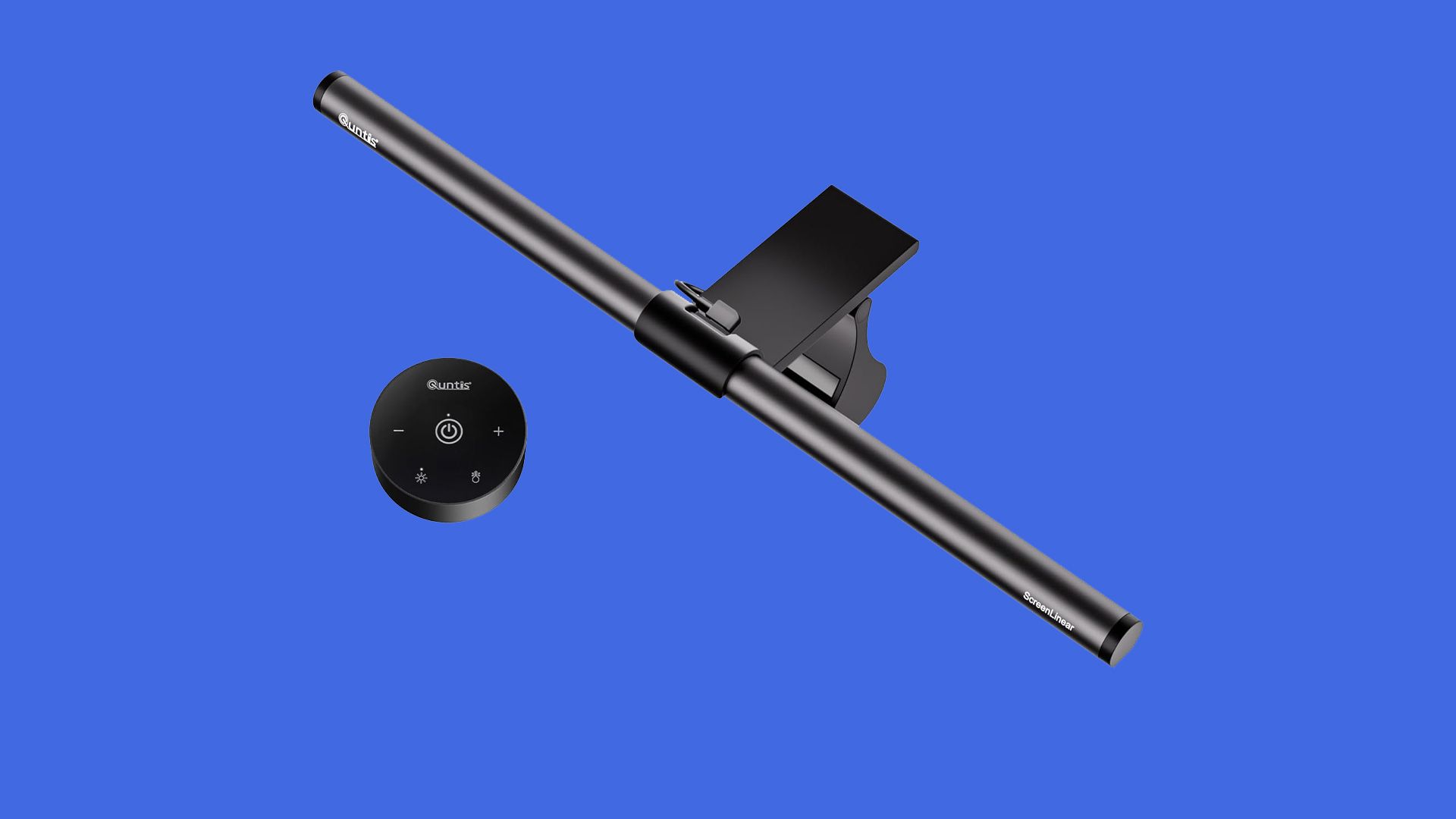
While monitor light bars are not medical-grade light therapy boxes, users frequently report psychological and mood-boosting benefits from replacing the oppressive gloom of an unlit room with a warm, controllable pool of desk light. By brightening the immediate workspace, these devices help combat the psychological claustrophobia associated with late-night winter work sessions.
Official Statements and Expert Evaluations
Industry experts and tech reviewers who spend countless hours evaluating office peripherals have increasingly highlighted the Quntis Monitor Light Bar as an essential budget-friendly recommendation.
Beren, Commerce Editor at Creative Bloq, notes the profound impact that such a modest investment can have on daily well-being:
"This time of year always threatens to get me down. Working from home three days a week in a poorly-lit home office will do that, especially with the UK days getting shorter and darker. But recently I got myself a monitor light, and I feel my mood has genuinely improved."
Evaluating its performance against higher-end competitors, Beren emphasizes the exceptional value proposition offered by the sub-$40 price tier:
"I’ve found this monitor light to noticeably reduce the eye fatigue that accompanies late-night work/gaming sessions because of the harsh contrast of staring into a brightly lit screen with no ambient lighting. This exact model is my top budget pick of the best monitor light bars, so at $33, it’s an absolute bargain."
Ergonomics researchers and occupational health specialists echo these sentiments, emphasizing that while employers often invest heavily in ergonomic chairs and standing desks, lighting is frequently overlooked as a foundational pillar of workspace comfort.
Future Outlook: The Evolution of Ergonomic Peripheral Tech
As we look toward the future of the home office, several trends indicate that ambient desk illumination and wellness-focused tech will continue to evolve rapidly.
1. Smart Integration and Automation
Future iterations of monitor light bars are expected to feature deeper integration with smart home ecosystems and automated environmental sensors. Imagine a light bar equipped with ambient light sensors that automatically adjust its color temperature and brightness throughout the day to mirror the natural circadian rhythm of the sun—optimizing focus during morning hours and emitting warm, melatonin-friendly hues as evening approaches.
2. Multi-Functional Display Bars
As ultra-wide monitors and multi-monitor setups become standard among digital professionals, manufacturers are already designing modular, extendable light bars capable of evenly illuminating expansive visual real estate. Additionally, we are beginning to see hybrid devices that combine webcam mounts, microphones, and studio-grade lighting into a single streamlined chassis, reducing desk clutter.
3. Sustainability and Energy Efficiency
With energy costs remaining a persistent concern for households worldwide, the ultra-low power consumption of LED-based monitor light bars (typically drawing power via a standard USB port rather than demanding a dedicated wall outlet) makes them an environmentally conscious and economically prudent choice. Future manufacturing will likely focus on recycled aluminum chassis and biodegradable packaging to meet the demands of eco-conscious consumers.
Conclusion
The rising popularity of affordable monitor light bars—exemplified by deals bringing the Quntis model down to just $33—underscores a broader shift in consumer priorities. Ergonomics is no longer just about posture; it encompasses the holistic sensory experience of the workspace. By mitigating eye strain, reducing desktop clutter, and injecting much-needed illumination into dark winter work environments, these unassuming devices prove that sometimes the most impactful productivity upgrades come in the smallest packages.