Executive Overview: A Season of Unprecedented Evolution
The landscape of front-end development is shifting beneath our feet at an accelerated velocity. As we transition into the final quarter of the year, the CSS ecosystem is experiencing a renaissance characterized by granular control, improved performance metrics, and a shift toward declarative syntax that simplifies historically complex tasks.
In this edition of What’s !important, we examine the latest technical breakthroughs that are redefining the developer experience. From the introduction of the <geolocation> element to the potential revolution of the class prefix selector, the industry is moving away from brittle, JavaScript-heavy workarounds toward robust, browser-native solutions. This report details the key technical shifts, the implications for progressive enhancement, and how leading developers are leveraging these tools to build a more performant web.
Detailed Chronology: The Latest Breakthroughs in CSS
The past fortnight has been a whirlwind of specification proposals and implementation milestones. We have curated the most impactful developments that every modern engineer should have on their radar.
1. The UX of Interactivity: Delayed-Instant Tooltips
The user experience of tooltips has long been a point of contention. Triggering them too quickly leads to "flicker-fatigue," while delaying them too long results in perceived latency. Abhishek Jakhar’s recent deep dive into "delayed-then-instant" tooltips offers a critical paradigm shift: a hover-based interaction that initiates with a delay to prevent accidental activation but disappears immediately upon exit to maintain UI cleanliness.
This approach has been further refined by Chris Coyier, who leveraged "interest invokers"—an emerging browser capability utilizing interest-delay-start and interest-delay-end. While current support is limited to the Chrome engine, this represents a significant move toward handling complex user intent through native CSS, rather than bloated third-party libraries.
2. The <geolocation> Element
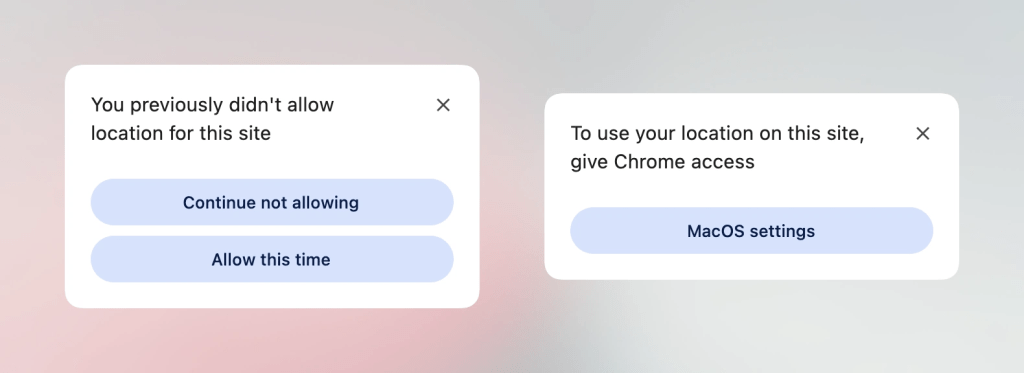
The Geolocation API has historically been one of the most friction-heavy components of the web platform, plagued by hardware dependency and cumbersome permission management. The introduction of the <geolocation> HTML element aims to streamline this process. By moving geolocation handling into the declarative realm, developers can reduce the complexity of the permission handshake. However, as noted in recent analysis from Piccalilli, this transition is not without its "styling restrictions." Navigating these constraints requires a nuanced approach to progressive enhancement, pairing the new element with existing legacy API fallbacks to ensure cross-browser stability.
3. Syntax Highlighting via ::highlight()
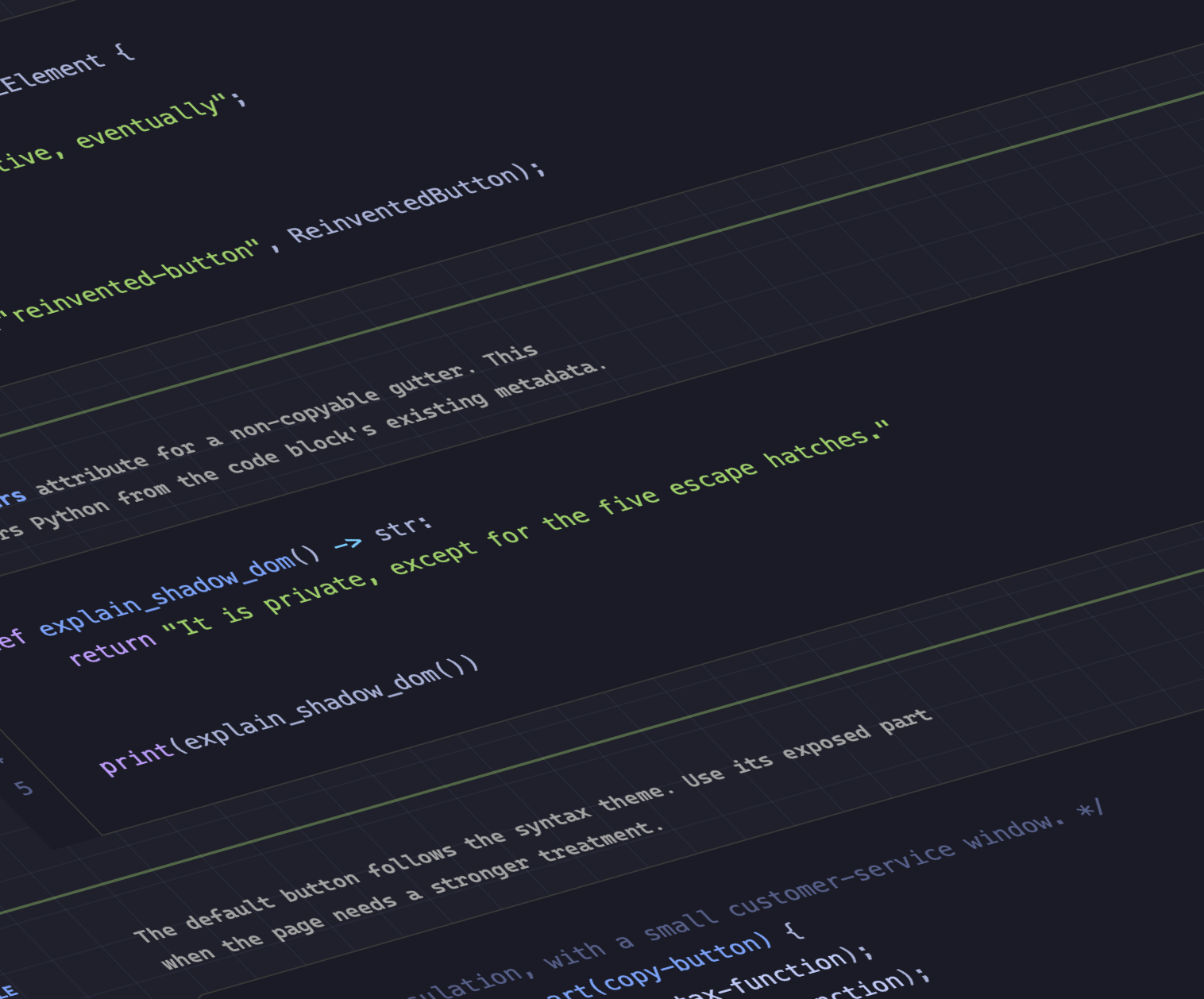
Dave Rupert has pioneered a sophisticated new approach to syntax highlighting with the release of MicroLighter. By leveraging the nascent ::highlight() pseudo-element and the Custom Highlight API, developers can now perform syntax transformations without the overhead of heavy DOM-node manipulation. This approach is not merely a performance optimization; it is a fundamental shift in how we represent text data on the screen, allowing for dynamic, high-performance syntax coloring that stays synchronized with the underlying text content.
4. Mathematical Precision: CSS Grid and Custom Properties
Temani Afif has unlocked a new level of layout awareness by demonstrating how to inject CSS Grid metadata into custom properties. By mapping grid row and column counts—and even cell coordinates—directly into CSS variables, developers can now build responsive logic that reacts to the grid structure itself. This enables sophisticated "hover proximity" effects where elements react based on their spatial relationship to one another within the grid, a feat that was previously locked behind expensive JavaScript getBoundingClientRect() calls.
Supporting Context & Metrics: Performance and Strategy
As we analyze these trends, the overarching theme is the reduction of "JavaScript-as-a-crutch." In every case mentioned—from syntax highlighting to tooltip management—the community is moving toward offloading heavy computation to the browser’s internal engine.
The Case for Tri-State Dark Mode
A spirited debate has emerged regarding the implementation of dark mode. While Lea Verou advocates for a binary two-state system, others, such as Bramus, argue for a tri-state approach (Light, Dark, and System-Preference). The technical consensus is shifting toward the "auto-until-overridden" model. This approach respects the user’s OS settings by default but provides a persistent override that is stored in local storage, balancing user autonomy with seamless, automated design transitions.
Performance Metrics: Why Native Matters
When we compare the new class prefix selector (.something-*) against traditional attribute selectors like [class^="something-"], the performance benefits are clear. Native selectors are parsed during the initial CSSOM construction, whereas attribute selectors require the browser to perform string matching against the DOM at runtime. Reducing the complexity of these selectors is a key strategy for maintaining a sub-100ms "Time to Interactive" on mobile devices with constrained CPU resources.
Official Perspectives: The Future of Selectors and Features
The web platform is currently undergoing a "feature-expansion" phase, where the gap between CSS and programming logic is narrowing.
The Class Prefix Selector
Bramus’s proposal for a class prefix selector is perhaps the most anticipated feature of the year. By allowing developers to target elements like .component-*, we move away from the fragile nature of broad attribute selectors. While this is currently in the conceptual/proposal stage, the industry’s demand for cleaner, more maintainable CSS architectures makes this a likely candidate for rapid adoption in the W3C specifications.
Feature Detection: named-feature()
Perhaps the most powerful addition to the developer’s toolkit is the named-feature() function within @supports. Previously, developers were limited to checking for the existence of specific CSS properties. named-feature() allows for querying the browser’s behavior—such as whether it respects specific transformations during anchor positioning. This granular level of feature detection allows for a "future-proof" development strategy, where developers can safely deploy cutting-edge features while providing graceful degradations for older browser versions.
Future Outlook: Preparing for the Next Season
As we look toward the horizon, the intersection of CSS and browser-native intelligence is becoming the primary driver of web innovation.
Key takeaways for the modern developer:
- Prioritize Progressive Enhancement: As seen with the Geolocation API, new features should be treated as enhancements, not replacements for reliable legacy methods.
- Leverage Native Logic: Before importing a heavy JavaScript library for tooltips or syntax highlighting, evaluate whether the
::highlight()API orinterest-delayproperties can achieve the same result. - Optimize for Grid Awareness: Start experimenting with passing layout data into CSS variables. This will be a standard pattern for responsive, spatially-aware UIs in the coming year.
The transition from a "script-first" mindset to a "CSS-first" approach is no longer a niche preference; it is a necessity for performance-oriented development. The tools discussed here—from flex-wrap: balance to advanced feature detection—represent the building blocks of the next generation of the web. As we enter the autumn season, the challenge for developers will be to adopt these tools not just for the sake of novelty, but to build a faster, more accessible, and more resilient web experience for all users.
The web is evolving, and it is doing so with more elegance than ever before. It is time to update your workflow, refine your patterns, and embrace the new syntax of the modern browser. The future of the web isn’t just about how it looks; it’s about how it behaves.