Executive Overview: The Rise of AI-Driven Referral Traffic
The landscape of digital marketing is undergoing a tectonic shift. For decades, ecommerce brands have obsessed over the "Holy Trinity" of traffic acquisition: organic search, paid advertising, and social media referrals. However, a new, formidable player has entered the arena: Generative AI.
As users increasingly turn to ChatGPT for product research, comparisons, and purchasing advice, the platform has evolved into a significant top-of-funnel discovery engine. When a user asks, "What are the best headphones for running in 2026?" they are no longer just browsing search engine results pages (SERPs); they are engaging in a curated, conversational consultation with an AI.
Crucially, OpenAI has implemented a standardized tracking mechanism for these referrals. By appending specific UTM parameters to outgoing links, ChatGPT provides ecommerce managers with a clear window into how AI-generated recommendations are translating into site traffic. This article serves as an investigative guide for digital marketers to isolate, analyze, and optimize for this burgeoning source of high-intent traffic.

Detailed Chronology: The Emergence of the AI Referral Channel
The integration of commercial intent into Large Language Models (LLMs) did not happen overnight. In the early days of ChatGPT, the tool was primarily a text generator, a coding assistant, or a brainstorming partner. The transition toward a "shopping assistant" model began as OpenAI introduced web-browsing capabilities and integrated real-time data retrieval.
The Shift to Conversational Commerce
By 2025, the behavioral shift was undeniable. Users stopped treating ChatGPT as a sandbox and began using it as a sophisticated search engine. Unlike traditional search, which presents a list of blue links, ChatGPT synthesizes data, offering product names, pricing, key features, and—most importantly—direct links to purchase.
The "UTM-Feed" Standard
To facilitate better attribution, OpenAI adopted a systematic approach to external linking. Every product recommendation generated by the model now includes specific tracking parameters:
utm_source=chatgpt.com&utm_medium=feed

This small string of code is the "digital handshake" between the AI and your ecommerce store. It allows web analytics platforms, most notably Google Analytics 4 (GA4), to recognize that a session did not originate from a traditional search engine or a social referral, but rather from an AI-driven interaction. For brands, this marks the transition from "AI as a curiosity" to "AI as a measurable sales channel."
Supporting Context & Metrics: Decoding the AI Footprint
For ecommerce teams to effectively leverage this data, they must move beyond surface-level metrics. The ability to isolate ChatGPT traffic within Google Analytics 4 is a powerful tool for understanding how your product pages perform under the "scrutiny" of an AI.
Step-by-Step: Isolating ChatGPT Traffic in GA4
To begin your audit, navigate to the Traffic acquisition report in GA4.

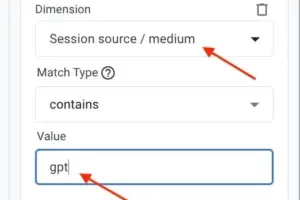
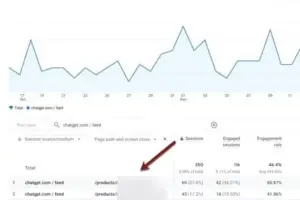
- Filter by Source/Medium: Use the search bar to filter for "chatgpt.com / feed." This will immediately strip away the noise of your other channels, leaving you with a clean dataset of users who arrived via an AI recommendation.
- Add Secondary Dimensions: To see exactly which products the AI is recommending, add "Page path and screen class" as a secondary dimension. This will show you exactly which URLs are being surfaced by the model.
- Cross-Reference Engagement: Don’t just look at sessions. Look at engagement rate, average engagement time, and conversion events. If your products are being recommended but users are bouncing immediately, your product detail page (PDP) may not be meeting the expectations set by the AI.
Mobile vs. Web: The Device Disparity
A critical finding in recent data is the dominance of mobile traffic from ChatGPT. Because a vast majority of users access the ChatGPT mobile app on the go, your mobile user experience (UX) is the primary "conversion zone." If your site is not optimized for rapid mobile loading and intuitive checkout flows, you are likely hemorrhaging potential revenue generated by AI referrals. Comparing mobile versus desktop traffic within your GA4 reports will reveal whether your site’s architecture is optimized for the modern, mobile-first AI user.
Official Statements and Industry Implications
While OpenAI has remained relatively quiet regarding the "commercial" nature of their referral traffic, the industry consensus is clear: the model is becoming a sophisticated curator of the web.
Industry analysts suggest that this is part of a larger ecosystem move. As OpenAI and competitors like Google (with Gemini) and Perplexity continue to integrate shopping features, the "link" itself is becoming a premium piece of digital real estate. Some ecommerce experts argue that we are witnessing the birth of "AI-SEO," where the goal is no longer just to rank on Google, but to be the "chosen" entity recommended by the model.

"The AI is not just a tool; it is a curator," notes one industry consultant. "If your product is consistently appearing in ChatGPT responses, it means the model has deemed your site authoritative, relevant, and trustworthy enough to recommend to a user who is essentially asking for a purchase recommendation."
Future Outlook: Preparing for the AI-Centric Economy
As we look toward the remainder of 2026 and beyond, the role of AI in the purchase funnel will only expand. To stay ahead of the curve, ecommerce managers must adopt a proactive strategy.
1. Optimize for "Answerability"
ChatGPT draws its recommendations from high-quality, structured content. If your product pages lack detailed, comparative data, or if your schema markup is outdated, the AI will likely bypass your products in favor of competitors who provide better-structured information. Focus on descriptive, feature-rich product copy that addresses common "vs." queries (e.g., "Product A vs. Product B").

2. Monitor Reputation and Sentiment
The AI does not just pull data; it evaluates it. If your products have negative reviews or if your pricing is consistently non-competitive, the AI may pick up on these signals from the broader web and present them as "downsides" to the user. Reputation management is now, quite literally, a prerequisite for AI visibility.
3. Treat ChatGPT as a Top-of-Funnel Channel
Do not treat AI traffic the same way you treat cold traffic from social media. These users are often in the "consideration" phase. They have already asked the AI to filter the noise for them. When they arrive at your site, they are closer to the bottom of the funnel than a typical organic search visitor. Your landing pages should reflect this, focusing on trust signals, clear value propositions, and frictionless purchasing paths.
4. The Integration of Paid AI Placements
While current referrals appear organic, it is only a matter of time before platforms introduce sponsored placements within AI responses. Understanding your organic "baseline" performance from ChatGPT today will be crucial when you eventually have to evaluate the ROI of paid AI-assisted search.

Conclusion: The Path Forward
The ability to track ChatGPT traffic is more than just a technical exercise in Google Analytics; it is a fundamental shift in how we understand customer acquisition. By monitoring the utm_source=chatgpt.com parameter, you are gaining a direct look at how your brand is perceived by the most advanced intelligence systems in the world.
The companies that succeed in the coming years will be those that understand this new dynamic—optimizing their content not just for algorithms, but for the conversational, helpful, and highly influential world of generative AI. Start by auditing your current referral traffic today, and ensure that your product pages are ready to convert when the AI sends a curious shopper your way.