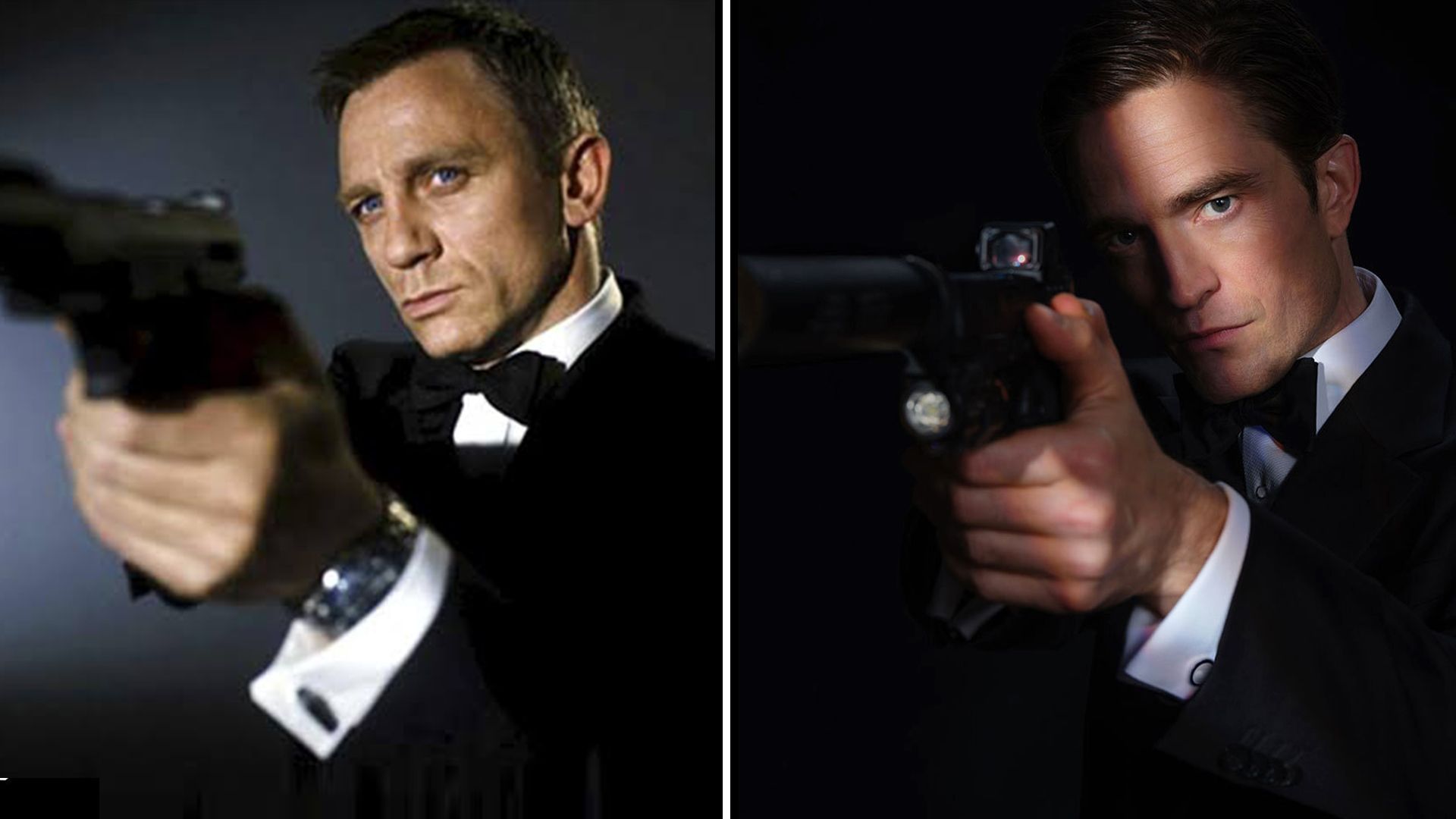
In a seismic shift for the entertainment industry, Robert Pattinson has been officially cast as the next James Bond, stepping into the iconic tuxedo and taking up the Walther PPK. The announcement, rolled out via a modest social media post rather than a high-profile, traditional press launch, breaks decades of Hollywood convention. For the first time in the history of the 007 franchise, a bonafide, globally recognized A-list superstar—and the modern face of Batman—has been chosen to portray British cinema’s most famous secret agent.
This unexpected casting choice marks a watershed moment, signaling a complete paradigm shift from the legacy-driven custodianship of the Broccoli family to the aggressive content-scaling model of Amazon, which acquired Metro-Goldwyn-Mayer (MGM) for billions. For over six decades, the James Bond IP has been handled with surgical precision, utilizing relative unknowns as blank canvases onto which the mythos of 007 could be projected. By bringing in Pattinson—an actor with immense cultural gravity, heavily established personal branding, and deep industry clout—Amazon is no longer just casting an actor; they are leveraging a pre-existing multi-million-dollar star persona to supercharge a newly acquired asset.
This deep-dive investigation explores the chronology of the announcement, the corporate philosophy steering Amazon MGM Studios, the philosophical clash between traditional franchise stewardship and modern streaming economics, and what this radical reinvention means for the future of cinematic espionage.
Detailed Chronology: From MGM Acquisition to the Pattinson Revelation
To understand the weight of Robert Pattinson’s casting, one must trace the modern commercial history of the franchise, which accelerated dramatically on March 17, 2022, when Amazon officially closed its $8.45 billion acquisition of MGM.
The MGM Takeover (Early 2022): Following the theatrical release of Daniel Craig’s swansong, No Time to Die (2021), the long-term future of 007 entered a holding pattern. EON Productions—run by Barbara Broccoli and Michael G. Wilson—retained creative veto power over the character, but the overarching distribution and strategic decisions shifted to the corridors of Amazon Studios. Industry analysts immediately began predicting that the tech giant would look to maximize the return on its multi-billion-dollar investment by accelerating production pipelines and potentially expanding the universe.
The Rumor Mill (2023–Early 2026): For years, the rumor mill focused on rising British talents and mid-tier stars—names like Aaron Taylor-Johnson, Regé-Jean-Péte, Henry Cavill, and James Norton. Conventional wisdom dictated that EON would stick to its historic playbook: find a capable, recognizable yet accessible actor who would not overshadow the brand. Robert Pattinson’s name was virtually absent from serious industry shortlists, largely due to his heavy involvement in auteur-driven cinema and major franchises like Matt Reeves’ The Batman.
The Quiet Unveiling (Mid-2026): Breaking violently from the tradition of Daniel Craig’s high-octane 2005 introduction on a speedboat riding down the River Thames, or Pierce Brosnan’s press conference at a London hotel, the Pattinson era began with a whimper rather than a bang. No glitzy global press junket, no live-streamed event, and no formal press release accompanied the news. Instead, a simple, minimalist social media post from official channels confirmed what many thought impossible: Robert Pattinson is James Bond.
Supporting Context & Metrics: The Economics of Amazon’s Franchise Play
To evaluate why Amazon pivoted away from tradition, one must look at the financial architecture of modern streaming and studio entertainment.
The End of Scarcity
Traditionally, James Bond operated on a model of manufactured scarcity. EON Productions released films roughly every two to three years, preserving the event-status of the character. In the pre-streaming era, this strategy built immense anticipation and kept ticket sales artificially inflated by rarity.
Amazon, however, operates on a diametrically opposed commercial logic: the velocity of content. In the ecosystem of Amazon Prime Video, intellectual properties must maintain a continuous loop of consumer engagement. Staggering gaps of four to six years between cinematic releases are anathema to subscription-retention models.
Valuing the MGM Portfolio
Metric / Milestone
Traditional Era (EON / MGM)
Modern Era (Amazon MGM Studios)
Primary Distribution
Theatrical-first exclusivity
Hybrid theatrical / Global streaming ecosystem
Casting Philosophy
Rising or unknown actors (blank canvases)
Established global A-listers (marketable IP anchors)
Content Expansion
Core film series only
Potential multi-platform universes, spin-offs, and series
Release Cadence
Infrequent, highly calculated events
Accelerated, consistent content pipeline
By casting Robert Pattinson, Amazon has injected immediate, guaranteed global hype into the property. Pattinson brings a massive, fiercely loyal demographic spanning Twilight, Christopher Nolan’s Tenet, The Batman, and his celebrated indie work with auteurs like Robert Eggers and Claire Denis. The risk of an unknown failing to open a film internationally has been entirely neutralized.
Official Statements and Industry Reaction
The entertainment community has responded to the news with a mixture of awe, confusion, and cautious optimism. The philosophical divide between old-guard filmmaking and modern corporate IP management has never been starker.
"I felt I had to have an unknown actor, not a star. Above all, a man you’d believe could be James Bond."
— Cubby Broccoli, Legendary Bond Producer (reflecting on the search for Sean Connery)
Cubby Broccoli’s foundational quote underscores just how radical the Pattinson casting is. For decades, the casting directors and producers of EON treated the tuxedo as a mantle that elevated the actor, rather than the actor elevating the tuxedo. Sean Connery, George Lazenby, Roger Moore, Timothy Dalton, Pierce Brosnan, and Daniel Craig were all chosen precisely because they possessed the physical presence and screen magnetism of Bond without the baggage of pre-existing, hyper-defined pop culture alter-egos.
When viewers watched Daniel Craig walk into a room, they saw 007. When viewers watch Robert Pattinson walk onto screen, the immediate mental hurdle will be separating the actor from his iconic runs as Bruce Wayne/Batman, Edward Cullen, or Neil.
Industry insiders have also noted the shifting power dynamics behind the scenes. While Barbara Broccoli and Michael G. Wilson remain critical guardians of the flame, the sheer financial leverage held by Amazon means that commercial pragmatism has officially triumphed over strict artistic tradition.
Future Outlook: Where Does 007 Go From Here?
The casting of Robert Pattinson opens a Pandora’
s box of creative possibilities and existential questions for the James Bond franchise.
1. A Strange, Uncomfortable, and Art-House Bond
From a purely creative standpoint, Pattinson is a masterstroke. Unlike traditional actors who leaned heavily into charismatic charm or rugged action-hero tropes, Pattinson specializes in neurosis, intensity, eccentricity, and brooding psychological depth. If the production team leans into his strengths, we may see a Bond who is stranger, colder, more psychologically compromised, and perhaps more dangerous than any iteration since Timothy Dalton’s tenure. Pattinson has proven time and again that he thrives in morally ambiguous, high-tension environments.
2. The Specter of Universe Expansion
The most pressing concern among purists is the monetization of the 007 brand. Now that Amazon holds the keys to the kingdom, will a mainline film be enough? Or are we staring down the barrel of an expanded cinematic universe? Industry analysts are already whispering about potential streaming spin-offs—such as origin stories for MI6 supporting characters, prequels focusing on early Cold War espionage, or limited series exploring the lives of other double-oh agents.
3. The Re-Definition of Star Power
Ultimately, the Robert Pattinson casting marks the day James Bond stopped being a cinematic institution that created stars, and officially became a corporate asset managed by a star. Whether this bold pivot ushers in a golden age of espionage entertainment or dilutes the legendary mystique of the world’s most famous secret agent remains to be seen. One thing is certain: the world is watching, and the martini has been thoroughly shaken.