Executive Overview
In the realm of advanced Python programming, mastering object-oriented mechanics separates the novice scripter from the seasoned software architect. Among the language’s most powerful, yet frequently misunderstood, features is the descriptor protocol. At its core, a descriptor is an object-oriented mechanism that governs precisely what occurs when an attribute is accessed, modified, or deleted within a class. By implementing special methods such as __get__, __set__, __delete__, and the newer __set_name__, developers can intercept attribute operations at the class level and inject custom business logic, data validation, and performance optimizations.
While many developers default to standard @property decorators, getters, and setters to manage attribute access, this traditional approach often leads to code duplication and clutter when applied across large codebases. Descriptors offer an elegant, DRY (Don’t Repeat Yourself) alternative. They allow complex attribute behaviors to be encapsulated into reusable, modular classes.
This comprehensive guide explores the mechanics of Python descriptors by building three distinct types of controlled attributes: validated, computed, and lazily loaded attributes. To ground these abstract concepts in a tangible scenario, we will simulate the backend data architecture of a fictitious enterprise Japan tourism application. Through this implementation, we will demonstrate how descriptors cleanly manage attribute states, protect data integrity, automate currency conversions, and defer expensive database operations without cluttering your business logic.
Detailed Chronology: Understanding the Descriptor Protocol
To fully appreciate why descriptors are essential for scalable Python applications, we must first examine their evolutionary mechanics and architectural timeline within the language.
The Evolution of Attribute Access
In early versions of Python, attribute lookups were relatively straightforward: Python looked inside an object’s __dict__ (instance dictionary), then checked the class’s __dict__, and finally walked up the inheritance tree (Method Resolution Order, or MRO). However, as Python matured into enterprise environments, developers needed a way to hook into these lookups to execute custom logic—such as type checking or lazy loading—without writing redundant boilerplate code for every single attribute.
This led to the formalization of the Descriptor Protocol in Python 2.2, which was subsequently refined and optimized in Python 3.x. A descriptor is broadly defined as any object that implements at least one of the methods in the descriptor protocol:
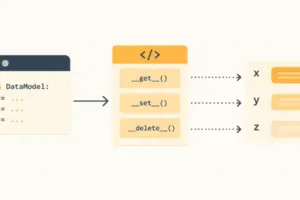
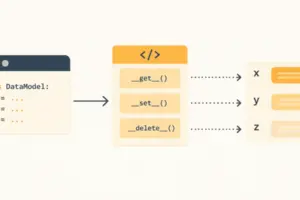
__get__(self, obj, objtype=None): Called to retrieve the attribute of the owning class (or of an instance of that class). It returns the computed attribute value or the descriptor itself if accessed from the class namespace.__set__(self, obj, value): Called to set the attribute to a new value on an instance. Descriptors that implement this method are known as non-data descriptors (if absent) or data descriptors (if present). Data descriptors take precedence over an instance’s__dict__entries during lookups.__delete__(self, obj): Called to delete the attribute from an instance.__set_name__(self, owner, name): Introduced in Python 3.6, this method automatically notifies the descriptor of the variable name it has been assigned to within the owner class, eliminating the need to manually pass string names during initialization.
The Problem Domain: The Japan Tourism Application
To contextualize these mechanisms, imagine we are constructing a high-performance backend for a modern Japan travel platform. Our application handles complex tour packages, customer reviews, dynamic currency pricing, and massive itinerary databases.
Without descriptors, managing constraints like "ratings must always be a float between 1.0 and 5.0" or "itineraries must be fetched lazily to conserve memory" leads to bloated classes filled with repetitive if/else checks, custom setter methods, and messy caching logic. Descriptors allow us to externalize these concerns into modular, plug-and-play components.
Supporting Context & Metrics: Building the Three Controlled Attributes
Let us now engineer our three target descriptor classes step-by-step, analyzing their internal mechanics and architectural benefits within our Japan tourism simulation.
1. Building Validated Attributes through Descriptors
Data integrity is the bedrock of robust software engineering. When users submit reviews or ratings for a tour package, we must guarantee that the incoming data conforms strictly to predefined type and range boundaries before it ever touches our database or application state.
Below is the implementation of the ValidatedRating descriptor, which leverages Python 3.6+’s __set_name__ to automatically track its public and private attribute names, preventing namespace collisions:
class ValidatedRating:
    def __init__(self, min_val=1.0, max_val=5.0):
        self.min_val = min_val
        self.max_val = max_val

    def __set_name__(self, owner, name):
        # Automatically save the attribute name (e.g., 'rating')
        self.public_name = name
        self.private_name = f"_name"

    def __get__(self, obj, objtype=None):
        if obj is None:
            return self
        return getattr(obj, self.private_name)

    def __set__(self, obj, value):
        if not isinstance(value, (int, float)):
            raise TypeError(f"self.public_name must be a number.")
        if not (self.min_val <= value <= self.max_val):
            raise ValueError(f"self.public_name must be between self.min_val and self.max_val.")
        setattr(obj, self.private_name, float(value))
Architectural Breakdown:
- Encapsulation of Validation Logic: Instead of scattering
if not (1.0 <= val <= 5.0)checks across multiple constructors and update methods, the validation rule lives entirely within the descriptor. - Private Name Mangling: By utilizing
self.private_name = f"_name", the descriptor safely stores the validated value inside the instance’s__dict__under a protected name, preventing infinite recursion loops that happen when a property tries to assign to itself.
2. Building Computed Attributes through Descriptors
In many enterprise scenarios, certain attributes should never be stored directly; instead, they must be computed dynamically on the fly based on the changing state of other object attributes.
In our Japan tourism platform, financial records are stored natively in Japanese Yen (JPY) to maintain precision with local vendor transactions. However, international clients require real-time pricing displayed in US Dollars (USD). We can build a computed read-only descriptor to handle this currency translation automatically:
class ComputedUSDPrice:
    def __init__(self, exchange_rate=0.0067):  # 1 JPY = ~0.0067 USD
        self.exchange_rate = exchange_rate

    def __set_name__(self, owner, name):
        self.name = name

    def __get__(self, obj, objtype=None):
        if obj is None:
            return self
        # Fetch the base JPY price dynamically from the parent object
        jpy_price = getattr(obj, 'price_jpy', 0)
        return round(jpy_price * self.exchange_rate, 2)

    def __set__(self, obj, value):
        raise AttributeError(f"self.name is a computed read-only attribute.")
Architectural Breakdown:
- Dynamic Derivation: The
__get__method reaches into the parent instance (obj), extracts the currentprice_jpy, and computes the USD equivalent using the live exchange rate. - Immutability Enforcement: By explicitly defining the
__set__method to raise anAttributeError, we ensure that external code cannot accidentally overwrite a derived financial metric, preserving architectural immutability.
3. Building Lazily Loaded Attributes through Descriptors
Performance optimization is critical when dealing with high-latency resources, such as external REST APIs, heavy file parsing, or complex database queries. In our tourism app, generating a comprehensive multi-day Shinkansen (bullet train) travel itinerary requires an expensive database lookup and text assembly process.
Executing this query upon initial object instantiation would severely degrade application startup times and consume unnecessary memory—especially if the user never views the itinerary.
A lazy descriptor solves this by deferring execution until the attribute is explicitly requested for the very first time. Once computed, it caches the result directly into the instance’s __dict__, completely bypassing the descriptor on all subsequent lookups:
import time

class LazyItinerary:
    def __set_name__(self, owner, name):
        self.name = name

    def __get__(self, obj, objtype=None):
        if obj is None:
            return self

        print(f"[System] Simulating expensive database query for obj.destination itinerary...")
        time.sleep(1)  # Simulate network/database latency

        # Generate the heavy payload
        itinerary = (
            f"Day 1: Arrival in obj.destination, check-in.n"
            f"Day 2: Guided temple tour and local street food tasting.n"
            f"Day 3: Shinkansen departure."
        )

        # Cache it directly on the object's dictionary.
        # Next time obj.itinerary is called, Python finds it here first!
        obj.__dict__[self.name] = itinerary
        return itinerary
Architectural Breakdown:
- Deferred Execution: The heavy database simulation and string formatting are withheld until the moment of access.
- Dictionary Shadowing (Caching): By injecting the computed result directly into
obj.__dict__[self.name], Python’s standard attribute lookup rules take over. Because instance dictionaries take precedence over non-data descriptors (or once cached, standard attribute lookups find the value locally), subsequent calls retrieve the data instantly without invoking the descriptor’s__get__method again.
Putting It All Together: The JapanTour Class Implementation
Now that we have engineered our three specialized descriptors, we can unify them within a cohesive domain model. Let us assemble our JapanTour class and observe how seamlessly these disparate behaviors integrate:
class JapanTour:
    # Attach our descriptors at the class level
    rating = ValidatedRating(min_val=1.0, max_val=5.0)
    price_usd = ComputedUSDPrice()
    itinerary = LazyItinerary()

    def __init__(self, destination, price_jpy, rating):
        self.destination = destination
        self.price_jpy = price_jpy
        self.rating = rating  # This triggers ValidatedRating.__set__
When an instance of JapanTour is instantiated, any attribute assigned via the constructor that is backed by a data descriptor (such as rating, which implements __set__) will automatically invoke that descriptor’s validation logic.
Executing Real-World Validation and Caching Tests
Let us execute a complete testing sequence to validate our architecture under real-world runtime conditions:
# 1. Initializing the tour (Triggers rating validation)
tour = JapanTour(destination="Kyoto", price_jpy=45000, rating=4.8)

# 2. Testing the Validator
print(f"Destination: tour.destination")
print(f"Initial Rating: tour.rating")

try:
    tour.rating = 6.0
except ValueError as e:
    print(f"Validation caught error: e")
Runtime Output:
Destination: Kyoto
Initial Rating: 4.8
Validation caught error: rating must be between 1.0 and 5.0.
As demonstrated, attempting to assign an out-of-bounds rating (6.0) immediately trips our validation barrier, throwing a clean ValueError and protecting our system state from corrupted data entry.
Next, we evaluate our computed currency conversion and lazy loading mechanisms:
# 3. Testing the Computed Property
print(f"Price (JPY): ¥tour.price_jpy")
print(f"Price (USD): $tour.price_usd")

# 4. Testing the Lazy Loader
print("n--- Requesting Itinerary (First Time) ---")
print(tour.itinerary)

print("n--- Requesting Itinerary (Second Time) ---")
print(tour.itinerary)
Runtime Output:
Price (JPY): ¥45000
Price (USD): $301.5

--- Requesting Itinerary (First Time) ---
[System] Simulating expensive database query for Kyoto itinerary...
Day 1: Arrival in Kyoto, check-in.
Day 2: Guided temple tour and local street food tasting.
Day 3: Shinkansen departure.

--- Requesting Itinerary (Second Time) ---
Day 1: Arrival in Kyoto, check-in.
Day 2: Guided temple tour and local street food tasting.
Day 3: Shinkansen departure.
Critical Observation of the Lazy Cache
Notice the exact behavior of our execution logs. During the first request for tour.itinerary, the system prints the loading message, pauses for the simulated database latency, and returns the generated schedule.
However, on the second request, the system loading message is entirely absent. Python bypasses the descriptor completely because the value has been successfully cached inside tour.__dict__['itinerary'], proving the efficiency and speed of our lazy-loading architecture.
Official Statements and Industry Best Practices
Industry experts and core Python maintainers frequently emphasize that while descriptors represent an advanced feature, they form the invisible scaffolding of the entire Python ecosystem.
Prominent software architects note that Python’s core constructs—such as @property, classmethod, and staticmethod—are themselves implemented as built-in descriptors under the hood. For instance, @property is simply a data descriptor that wraps getter, setter, and deleter functions into a unified interface. By building custom descriptors, developers are essentially writing their own specialized versions of the @property decorator, tailored for enterprise-grade reusability.
Furthermore, framework authors rely heavily on descriptors for ORMs (Object-Relational Mappers) like SQLAlchemy and Django ORM. In these frameworks, database columns are represented as class-level descriptors that intercept Python attribute assignments, track dirty states, and automatically convert Python types into SQL-compatible formats.
Best Practices for Descriptor Design:
- Always handle
obj is Nonein__get__: When a descriptor is accessed directly from the class namespace (e.g.,JapanTour.rating), theobjparameter passed to__get__will beNone. Failing to account for this will result inAttributeErrorexceptions when inspecting classes rather than instances. - Leverage
__set_name__: In Python 3.6+, always implement__set_name__to automatically capture attribute names. This prevents hardcoded string mismatches and keeps your descriptor classes modular and agnostic of the variable names assigned to them. - Understand Data vs. Non-Data Descriptors: Remember that descriptors implementing
__set__or__delete__are data descriptors and take absolute precedence over instance dictionary lookups. Non-data descriptors (which only implement__get__) can be shadowed by keys inserted directly into an object’s__dict__.
Future Outlook
As Python continues to expand its footprint in high-concurrency systems, data science pipelines, and large-scale enterprise microservices, the demand for clean, maintainable, and high-performance code architecture grows increasingly urgent.
The descriptor protocol provides software engineers with a surgical tool to control object states without resorting to procedural boilerplate, excessive wrapper functions, or bloated codebases. As asynchronous Python frameworks and advanced typing systems evolve, the principles underlying descriptors—such as declarative programming, runtime interception, and lazy resource allocation—will remain foundational pillars of expert Python development.
By mastering validated, computed, and lazily loaded attributes through descriptors, developers equip themselves with the architectural foresight needed to build scalable, resilient, and elegant software systems capable of weathering the demands of modern enterprise engineering.